
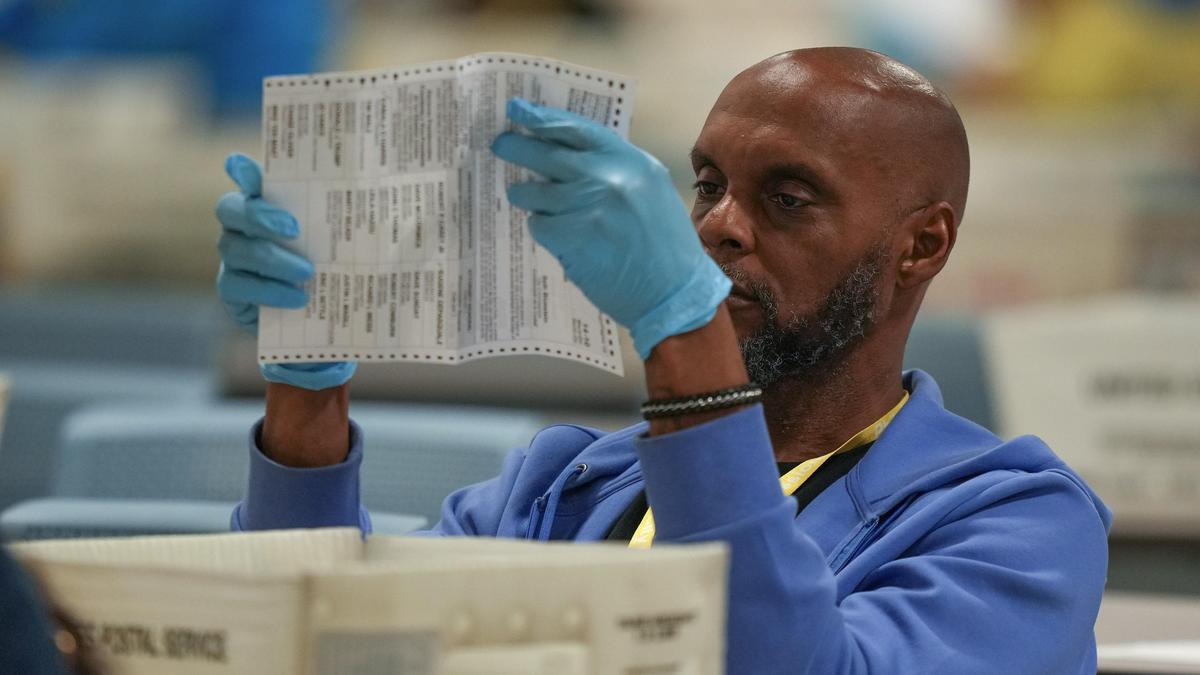
Tue Mar 10 13:08:10 UTC 2026: Headline: Trump Halts Legislation, Demanding Strict Voter ID Law Before Midterms
The Story:
On March 9, 2026, U.S. President Donald Trump declared he would not sign any further legislation into law until Congress approves a stringent proof-of-citizenship voting bill, known as the SAVE America Act. He also demanded an end to mail-in voting. This ultimatum, delivered at a Republican retreat in Florida, comes months before the midterm elections and has ignited controversy, with critics alleging the bill could disenfranchise millions of voters.
The President’s push for stricter voting laws is framed as a measure to prevent voter fraud, despite existing federal laws requiring U.S. citizenship for national elections and minimal evidence of widespread non-citizen voting. The House has already approved the SAVE America Act, and Trump is pressuring the Senate to bypass filibuster rules to expedite its passage.
Key Points:
- President Trump is refusing to sign any legislation until Congress passes a strict proof-of-citizenship voting bill (SAVE America Act) and eliminates mail-in voting.
- He claims these measures are necessary to prevent voter fraud, despite evidence suggesting such fraud is minimal.
- Voting experts estimate the SAVE America Act could disenfranchise approximately 20 million American voters without readily available birth certificates or other required documents.
- Democrats, led by Senate Democratic leader Chuck Schumer, strongly oppose the President’s demands, with Schumer labeling Trump a “thug” and a “bully.”
- Senate Majority Leader John Thune expressed skepticism about using a “talking filibuster” to pass the voting bill, citing the lack of historical precedent.
Critical Analysis:
The historical context shows a clear and concerted effort by the Trump administration to push the SAVE America Act as a top priority. The live updates indicate that the President is doubling down on his demands, even in the face of opposition from within his own party. Touting Wellcovorin as a treatment for autism is irrelevant to the analysis of the unfolding events.
Key Takeaways:
- President Trump is leveraging his power to force through a controversial voting bill that could significantly alter election procedures.
- The move is likely to further polarize the political landscape, with Democrats vehemently opposing the President’s efforts.
- The future of other critical legislation, including funding for the Department of Homeland Security, is now uncertain, pending the outcome of the voting bill debate.
- The President’s actions raise concerns about federal overreach into state-controlled election processes.
- The push for the SAVE America Act is occurring as the Republican Party faces potential losses in the upcoming midterm elections.
Impact Analysis:
This event series has significant long-term implications for the American electoral system. If the SAVE America Act passes, it could lead to:
- Reduced Voter Turnout: Stricter ID requirements and the elimination of mail-in voting could disproportionately affect marginalized communities and those with limited access to documentation.
- Legal Challenges: The constitutionality of the SAVE America Act is likely to be challenged in court, potentially leading to years of legal battles.
- Erosion of Trust in Elections: The ongoing debate over voter fraud, regardless of its factual basis, could further erode public trust in the integrity of elections.
- Increased Political Polarization: The deeply partisan nature of this issue is likely to exacerbate existing political divisions and make bipartisan cooperation even more difficult.
- State-Level Responses: States may enact their own voting laws in response to the federal legislation, leading to a patchwork of different voting regulations across the country.
 First Piper