
Tue Mar 10 02:13:16 UTC 2026: # Congress Protests India-U.S. Trade Deal, Demands Modi’s Resignation
The Story:
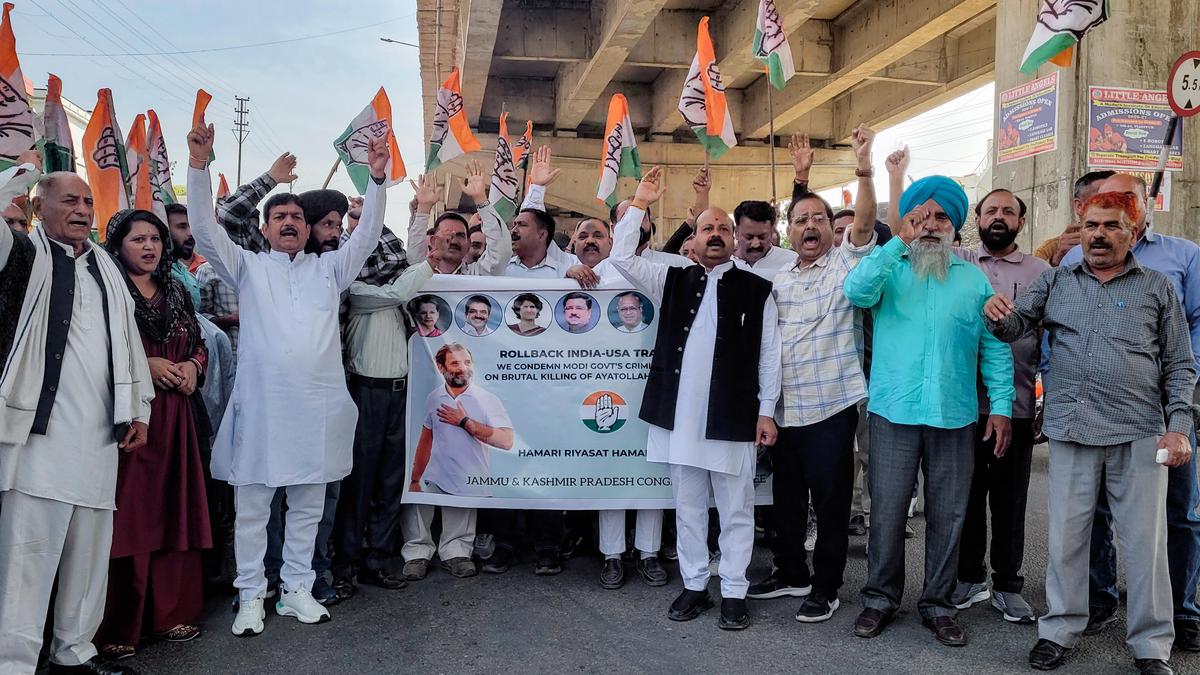
On March 10, 2026, Congress leaders and party workers staged protests in Jammu and Kashmir against the proposed India-U.S. trade deal. Jammu and Kashmir Pradesh Congress Committee (JKPCC) chief Tariq Hameed Karra criticized Prime Minister Narendra Modi’s foreign policy, alleging that India is facing international humiliation and that Modi has “surrendered” to the U.S. Several Congress leaders were reportedly detained to prevent them from participating in the protests.
Key Points:
- Protests were organized by the Congress party in Jammu and Kashmir against the proposed India-U.S. trade deal on March 9, 2026.
- JKPCC chief Tariq Hameed Karra demanded PM Modi’s resignation, citing “failure in foreign policy” and “mishandling of external affairs.”
- Karra claimed India’s international reputation has diminished under Modi’s leadership.
- Congress workers allege the trade deal will negatively “affect local economic interests.”
- Several Congress leaders were reportedly detained in Kashmir to prevent them from joining the protests.
Critical Analysis:
The protests are likely fueled by concerns within the Congress party that the proposed India-U.S. trade deal will disadvantage local businesses and industries. Karra’s strong language suggests a deep dissatisfaction with the current government’s foreign policy direction, potentially tapping into broader anxieties about India’s place in the world, particularly in relation to the U.S. The timing of the protests, coupled with the detentions of Congress leaders, highlights the political tension surrounding the trade deal and the government’s response to dissent. The historical context shows the United States is dealing with rising tensions with Iran, so India’s potential trade deal with the U.S. could be seen as India taking sides, which could affect India’s standing in the world.
Key Takeaways:
- The proposed India-U.S. trade deal is facing domestic opposition, particularly from the Congress party.
- Concerns exist regarding the potential impact of the deal on local economic interests in India.
- The protests reflect a broader critique of PM Modi’s foreign policy and its perceived impact on India’s international standing.
- The detentions of Congress leaders suggest a government effort to suppress dissent related to the trade deal.
- The protests could escalate tensions between the ruling party and the opposition.
Impact Analysis:
The protests and the government’s response could have several long-term implications:
- Trade Deal Negotiations: The domestic opposition could complicate negotiations and potentially lead to revisions in the proposed India-U.S. trade deal.
- Indo-U.S. Relations: While unlikely to derail the relationship entirely, the controversy could introduce friction and require careful management by both governments.
- Domestic Politics: The protests could energize the opposition and contribute to a more polarized political climate in India.
- Regional Stability: The protests could affect India’s standing on the world stage if the US continues to have issues with Iran.
 First Piper