
Tue Mar 10 00:57:57 UTC 2026: ### India’s Political Leaders Express Condolences Over Ayatollah Khamenei’s Death, Criticize U.S.-Israel Actions
The Story:
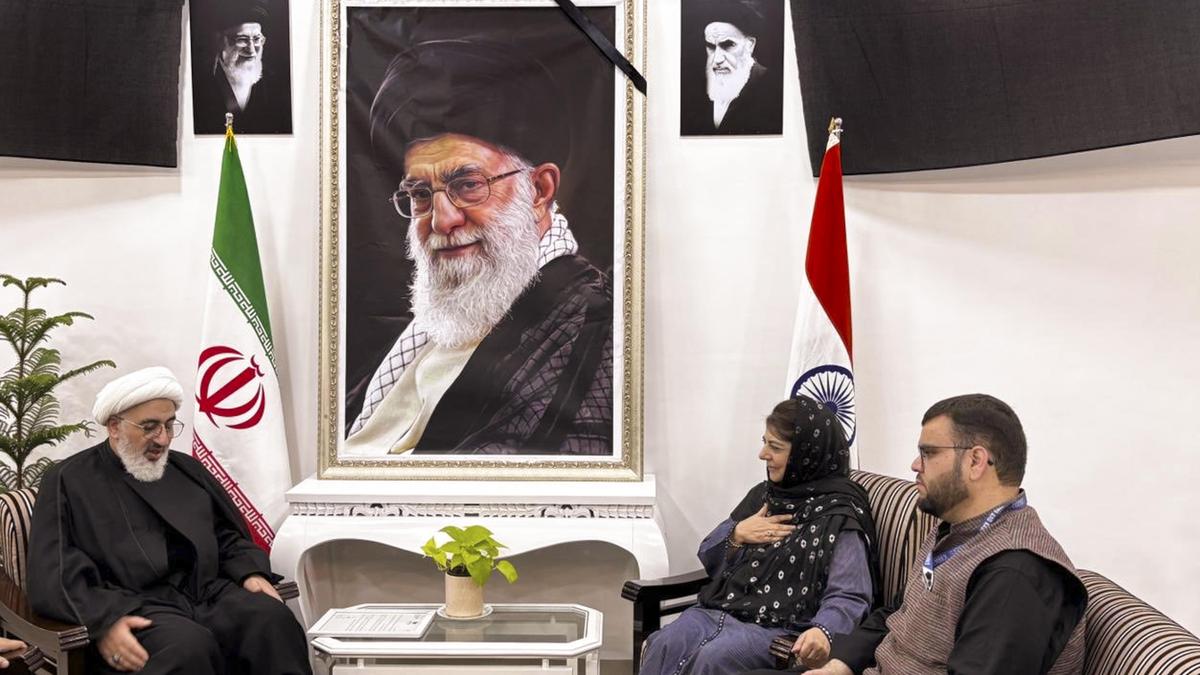
Former Jammu and Kashmir Chief Minister Mehbooba Mufti and members of the ruling National Conference (NC) visited the Iranian Embassy in New Delhi on March 9, 2026, to offer condolences following the death of Ayatollah Ali Khamenei, the former supreme leader of Iran. The leaders also voiced strong condemnation of U.S.-Israel attacks on Iran, with Ms. Mufti criticizing India’s perceived shift in policy towards siding with Israel.
Key Points:
* Mehbooba Mufti, President of the Peoples Democratic Party (PDP), visited the Iranian Embassy with party legislator Aga Muntazir Mehdi.
* Ms. Mufti emphasized the long-standing friendship between India and Iran, particularly Iran’s support during India’s sanctions after nuclear tests.
* NC MPs, including Chowdry Mohammad Ramzan, Sajjad Ahmed Kichloo, and Gurwinder Singh Oberoi, also signed the condolence book.
* The NC MPs condemned the “unilateral and barbaric attack” by the U.S. and Israel on Iran, stating it violates international law.
* Ms. Mufti linked support for Israel to individuals named in the Epstein files.
* Mojtaba Khamenei was appointed as Iran’s new supreme leader (March 10, 2026).
Critical Analysis:
The timing of the Indian politicians’ visit, coinciding with the appointment of Mojtaba Khamenei as the new supreme leader, suggests a calculated move to maintain diplomatic ties with Iran amidst a sensitive transition of power. Ms. Mufti’s strong condemnation of the U.S. and Israel, coupled with the NC MPs’ similar statements, indicates a divergence in views between certain Indian political factions and the official government policy towards Iran and the Middle East. The mention of the Epstein files introduces a conspiratorial element, potentially aimed at discrediting those supporting Israel.
Key Takeaways:
- The event highlights the complex geopolitical dynamics in the Middle East and their impact on India’s foreign policy.
- Differing opinions exist within India’s political landscape regarding relations with Iran, the U.S., and Israel.
- The statements made by Ms. Mufti and the NC MPs could strain India’s relationship with the U.S. and Israel.
- The visit demonstrates India’s effort to maintain a balanced approach in its foreign relations, even amidst international tensions.
- The rapid succession of power in Iran with Mojtaba Khamenei’s appointment adds another layer of complexity to the region.
Impact Analysis:
This event series has several potential long-term implications:
- Strain on India-U.S./Israel Relations: The strong condemnation of U.S. and Israeli actions could lead to diplomatic friction.
- Domestic Political Repercussions: The differing views on foreign policy could create further divisions within India’s political sphere.
- Influence on Regional Stability: India’s stance could influence the broader dynamics in the Middle East, especially given its historical ties with Iran.
- Economic Implications: Depending on how India navigates these relationships, there could be implications for trade and investment with the involved nations.
- Future Policy Direction: This incident may signal a need for India to reassess and clarify its foreign policy approach in the region to balance competing interests.
 First Piper