
Tue Mar 10 13:33:47 UTC 2026: ### Iran Vows to Fight “As Long as Needed” as Gulf States Targeted; Trump Sends Mixed Signals
The Story:
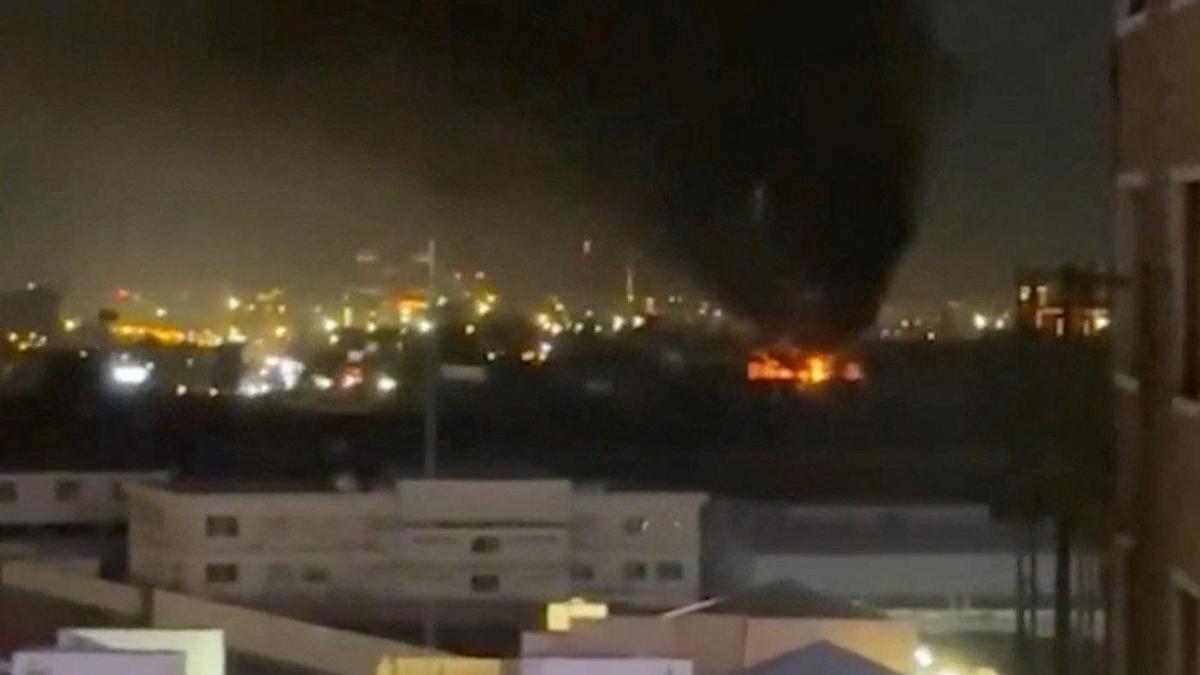
Tensions escalate dramatically in West Asia as Iran launches drone attacks on Saudi Arabia and Kuwait on March 10, 2026. This action comes amid conflicting statements from U.S. President Donald Trump regarding the duration of the ongoing war. An Iranian official declared that Iran will determine when the war ends and sees no room for diplomacy unless economic pressure is removed and what they call “aggression of Americans and Israelis against Iran” stops. Meanwhile, attacks in the Strait of Hormuz disrupt global oil supplies, sending markets into turmoil and causing widespread displacement and casualties.
Key Points:
- March 10, 2026: Iran attacks Saudi Arabia and Kuwait with drones.
- Trump sends contradictory messages about the war’s length.
- Ali Mohammad Naini of the Revolutionary Guard says Iran will decide when the war ends.
- Kamal Kharazi states Iran is prepared for a long war and sees no room for diplomacy.
- Trump warns that if Iran interferes with oil flow in the Strait of Hormuz, the U.S. will retaliate with overwhelming force.
- Attacks on oil infrastructure and merchant ships disrupt global oil supplies.
- The war has resulted in significant casualties: at least 1,230 in Iran, 397 in Lebanon, 11 in Israel, and 7 U.S. service members.
- Oil prices fluctuate wildly, reaching nearly $120 per barrel before falling back to $90.
Critical Analysis:
The events of March 10, 2026, reveal a dangerous escalation of the conflict, fueled by conflicting messaging from the U.S. and Iran’s determination to maintain pressure on the region. Iran’s attacks on Gulf states, coupled with threats to the Strait of Hormuz, appear calculated to exert maximum economic leverage and demonstrate resolve despite U.S. military actions. The contradictory statements from Trump are likely exacerbating market instability and regional uncertainty, potentially emboldening Iran to prolong the conflict. The timing of these events with the Pentagon chief intensifying strikes on Iran points to a tit-for-tat escalatory cycle.
Key Takeaways:
- The conflict between Iran, Israel, and the U.S. is intensifying, with no clear end in sight.
- Disruptions to oil supplies are having a significant impact on global markets.
- Conflicting signals from the U.S. are contributing to instability and uncertainty.
- Iran is willing to risk further escalation to achieve its objectives.
- The conflict is resulting in a growing humanitarian crisis, with significant casualties and displacement.
Impact Analysis:
The ongoing war between Iran, Israel, and the U.S. has profound and long-term implications. The disruption to oil supplies will likely continue to impact global economies. The instability in the region could lead to further conflicts and proxy wars. The humanitarian crisis will require sustained international assistance. Moreover, the credibility of the U.S. as a reliable actor on the global stage is being questioned due to the inconsistent messaging from the Trump administration. The long-term geopolitical consequences could reshape alliances and power dynamics in the Middle East and beyond.
 First Piper