
Mon Mar 09 17:10:45 UTC 2026: ### Headline: Bellingcat Report Contradicts Trump’s Claim on Iranian School Strike, Points to U.S. Involvement
The Story:
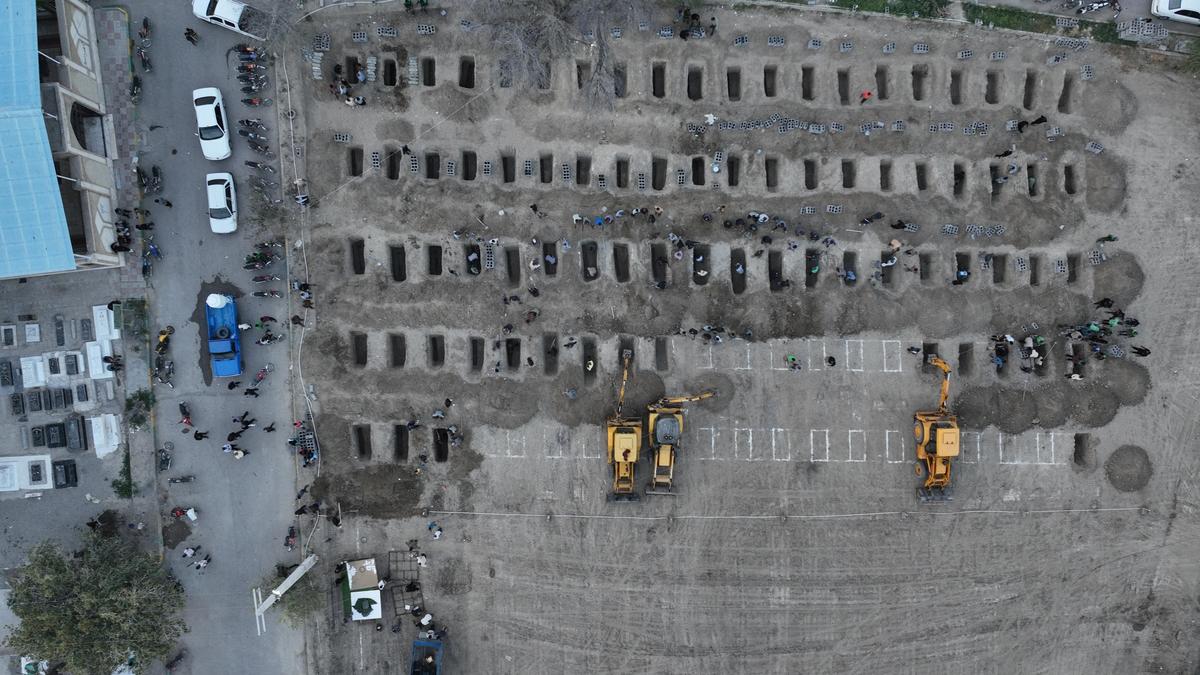
An investigative report by Bellingcat has cast doubt on former U.S. President Donald Trump’s claim that Iran was responsible for the bombing of a school in Minab, Iran on March 2, 2026. The strike, which resulted in over 165 deaths, occurred amidst the ongoing Israel-Iran war. The Bellingcat report presents video evidence suggesting a U.S. Tomahawk cruise missile was used in the attack, a weapon reportedly only possessed by the U.S. in the conflict. This development comes as mounting evidence, including expert analysis of satellite imagery, indicates U.S. culpability for the strike, which targeted a school adjacent to a Revolutionary Guard base.
Key Points:
- A strike on a school in Minab, Iran on March 2, 2026, resulted in over 165 deaths.
- Donald Trump initially blamed Iran for the attack.
- Bellingcat released a video appearing to show a U.S. Tomahawk cruise missile striking the school.
- Satellite image analysis suggests the school was hit during a series of bombings targeting a nearby Revolutionary Guard base.
- The U.S. military’s Central Command has acknowledged using Tomahawk missiles in the war and has released a photo of the USS Spruance firing a Tomahawk missile on Feb. 28.
- A U.S. official anonymously told the AP that the strike was likely U.S.
- An assessment of the incident has been launched by the US military.
- Defense Secretary Pete Hegseth stated on March 2, 2026, that the U.S. is unleashing the “most lethal and precise air power campaign in history” and is not following “stupid rules of engagement”.
- Israel has denied conducting the strike and has focused on areas of Iran closer to Israel.
Key Takeaways:
- The Bellingcat report significantly undermines the U.S.’s initial denial of responsibility for the school bombing.
- The incident raises serious questions about the rules of engagement and adherence to international law during the Israel-Iran war.
- The controversy surrounding the strike has the potential to further escalate tensions in the region and damage the U.S.’s international reputation.
- The proximity of the school to a military base highlights the challenges of avoiding civilian casualties in modern warfare.
- The lack of independent investigation at the site complicates the establishment of facts.
Impact Analysis:
The unfolding events hold significant long-term implications:
- International Law and Accountability: The incident challenges the norms of international law regarding civilian protection during armed conflicts. If confirmed, the U.S. could face significant legal and diplomatic repercussions.
- Regional Stability: The revelation of potential U.S. involvement could further inflame tensions between the U.S., Iran, and their respective allies, potentially leading to escalation of the conflict.
- Public Trust: The contradictory statements from U.S. officials erode public trust in government narratives surrounding military actions.
- Future Military Operations: The incident may prompt a re-evaluation of rules of engagement and targeting protocols to minimize civilian casualties in future military operations.
- Arms Control and Proliferation: The use of advanced weaponry like Tomahawk missiles in civilian areas could lead to renewed calls for arms control measures.
 First Piper