
Mon Mar 09 19:08:58 UTC 2026: ### Bengaluru Hotels Face Closure Threat Amid LPG Cylinder Supply Halt
The Story:
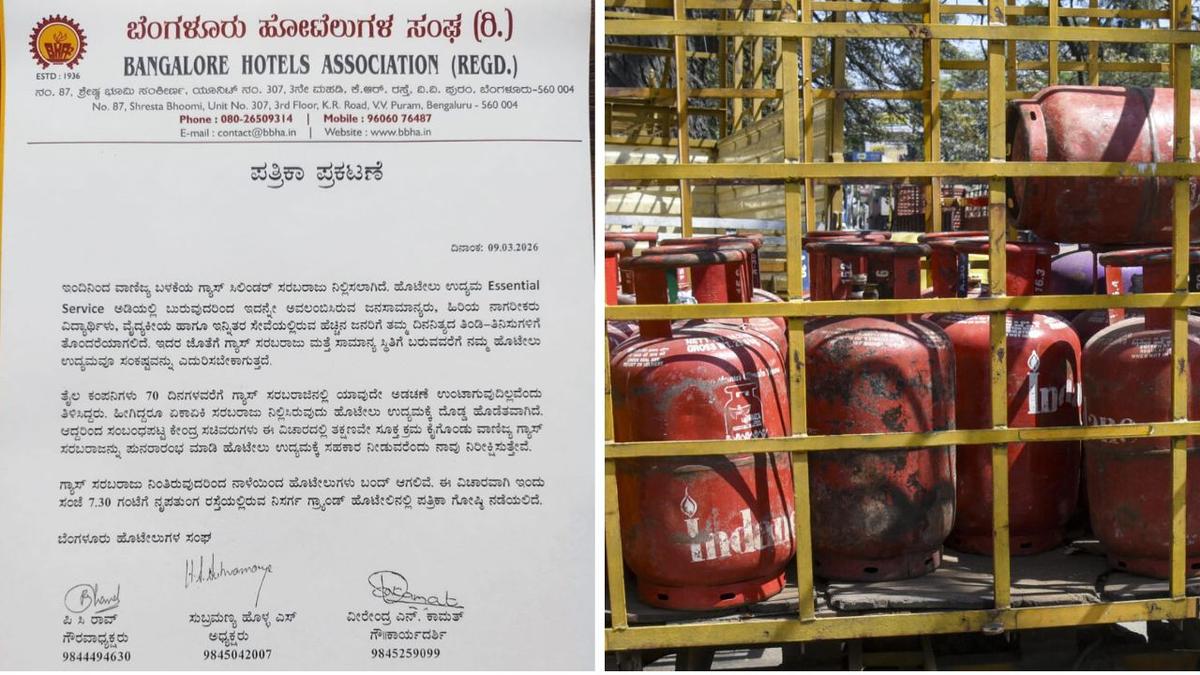
The Bangalore Hotels Association has warned of potential restaurant closures across Bengaluru due to a sudden halt in the supply of commercial LPG cylinders, effective March 9, 2026. Association president P.C. Rao stated that oil companies had previously assured no disruptions for approximately 70 days. The stoppage, attributed to the ongoing West Asia conflict, threatens an essential service relied upon by students, senior citizens, and daily wage earners. The association has appealed to the Central Government for immediate intervention to restore the supply.
Key Points:
- The Bangalore Hotels Association reports a halt in commercial LPG cylinder supply starting March 9, 2026.
- P.C. Rao, the association president, warns of potential restaurant closures if the supply is not resumed.
- The halt is reportedly linked to the West Asia conflict.
- Hoteliers were informed that priority would be given to domestic consumers over commercial users.
- Karnataka Chief Minister Siddaramaiah criticized the Central Government for recent LPG price hikes of ₹115 for commercial and ₹60 for domestic cylinders.
- Nisarga Grand representative S.P. Krishnaraj expressed concerns about business losses and the impact on staff dependent on hotel meals.
Critical Analysis:
The disruption in LPG supply to Bengaluru hotels highlights the vulnerability of local economies to international conflicts. The West Asia conflict appears to be directly impacting India’s supply chain, leading to prioritization of domestic LPG consumers over commercial establishments. This situation also reveals a potential communication breakdown between oil companies and the hotel industry, as the sudden stoppage contradicts earlier assurances of uninterrupted supply.
Key Takeaways:
- Geopolitical conflicts can have immediate and significant impacts on local businesses and essential services.
- Supply chain vulnerabilities need to be addressed to mitigate the impact of international crises.
- Effective communication between government, industry, and suppliers is crucial for managing disruptions.
- Prioritization policies during crises can create winners and losers, necessitating careful consideration of societal impacts.
- Price hikes exacerbate the strain on businesses already struggling with supply disruptions.
Impact Analysis:
The potential closure of Bengaluru restaurants could have cascading effects, impacting students, senior citizens, and daily wage earners who rely on affordable meals. The disruption could also lead to job losses within the hotel industry and negatively affect the local economy. If the situation persists, it may necessitate government intervention to secure alternative fuel sources for commercial establishments and implement price controls to prevent exploitation. The long-term impact will depend on the duration of the West Asia conflict and the effectiveness of government measures to stabilize the LPG supply chain.
 First Piper