
Tue Mar 10 10:45:33 UTC 2026: # Abdullah Offers Condolences Amid Escalating Iran Conflict
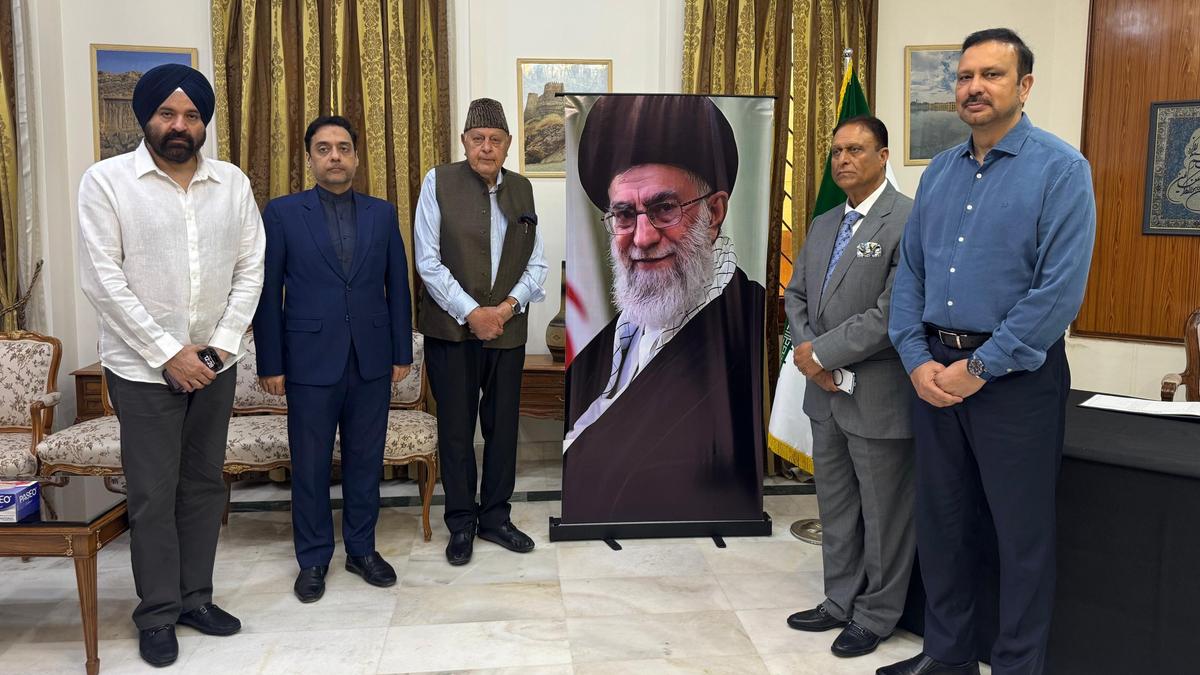
The Story: Former Jammu and Kashmir chief minister Farooq Abdullah met with Iranian Deputy Ambassador Mohammad Fathali in New Delhi on Tuesday, March 10, 2026, to express condolences following the death of Iran’s Supreme Leader Ali Khamenei. The meeting occurred amidst an escalating conflict in West Asia, involving Iran, the United States, and Israel. Abdullah conveyed his solidarity with the Iranian people and hoped for a swift end to the war.
Key Points:
- Farooq Abdullah met with Iranian Deputy Ambassador Mohammad Fathali on March 10, 2026.
- The meeting was to offer condolences for the death of Iran’s Supreme Leader Ali Khamenei.
- Abdullah expressed hope for an end to the ongoing war and conveyed solidarity with the Iranian people.
- The meeting lasted 30 minutes.
- Mojtaba Khamenei has been named the new Supreme Leader of Iran.
- The conflict in West Asia has entered its 11th day and has resulted in over 1,700 deaths in Iran, Lebanon, and Israel.
- Rajya Sabha MPs from Jammu and Kashmir also visited the Iranian mission to sign the condolence book.
Critical Analysis:
The meeting between Farooq Abdullah and the Iranian Deputy Ambassador takes place against a backdrop of intensifying military action by the U.S. against Iran, and an ongoing conflict with Israel. The naming of Mojtaba Khamenei as the new Supreme Leader, amidst the conflict, signals a continuation of Iranian resolve. Abdullah’s expression of solidarity with Iran, while a humanitarian gesture, also carries geopolitical weight, given his position as a prominent political figure in a region with complex historical ties to both Iran and the broader Middle East.
Key Takeaways:
- The death of Ali Khamenei and the subsequent appointment of Mojtaba Khamenei as Supreme Leader have not de-escalated the ongoing conflict.
- International actors, like Farooq Abdullah, are engaging diplomatically, even amidst the conflict.
- The conflict is rapidly escalating, involving the U.S., Iran, and Israel, with regional repercussions spreading.
- The internal political dynamics of Iran are being tested during this period of intense external pressure.
Impact Analysis:
The death of a Supreme Leader during an active conflict is likely to create instability and uncertainty in Iran. The naming of a successor is intended to project strength and continuity, but the choice of Mojtaba Khamenei could be controversial within Iran. The ongoing conflict, coupled with the leadership transition, could reshape the geopolitical landscape of the Middle East, potentially leading to new alliances and further destabilization. The expressions of solidarity, like Abdullah’s, may further complicate diplomatic relations, particularly between India and its allies, depending on the evolving nature of the conflict. The conflict is already impacting global markets as evidenced by the LPG shortage in Kerala.
 First Piper