
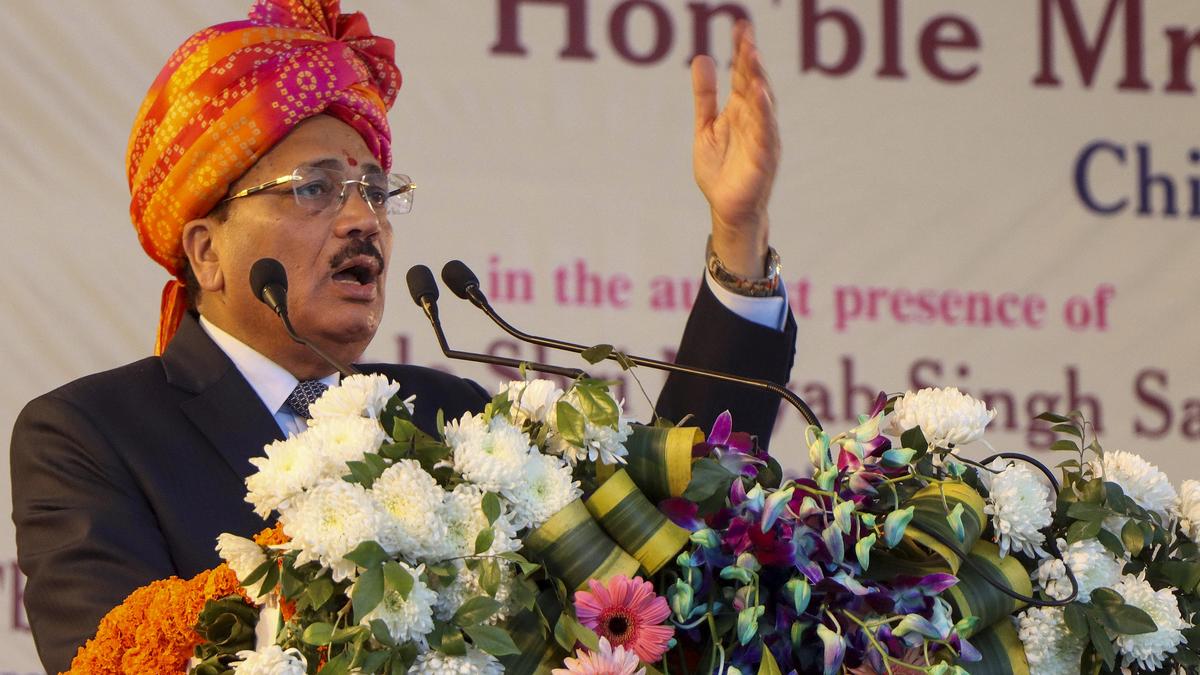
Tue Mar 10 02:23:14 UTC 2026: ### Headline: CJI Surya Kant Advocates for Institutional Reforms to Enhance Women’s Representation in Indian Judiciary
The Story:
Chief Justice of India Surya Kant, on March 8, 2026, championed greater institutional reforms within the judiciary to increase the representation of women in the legal field. Speaking at the first national conference of Indian Women in Law, CJI Kant urged High Court collegiums to consider meritorious women members of the Bar for judgeship as a standard practice, rather than an exception. He emphasized that women are not seeking concessions but rather fair and appropriate representation, which has been long overdue.
CJI Kant stressed that any meaningful progress must be institutionalized, embedding fairness into the processes of the Supreme Court and High Courts across the country. He called for persistent cultivation of institutional fairness, stating that reforms of this nature are a continuous process that extends beyond individual tenures. He requested the High Court collegiums to widen the zone of their consideration and include women advocates from their states who are practising in the Supreme Court for elevation.
Key Points:
- CJI Surya Kant advocated for institutional reforms to bring more women into the legal field.
- He urged High Court collegiums to consider meritorious women members of the Bar for judgeship as a norm.
- The CJI emphasized that women are seeking fair representation, not concessions.
- He requested the High Court collegiums to widen the zone of their consideration and include women advocates practising in the Supreme Court who belong to that state, for elevation
- Women comprise approximately 36.3% of judicial officers at the district level.
- Multiple women are currently serving as Chief Justices of different high courts.
- The Punjab and Haryana High Court has as many as 18 sitting women judges.
Key Takeaways:
- The Indian judiciary is acknowledging the need for greater gender diversity.
- Institutional reforms are considered crucial for achieving lasting change in women’s representation.
- The increase in women judicial officers at the district level suggests a positive trend for future representation in higher courts.
- The CJI is urging for immediate action from High Court collegiums to address the underrepresentation of women.
- The legal profession needs to address issues such as workplace bias and late-night briefings, which disproportionately affect women.
Impact Analysis:
The CJI’s call for institutional reforms has the potential to significantly alter the composition of the Indian judiciary in the long term. By encouraging High Court collegiums to prioritize meritorious women candidates, the representation of women on the Bench can be expected to increase. This, in turn, could lead to more diverse perspectives and a more equitable application of the law. The emphasis on institutionalizing fairness suggests a commitment to sustained progress beyond individual tenures, ensuring that the judiciary reflects the diversity of the society it serves. The increasing number of women at the district level also indicates a growing pipeline of potential candidates for higher judicial positions. This initiative could also serve as a model for other institutions and sectors in India striving for greater gender equality.
 First Piper