
Tue Mar 10 05:58:41 UTC 2026: ### Election Commissioner Faces Protests Amid West Bengal Poll Preparations
The Story:
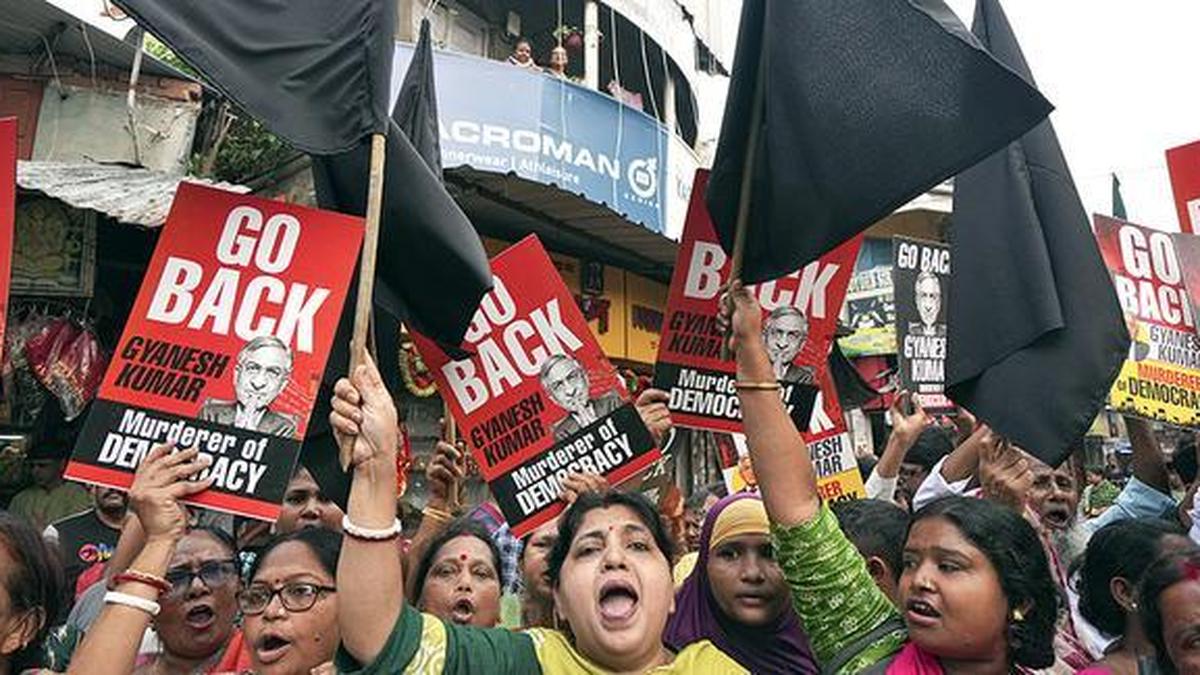
Chief Election Commissioner Gyanesh Kumar is facing significant opposition during his visit to West Bengal to review preparations for the upcoming Assembly elections. Protests involving “go back” slogans and black flags greeted him at multiple locations, including temples and the airport. These demonstrations coincide with controversies surrounding alleged irregularities in the post-Special Intensive Revision (SIR) electoral rolls and accusations from West Bengal Chief Minister Mamata Banerjee that Mr. Kumar threatened state officials. Despite the protests, Mr. Kumar is proceeding with scheduled meetings with senior officials, police officers, and political parties to ensure free and fair elections.
Key Points:
* Gyanesh Kumar, the Chief Election Commissioner (CEC), is visiting West Bengal to review poll preparedness for the upcoming Assembly elections.
* Protests featuring “go back” slogans and black flags occurred during Mr. Kumar’s visits to Kalighat Kali Temple, Dakshineswar Kali Temple, and Netaji Subhas Chandra Bose International Airport.
* The CEC is holding meetings with the Chief Secretary, Director General of Police, and other senior officials to assess election-related arrangements.
* The Election Commission is reviewing coordination between the State administration and security agencies, including the deployment of central armed police forces.
* Political parties have suggested conducting the elections in one or two phases and urged measures to curb voter intimidation.
* Mamata Banerjee accused Mr. Kumar of threatening State officials during a meeting and warned against “false bravado.”
* The CEC stated the Election Commission is committed to violence-free elections in West Bengal and ensuring voters can exercise their franchise in a festive environment.
Critical Analysis:
The protests against the CEC and Mamata Banerjee’s strong accusations indicate a deep level of distrust between the state government and the Election Commission. The historical context regarding the West Bengal SIR Hearing Live Updates suggests the core of this distrust stems from the revision of electoral rolls. The “go back” slogans, typically associated with resistance to perceived external interference, further underscore this tension. The prior article “How a pre-poll storm in Bengal drew in the President and Governor, sparked a TMC-BJP slug fest” confirms the highly charged political atmosphere prevailing in West Bengal.
Key Takeaways:
- The upcoming West Bengal Assembly elections are occurring amidst significant political tension and distrust.
- Controversies surrounding the Special Intensive Revision of electoral rolls are a major source of conflict.
- The Election Commission faces the challenge of ensuring free and fair elections in a highly polarized environment.
- Accusations of threats and intimidation are escalating the confrontation between the state government and the poll panel.
- The protests against the CEC highlight the sensitivity and politicization of the electoral process in West Bengal.
Impact Analysis:
The ongoing conflict between the state government and the Election Commission could have far-reaching implications. Firstly, it may erode public trust in the electoral process, potentially leading to lower voter turnout or increased instances of electoral misconduct. Secondly, if the Election Commission is perceived as biased or ineffective, the legitimacy of the election results could be questioned, potentially leading to post-election violence or legal challenges. The long-term stability of the state government could be jeopardized if the election is marred by irregularities or perceived unfairness. Ultimately, the events surrounding the 2026 West Bengal Assembly elections could set a precedent for future elections in the state and elsewhere in India.
 First Piper