
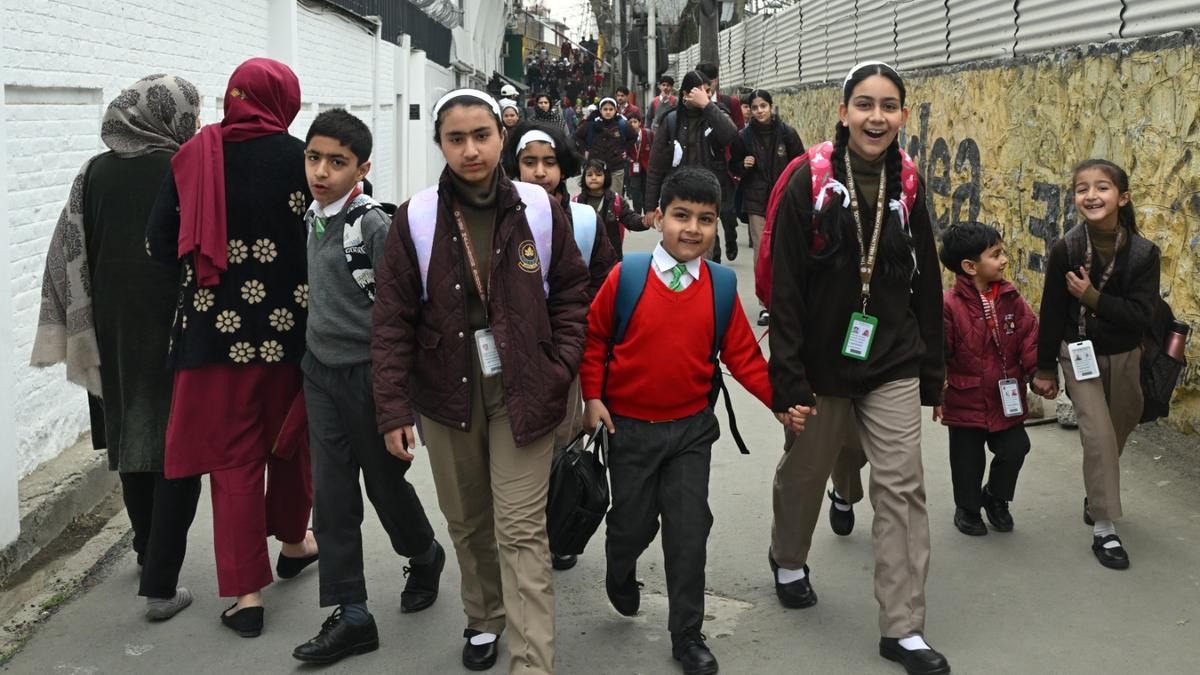
Mon Mar 09 05:51:37 UTC 2026: ### Headline: Kashmir Schools Reopen After Protests Over Iranian Leader’s Death
The Story:
Schools in Kashmir reopened on Monday, March 9, 2026, after being closed for a week due to protests. These protests were triggered by the death of Iran’s Supreme Leader Ayatollah Ali Khamenei, who was reportedly killed in a U.S.-Israel air strike on February 28, 2026. Educational institutions, including schools, colleges, and universities, had initially closed on March 2, 2026, following the eruption of protests. While secondary and higher institutions had reopened after winter vacations on February 23, 2026, the reopening of middle and primary schools, initially scheduled for March 2, 2026, was delayed due to the unrest.
Key Points:
- Schools in Kashmir reopened on March 9, 2026, after a week-long closure.
- The closure was due to protests over the death of Iran’s Supreme Leader Ayatollah Ali Khamenei on February 28, 2026.
- Khamenei’s death was reportedly caused by a U.S.-Israel air strike.
- Secondary and higher institutions had reopened on February 23, 2026, after winter vacations.
- Middle and primary schools were initially scheduled to reopen on March 2, 2026, but the reopening was delayed.
Critical Analysis:
The reopening of schools in Kashmir after a week-long closure due to protests over the death of Iran’s Supreme Leader in a US-Israeli airstrike highlights the interconnectedness of global events and their local impact. The fact that an event in the Middle East can trigger protests and the closure of schools in Kashmir indicates the region’s sensitivity to international affairs, particularly those involving the United States, Israel, and Iran. This suggests a potential for further instability in the region based on international events.
Key Takeaways:
- International events can have significant local repercussions, even in seemingly distant regions.
- Kashmir remains a sensitive region prone to unrest, particularly in response to events involving the US, Israel, and Iran.
- The protests indicate a level of sympathy or identification with Iran within certain segments of the Kashmiri population.
- The closure and reopening of schools highlight the disruption caused by geopolitical tensions on education.
Impact Analysis:
The incident underscores the complex geopolitical dynamics at play in Kashmir. The long-term impact could include:
- Increased Security Measures: Authorities may implement stricter security measures to prevent future disruptions to education and daily life.
- Diplomatic Ramifications: The event could strain relations between India and Iran, or potentially with the U.S. and Israel, depending on the Indian government’s response.
- Radicalization Concerns: The protests could be interpreted as a sign of growing radicalization among certain segments of the Kashmiri population, prompting further scrutiny and counter-radicalization efforts.
- Educational Disruption: Repeated school closures can negatively impact students’ learning outcomes and overall educational development.
 First Piper