
Sun Mar 08 17:16:15 UTC 2026: ### Headline: Russia Declares International Law “Effectively Dead” Amid Escalating U.S.-Israeli Conflict with Iran
The Story:
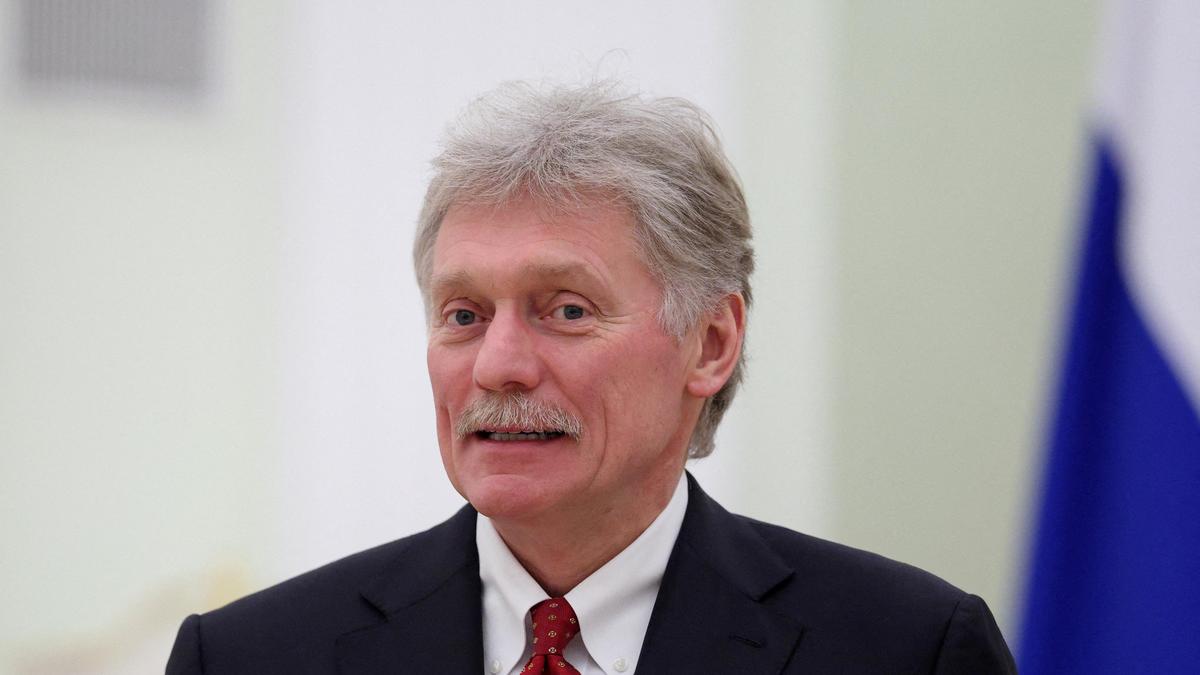
On March 8, 2026, Russia asserted that international law is practically non-existent following a U.S.-Israeli strike on Iran. Kremlin spokesman Dmitry Peskov highlighted the destabilization of the West Asia region and called for a revival of President Vladimir Putin’s pre-pandemic proposal for a summit of the P-5 nations (Russia, U.S., China, France, and the U.K.) to address global security concerns. Foreign Minister Sergei Lavrov urged the U.S. to clarify its plans and how they align with established international norms. The statement comes amidst reports of Iranian drone attacks, U.S.-Israeli strikes on Iranian oil sites, and escalating tensions in the region, including Israeli Prime Minister Netanyahu’s vow to “eradicate” the Iranian regime.
Key Points:
- March 8, 2026: Russia declares international law “effectively dead.”
- Dmitry Peskov: States the situation in West Asia has become significantly destabilized following a U.S.-Israeli strike on Iran.
- President Putin’s Proposal: Russia calls for a summit of the P-5 nations to discuss global security.
- Sergei Lavrov: Urges the U.S. to clarify its plans and their relation to international norms.
- Escalating Tensions: The statement follows reports of Iranian drone attacks, U.S.-Israeli strikes, and vows by the Israeli PM to “eradicate” the Iranian regime.
Critical Analysis:
The timing of Russia’s statement, immediately following the U.S.-Israeli strike on Iran, suggests a strategic attempt to exploit the growing instability and undermine the legitimacy of U.S. actions on the global stage. By declaring international law “effectively dead,” Russia aims to position itself as a potential mediator or alternative power center, challenging the existing world order and highlighting what it perceives as the hypocrisy of Western powers. The call for a P-5 summit can be seen as an attempt to regain influence and reassert Russia’s role in global security discussions, especially in light of the ongoing conflict in Ukraine and its strained relationship with the West. The historical context, particularly the mention of Putin’s pre-pandemic proposal, indicates a long-term strategy to reshape international relations.
Key Takeaways:
- The U.S.-Israeli strike on Iran has triggered a significant escalation in geopolitical tensions.
- Russia is leveraging the crisis to undermine the perceived legitimacy of international law and the U.S.-led global order.
- The call for a P-5 summit reflects Russia’s ambition to reassert its influence in global security matters.
- The situation poses a significant challenge to international stability and could lead to further fragmentation of the global order.
- The absence of a clear framework of international law, as highlighted by Russia, creates a dangerous vacuum that could be exploited by various actors.
Impact Analysis:
The declaration that international law is “effectively dead” carries significant long-term implications. It could embolden other nations to disregard international norms, leading to further instability and conflicts. The failure to uphold international law could erode trust in international institutions and multilateral agreements, making it more difficult to address global challenges such as climate change, pandemics, and nuclear proliferation. This situation could accelerate the emergence of a multipolar world order, where great powers compete for influence and regional conflicts are more likely to escalate without effective international mechanisms for resolution. The long-term impact will depend on how the major powers respond to this challenge and whether they can find a way to rebuild trust and re-establish a shared commitment to international law.
 First Piper