
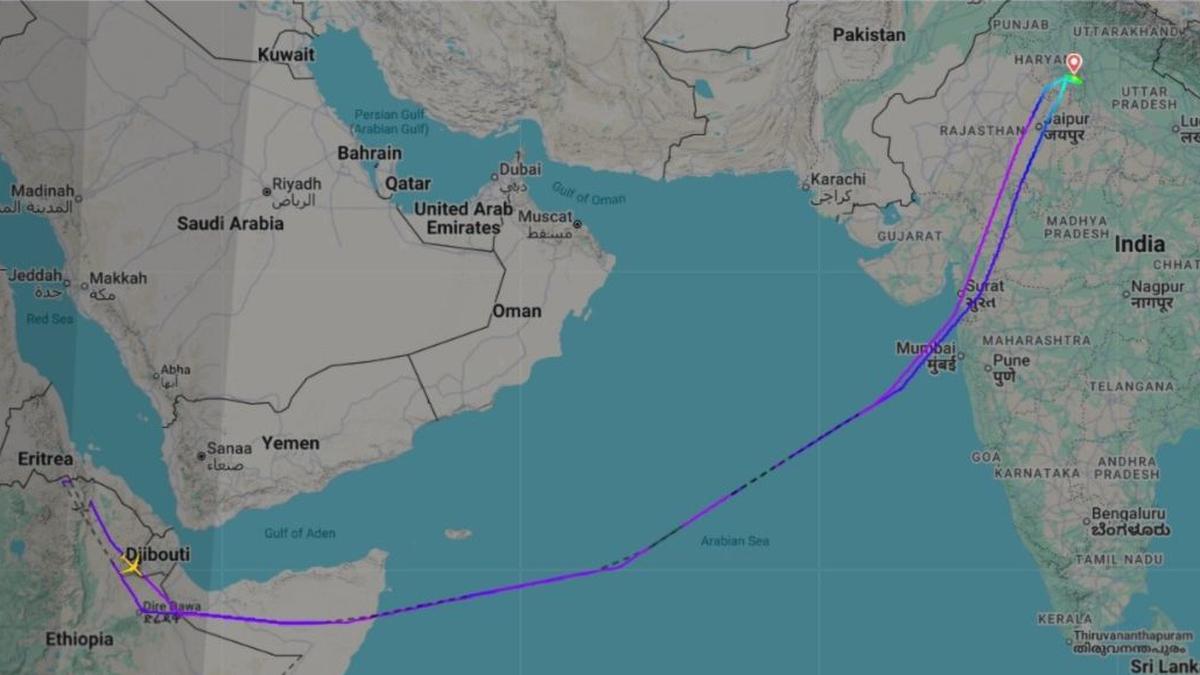
Mon Mar 09 10:36:31 UTC 2026: ### Headline: IndiGo Flight to Manchester Turns Back Over Eritrea Due to Permit Confusion Amidst West Asia Tensions
The Story:
An IndiGo flight from Delhi to Manchester was forced to return to its origin after nearly eight hours in the air on March 8, 2026. The diversion occurred over Eritrea despite the flight avoiding the conflict-affected Persian Gulf region. The incident was attributed to confusion by Eritrean air traffic authorities regarding the operating permit for the aircraft, which IndiGo leases from Norwegian carrier Norse Atlantic Airways. This event highlights the challenges airlines face navigating complex airspace restrictions amid ongoing geopolitical tensions.
Key Points:
- The IndiGo flight from Delhi to Manchester turned back over Eritrea on March 8, 2026, after approximately eight hours in the air.
- The diversion was due to confusion by Eritrean air traffic authorities over the operating permit.
- The aircraft is leased from Norse Atlantic Airways, leading to permit complications.
- The flight was the first IndiGo service to Manchester since February 26, 2026, and part of a partial resumption of European flights.
- IndiGo’s Mumbai to London Heathrow flight was also diverted to Cairo for the same reason.
- The airline is working with authorities to resume the journey.
- European Union Aviation Safety Agency (EASA) issued an advisory on February 28, 2026, barring its carriers from flying over 11 countries in West Asia due to airstrikes between Israel and Iran.
Critical Analysis:
The event is a direct consequence of the heightened geopolitical tensions in West Asia. The EASA advisory of February 28, 2026, restricting flights over the region forced IndiGo to adopt longer, diversionary routes. The operating permit confusion in Eritrea is a secondary effect, highlighting how the crisis is creating operational complexities for airlines. The fact that IndiGo’s Mumbai-London flight also faced a similar diversion to Cairo suggests a systemic issue rather than an isolated incident, pointing to potential communication gaps or insufficient coordination between airlines and air traffic authorities in the affected regions.
Key Takeaways:
- Geopolitical instability in West Asia is significantly disrupting air travel routes between Europe and Asia.
- Airlines face increased operational challenges due to rapidly changing airspace restrictions and the need for complex permit arrangements.
- Permit discrepancies and confusion among air traffic authorities can lead to costly and inconvenient flight diversions.
- The reliance on leased aircraft adds another layer of complexity to international flight operations.
- Passengers are likely to experience flight cancellations, diversions, and longer travel times as airlines adapt to evolving airspace advisories.
Impact Analysis:
The ongoing disruptions in air travel corridors have several long-term implications:
- Increased Costs: Airlines will incur higher operational costs due to longer routes, diversions, and potential compensation to passengers.
- Operational Inefficiencies: The need to constantly adjust flight paths and navigate complex permit requirements will reduce operational efficiency.
- Passenger Dissatisfaction: Frequent disruptions and uncertainty can lead to decreased passenger confidence and loyalty.
- Geopolitical Risk Assessment: Airlines will need to enhance their geopolitical risk assessment and contingency planning to mitigate future disruptions.
- Regulatory Scrutiny: Aviation regulatory bodies like EASA may need to streamline permit processes and improve communication with airlines and air traffic authorities to prevent similar incidents.
 First Piper