
Sun Mar 08 12:39:35 UTC 2026: ### Headline: Iran and US/Israel Engage in Escalating Conflict; Regional Instability Deepens
The Story:
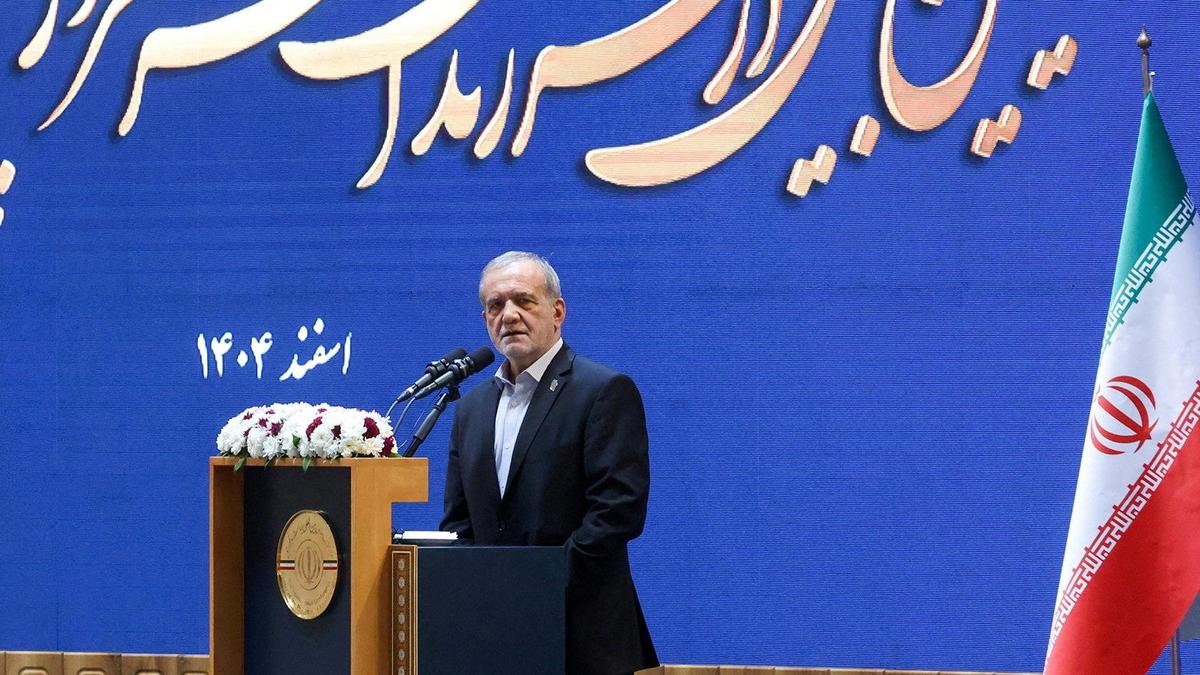
On March 7, 2026, the conflict between Iran, the United States, and Israel intensified, marking the eighth day of open warfare. Iranian President Masoud Pezeshkian asserted that Iran would only target neighboring countries if attacked first, while simultaneously vowing to resist U.S. and Israeli demands for “unconditional surrender.” Despite these assurances, several Arab nations reported drone and missile attacks. Both sides continued aggressive strikes, with the U.S. claiming to have hit over 3,000 targets in the first week of “Operation Epic Fury,” and Iran retaliating with missile strikes and claims of inflicting casualties on American forces.
Key Points:
- Iranian President Masoud Pezeshkian stated Iran would only target neighboring countries if attacked, but several Arab countries reported attacks.
- The U.S. and Israel continued strikes across Iran, focusing on the Iranian Air Force.
- Iran fired missile salvos at Israel, with no reported injuries in Israel.
- U.S. President Donald Trump ruled out a deal with Iran and demanded “unconditional surrender.”
- Iran claimed to have inflicted casualties on American forces and targeted a Marshal Islands-flagged oil tanker.
- Iran accused the U.S. of attacking a freshwater desalination plant, impacting water supply in 30 villages.
- Dubai’s main airport was temporarily closed due to Iranian missile and drone attacks.
- Attacks were reported in the UAE, Saudi Arabia, Qatar, and Kuwait, with the UAE claiming to have been targeted with 16 ballistic missiles and over 120 drones.
Critical Analysis:
The escalation appears to be fueled by a combination of factors: the failure of diplomatic efforts, the hardline stance of the U.S. under President Trump demanding unconditional surrender, and Iran’s determination to resist what it perceives as aggression against its sovereignty. The targeting of civilian infrastructure, such as the desalination plant, marks a dangerous escalation with the potential for severe humanitarian consequences.
Key Takeaways:
- The conflict is rapidly escalating, with no clear signs of de-escalation from either side.
- Regional instability is increasing, as neighboring countries are drawn into the conflict.
- The targeting of civilian infrastructure could lead to a humanitarian crisis.
- The rhetoric from both sides suggests a prolonged and potentially devastating conflict.
- The conflict is likely to have significant geopolitical ramifications for the Middle East and beyond.
Impact Analysis:
The ongoing conflict has the potential for long-term and widespread impact. The disruption of oil production in the Gulf states could have significant global economic consequences. The humanitarian impact of attacks on civilian infrastructure could further destabilize the region. The conflict could also draw in other actors, leading to a wider regional war. The deep-seated animosity and lack of diplomatic solutions suggest that this conflict could continue for the foreseeable future, reshaping the geopolitical landscape of the Middle East.
 First Piper