
Fri Mar 06 16:38:24 UTC 2026: # Nepal’s Rastriya Swatantra Party Poised for Landslide Victory, Ushering in a New Era
The Story:
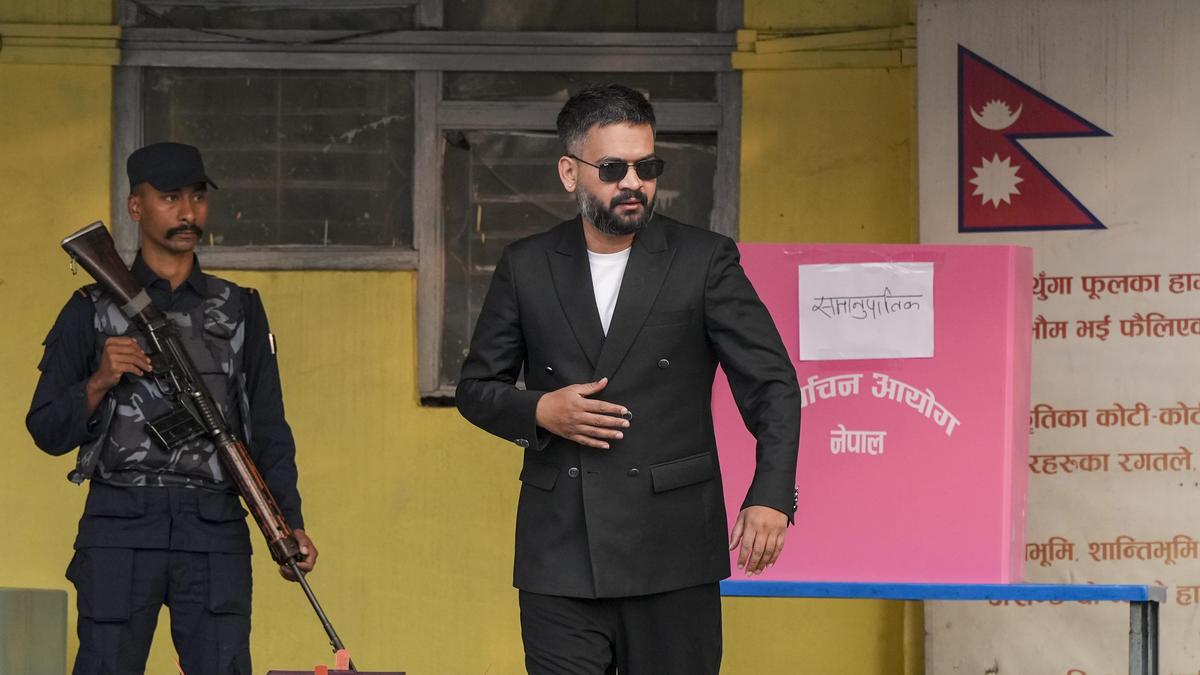
Nepal is witnessing a significant political shift as the Rastriya Swatantra Party (RSP), a party formed just four years ago, is on the verge of an electoral landslide in the March 5, 2026, general elections. Early trends indicate that the RSP is significantly ahead of established parties that have dominated Nepali politics for decades. Rapper-turned-politician Balendra Shah, 35, is poised to become the nation’s youngest Prime Minister. The election follows the 2025 Gen Z protests that resulted in 77 deaths and the toppling of the previous government.
Key Points:
- The RSP is leading in 110 out of 165 constituencies.
- Established parties like the Nepali Congress (NC) and CPN-UML are trailing significantly with 10 and 7 constituencies respectively.
- Balendra Shah is leading against K.P. Sharma Oli in Oli’s home turf of Jhapa-5 with 15,169 votes to Oli’s 3,344.
- The RSP is also leading in proportional representation with 18,830 votes (59%) out of 31,882 counted.
- Voter turnout was 58.7%, the lowest since 1991.
- The RSP was founded in 2022, emerging as the fourth-largest party in that year’s election.
- Balendra Shah joined the RSP in December 2025, after winning the Kathmandu mayoral election in 2022 as an independent.
Key Takeaways:
- The RSP’s success highlights a significant shift in voter sentiment away from established parties.
- The election result could mark a rare reset in Nepali politics, potentially leading to a majority government for the first time in 27 years.
- The low voter turnout suggests voter fatigue and frustration with the performance of traditional parties.
- The Gen Z protests of 2025, fueled by demands for an end to corruption, played a significant role in shaping the election outcome.
- The victory of the RSP demonstrates the growing influence of youth and their desire for change in Nepal’s political landscape.
Impact Analysis:
The RSP’s impending victory has significant long-term implications for Nepal. A stable, majority government could lead to more effective governance and policy implementation. The focus on anti-corruption and accountable governance, driven by the Gen Z movement, could reshape Nepal’s political culture. Balendra Shah’s leadership, particularly his appeal to the youth, may usher in a new era of political participation and engagement. However, the RSP’s ability to deliver on its promises and navigate the complexities of Nepali politics remains to be seen. The success or failure of this new government will likely shape the future of Nepali democracy for years to come.
 First Piper