
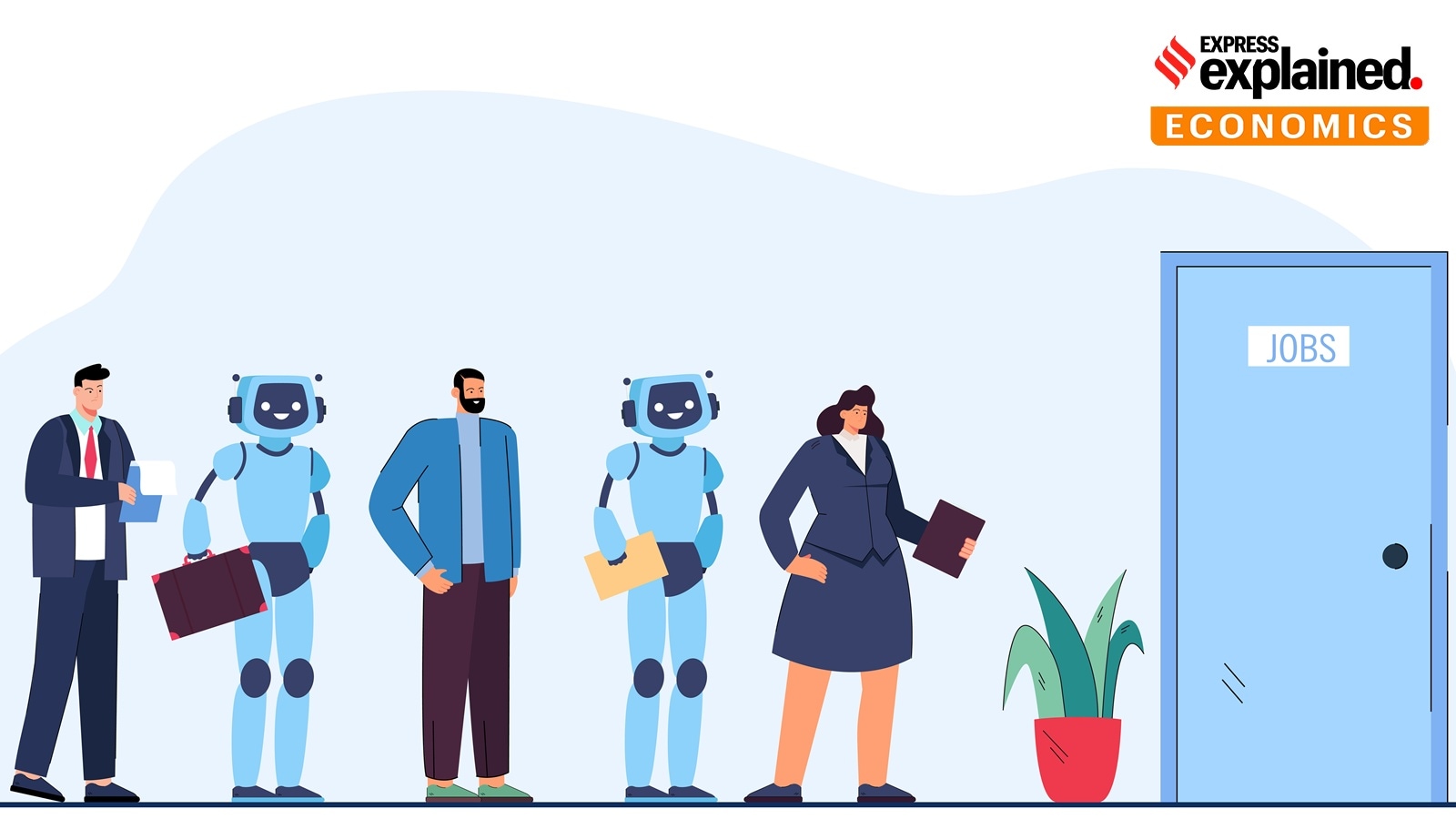
Sun Mar 08 06:39:47 UTC 2026: ### AI’s Growing Shadow: Anthropic Study Reveals Job Market Disruption, Highlights Demographic Risks
The Story:
A new study by Anthropic sheds light on the potential disruptive impact of Artificial Intelligence (AI) on the labor market. The study introduces a new measure, “observed exposure,” to assess the extent to which jobs are currently affected by AI, moving beyond theoretical capabilities. The findings reveal that while AI’s current usage is limited in some sectors, it theoretically covers a majority of tasks in business, finance, computer science, and other white-collar roles. The study also indicates that younger workers entering AI-exposed roles are facing hiring freezes, and certain demographics, including women and highly educated individuals, are disproportionately at risk. The findings raise concerns about the future of work and the need for adaptation in the face of rapidly advancing AI technologies.
Key Points:
- Anthropic’s study introduces “observed exposure” as a measure of AI’s current impact on jobs.
- Computer programmers, customer service representatives, and financial analysts are among the most AI-exposed professions.
- AI theoretically covers a majority of tasks in sectors like business and finance, management, and computer science.
- Hiring of younger workers (22 to 25 years old) into AI-exposed roles has dropped by 14% since late 2022.
- The study finds that highly exposed workers are more likely to be female (54.4%), highly educated, white or Asian, and slightly older (average age 42.9).
- Indian IT services sector faces potential revenue losses of 9-12% over the next four years due to AI automation.
Key Takeaways:
- AI is not just a future threat; it is already impacting the job market, particularly for entry-level positions and specific demographics.
- The shift towards AI automation requires a proactive approach from businesses and policymakers to mitigate potential job losses and ensure equitable transitions.
- India’s IT sector faces significant challenges as AI tools increasingly automate tasks previously handled by human workers.
- There is a significant gap between AI’s theoretical capabilities and its current usage, suggesting that the full impact is yet to be realized.
- The study highlights the importance of continuous learning and adaptation to remain competitive in an AI-driven economy.
Impact Analysis:
The Anthropic study has significant long-term implications:
- Workforce Restructuring: Companies may reduce hiring in AI-exposed roles, leading to a potential skills gap and unemployment.
- Demographic Disparities: The disproportionate impact on women and highly educated workers could exacerbate existing inequalities.
- Economic Impact on India: The Indian IT sector, a major contributor to the country’s economy, may face substantial revenue losses and job displacement.
- Policy Implications: Governments may need to implement policies to support workers in transitioning to new roles, invest in education and training programs, and address potential biases in AI systems.
- Future of Education: Educational institutions may need to adapt their curricula to focus on skills that are less susceptible to AI automation, such as critical thinking, creativity, and emotional intelligence.
 First Piper