
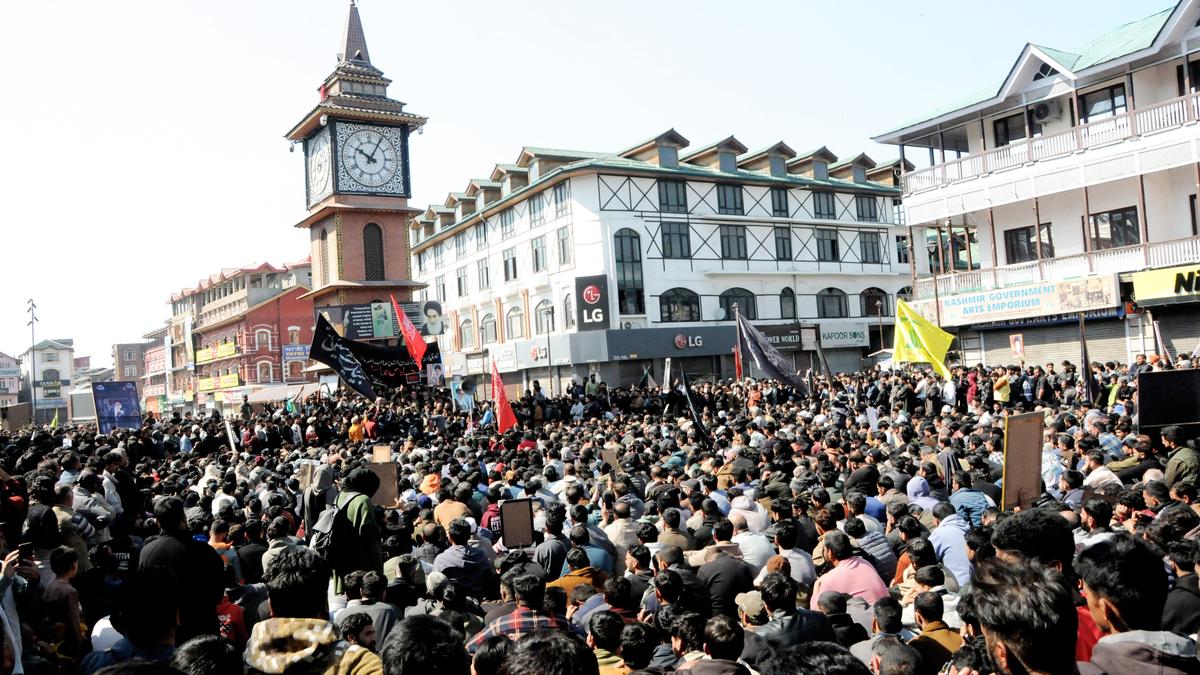
Mon Mar 02 04:55:20 UTC 2026: ### Headline: Kashmir Gripped by Protests and Restrictions Following Khamenei’s Killing
The Story:
Following the death of Iran’s Supreme Leader, Ayatollah Ali Khamenei, in a joint U.S.-Israeli airstrike on February 28, 2026, parts of Kashmir witnessed massive street protests on March 1, 2026. Authorities imposed severe restrictions on movement in response, sealing off areas like Lal Chowk in Srinagar and deploying significant security forces to prevent further gatherings. The protests, largely led by Shia Muslims, involved anti-U.S. and anti-Israel slogans, reflecting widespread mourning and anger over Khamenei’s death.
Key Points:
- Ayatollah Ali Khamenei was killed in a joint U.S.-Israeli airstrike in Tehran on February 28, 2026.
- Protests erupted across Kashmir, particularly in Shia-dominated areas like Lal Chowk, Saida Kadal, Budgam, Bandipora, Anantnag, and Pulwama.
- Authorities imposed restrictions on movement and sealed off areas to prevent further protests on March 2, 2026.
- Mutahida Majlis-e-Ulama (MMU) chairman Mirwaiz Umar Farooq called for a one-day strike, supported by political parties like PDP president Mehbooba Mufti.
- Educational institutions were closed for two days as a precautionary measure.
Key Takeaways:
- The death of Ayatollah Khamenei has triggered significant unrest among Shia Muslims in Kashmir.
- The swift response by authorities indicates a concern over maintaining law and order in the region.
- Political factions in Kashmir are leveraging the situation to express solidarity and dissent.
- The event underscores the sensitivity of the region to international events, particularly those involving Iran and the U.S./Israel.
Impact Analysis:
The protests and subsequent restrictions highlight the potential for international events to destabilize already volatile regions like Kashmir. The strong reaction to Khamenei’s death suggests deep-seated religious and political affiliations that transcend national borders. This incident may have lasting implications for regional stability, potentially fueling further anti-U.S. and anti-Israel sentiment and influencing future political dynamics within Kashmir. The government’s response will likely be scrutinized, as it balances security concerns with the need to respect freedom of expression. This event could also exacerbate existing tensions between Shia and Sunni communities, as well as between those who support and oppose Indian rule.
 First Piper