
Mon Mar 02 03:17:41 UTC 2026: # India Advances Space Re-entry Technology with Gaganyaan Mission Preparations
The Story:
An article published in The Hindu on March 2, 2026, details the complexities and challenges of space capsule re-entry, focusing on the technology and procedures necessary for a safe return to Earth. The article highlights India’s progress in this domain, particularly in preparation for the Gaganyaan mission, which aims to send Indian astronauts into space. It explains the science behind re-entry, including heat dissipation, trajectory control, communication blackout management, and parachute deployment.
Key Points:
- Re-entry involves converting kinetic energy into heat, necessitating robust thermal protection systems.
- The “blunt body theory” is crucial for deflecting heat away from the capsule during re-entry.
- A precise re-entry corridor is essential to avoid bouncing off the atmosphere or burning up.
- Semi-ballistic re-entry allows for controlled maneuvers and targeted landing.
- Communication blackout during re-entry is managed through orbital relay networks.
- ISRO’s past missions, such as the 2007 Space Capsule Recovery Experiment (SRE) and the 2014 Crew Module Atmospheric Re-entry Experiment (CARE), have been instrumental in developing re-entry capabilities.
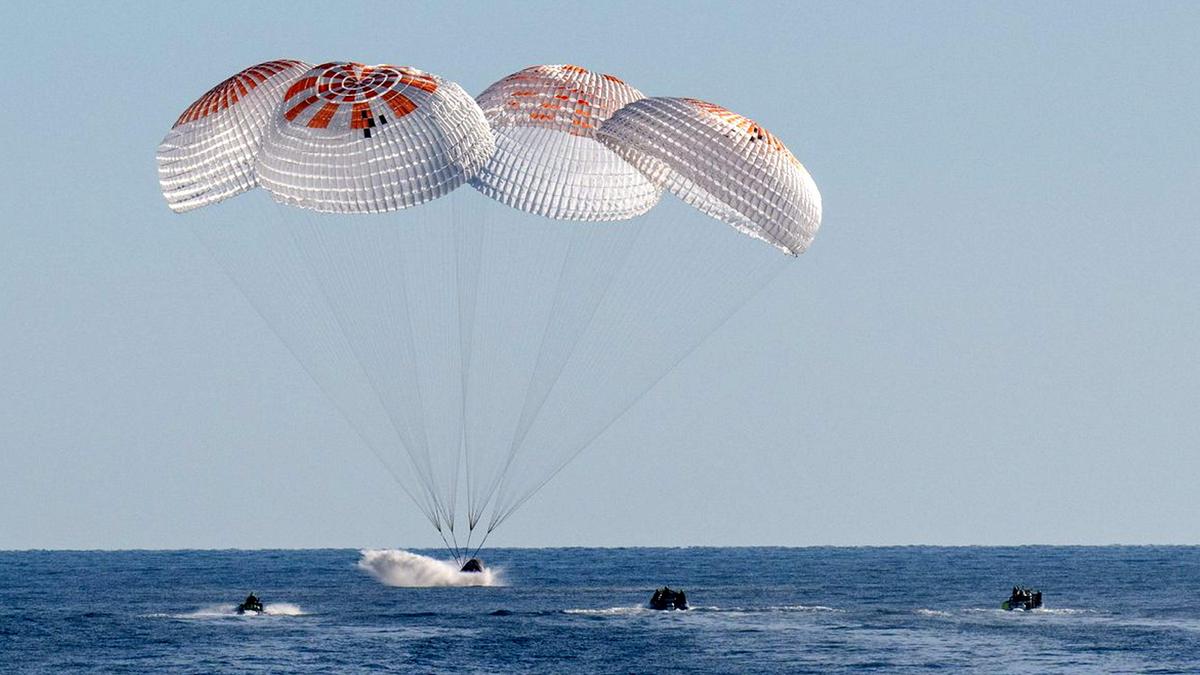
- The Gaganyaan crew module (CM) will use thrusters for controlled maneuvers and a three-stage parachute system for a splashdown in the Bay of Bengal.
Key Takeaways:
- Safe space capsule re-entry requires mastery of complex physics and engineering.
- India has made significant strides in re-entry technology, positioning it as a key player in space exploration.
- The Gaganyaan mission represents a major milestone for India’s space program and demonstrates its ability to undertake human spaceflight.
- Understanding and mitigating the challenges of re-entry are crucial for the success of future space missions.
 First Piper