
Sun Mar 01 04:48:44 UTC 2026: ### Headline: UN Chief Condemns US-Israeli Airstrikes on Iran, Warns of Wider Conflict
The Story:
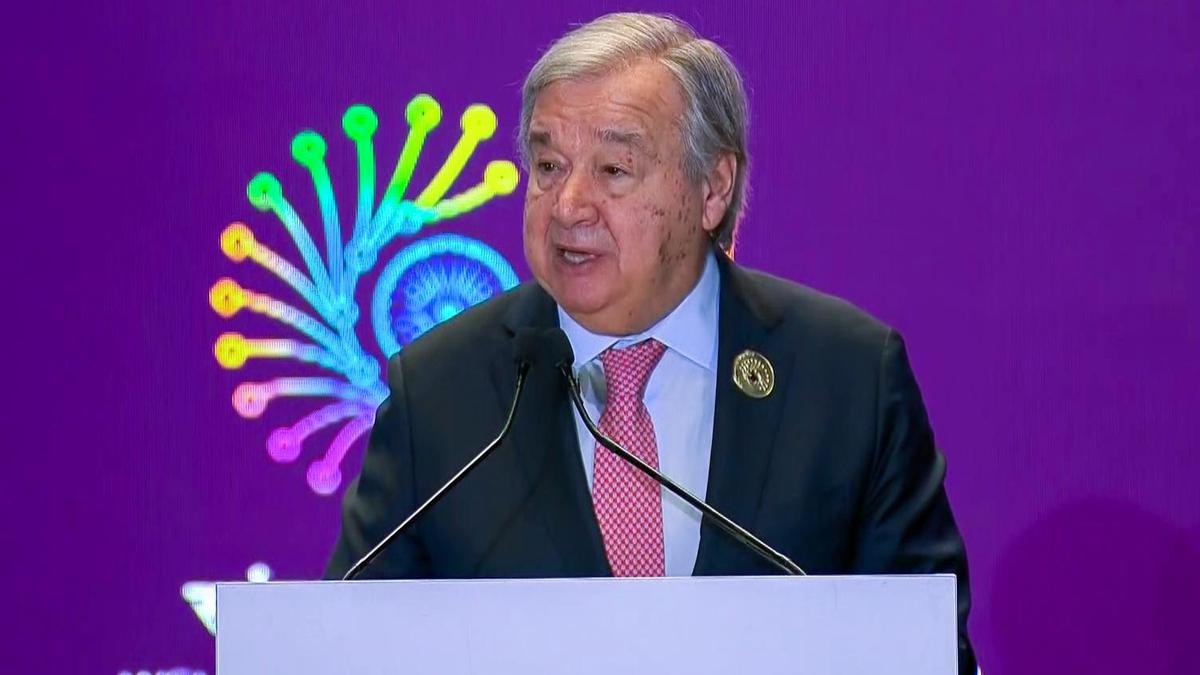
United Nations Secretary-General António Guterres condemned the joint U.S.-Israeli airstrikes on Iran on Saturday, February 28, 2026, and called for an immediate return to negotiations. Addressing an emergency session of the UN Security Council, Guterres warned that the strikes violated international law and risked escalating into a broader conflict. The U.S. and Israel defended their actions as necessary to prevent Iran from acquiring nuclear weapons, while Iran decried the attacks as a war crime and criticized the UN’s inaction.
The emergency meeting, convened at the request of five Security Council members, highlighted deep divisions within the international community. While Russia strongly condemned the airstrikes, China offered more measured criticism. European powers, including Britain, France, and Germany, focused their condemnation on Iran’s regional actions and urged a return to negotiations on its nuclear program, conspicuously omitting condemnation of the US-Israeli strikes.
Key Points:
- António Guterres condemned U.S.-Israeli airstrikes on Iran, citing violations of international law.
- The U.S. defended the strikes as necessary to prevent Iran from developing nuclear weapons.
- Israel claimed the strikes were to stop an “existential threat” from Iran.
- Iran denounced the attacks as a “war crime” and criticized the UN Security Council for inaction.
- Ayatollah Ali Khamenei was reportedly killed in the strikes.
- Russia condemned the airstrikes, while China expressed concern over escalating tensions.
- Britain, France, and Germany condemned Iranian airstrikes, urging a return to nuclear negotiations.
Critical Analysis:
The context reveals a pattern of escalating tensions. The appointment of Brigadier General Ahmad Vahidi as the new IRGC Commander-in-Chief suggests a hardening of Iran’s military posture. Coupled with the U.S. Pentagon’s decision to restrict officer training at elite universities, this suggests a growing ideological divide within the U.S. military establishment. The U.S. and Israel likely timed their airstrikes, anticipating a more aggressive response from Iran under its new military leadership.
Key Takeaways:
- The U.S.-Israeli airstrikes have significantly heightened tensions in the Middle East.
- The reported death of Ayatollah Ali Khamenei creates a power vacuum in Iran and increases the risk of instability.
- International consensus on addressing the Iranian nuclear issue is fracturing, with major powers divided in their responses.
- The UN’s ability to mediate the conflict is being questioned, given Iran’s criticisms and the Security Council’s divisions.
- The appointment of a hardliner as IRGC chief potentially signals a less compromising stance from Iran.
Impact Analysis:
The current crisis could have long-term implications for regional and global security. The potential for a wider conflict involving multiple actors is real. The failure of diplomacy could lead to a protracted period of instability, increased military spending, and a renewed arms race in the Middle East. Furthermore, the breakdown of the 2015 nuclear deal and the assassination of a key Iranian leader undermine international efforts to prevent nuclear proliferation and could embolden other states to pursue nuclear weapons. The event series may also drive a wedge between the US and its traditional European allies, who are attempting to salvage a diplomatic resolution.
 First Piper