
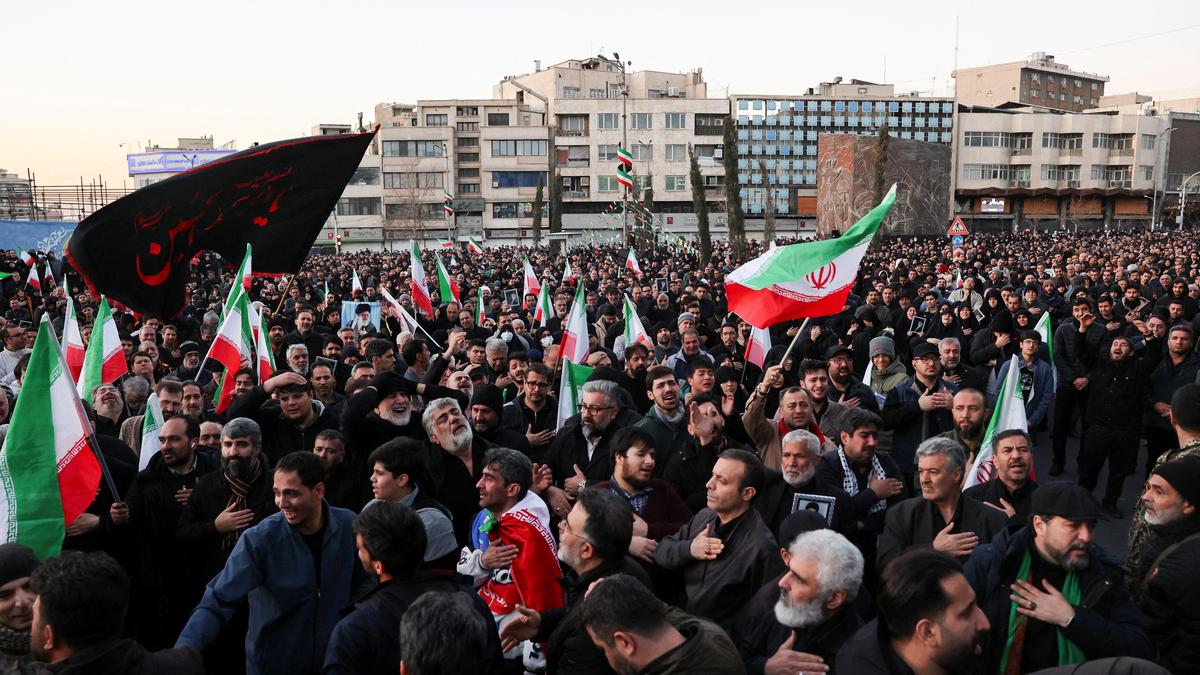
Sun Mar 01 04:03:51 UTC 2026: ### Headline: Iran’s Supreme Leader Khamenei Killed in Strikes, Succession Uncertainty Looms
The Story:
Iran’s Supreme Leader Ayatollah Ali Khamenei has been killed in Israeli and U.S. strikes in Tehran on March 1, 2026. His death raises critical questions about the future leadership of Iran. While the Assembly of Experts, an 88-member panel of Shia clerics, is tasked with selecting a successor, the process is complex and shrouded in secrecy. A leadership council consisting of the current president, judiciary chief, and a member of the Guardian Council can temporarily assume leadership duties.
The death of Khamenei follows a 12-day war between Iran and Israel in June 2025, adding to the instability of the region. The succession process is further complicated by the previous death of potential successor President Ebrahim Raisi in May 2024. The absence of a clear successor raises the possibility of internal power struggles and could significantly impact Iran’s domestic and foreign policies.
Key Points:
- Ayatollah Ali Khamenei was killed in Israeli and U.S. strikes in Tehran on March 1, 2026.
- The Assembly of Experts, an 88-member panel, is responsible for selecting a new Supreme Leader.
- A leadership council, composed of the president, judiciary chief, and a Guardian Council member, can temporarily assume leadership.
- Potential successor Ebrahim Raisi died in a helicopter crash in May 2024.
- Khamenei’s son, Mojtaba, is a potential candidate, but his appointment could spark internal dissent.
- The Supreme Leader holds immense power, including command over the military and the Revolutionary Guard.
- This transition comes after the June 2025 war between Iran and Israel.
Critical Analysis:
The timing of Khamenei’s death, following the June 2025 war with Israel, suggests a strategic escalation in the ongoing conflict. The strikes, attributed to both Israel and the U.S., indicate a coordinated effort to destabilize the Iranian regime at a critical juncture. The death of Raisi in May 2024 cleared the path for Khamenei’s son as a potential successor. The article highlights the potential for internal strife, particularly if Mojtaba is seen as inheriting the position, mirroring the dynastic rule of the pre-revolutionary Shah. The combination of external pressure and internal uncertainty creates a volatile situation with potentially far-reaching consequences for the region.
Key Takeaways:
- Khamenei’s death has created a power vacuum in Iran.
- The succession process is complex and could lead to internal power struggles.
- The strikes signify an escalation in the conflict between Iran, Israel, and the U.S.
- The future of the Revolutionary Guard and its “Axis of Resistance” is uncertain.
- Regional stability is significantly threatened.
Impact Analysis:
The death of Ayatollah Ali Khamenei and the subsequent succession process will have profound and long-term impacts. Domestically, the selection of a new Supreme Leader will shape Iran’s political and social landscape for decades. A hardline successor could lead to increased repression and isolation, while a more moderate figure might open the door to reform. Regionally, the power vacuum could embolden Iran’s rivals and destabilize the Middle East, especially given the existing tensions with Israel. The future of the Iran nuclear deal and the activities of the Revolutionary Guard are also in question. Globally, the event could trigger shifts in alliances and potentially lead to increased military intervention in the region. The next few months will be critical in determining the trajectory of Iran and its role in the world
 First Piper