
Thu Feb 26 11:54:35 UTC 2026: # Varanasi’s “Masan Holi” Faces Opposition Amidst Claims of Disrespect and Scriptural Deviance
The Story:
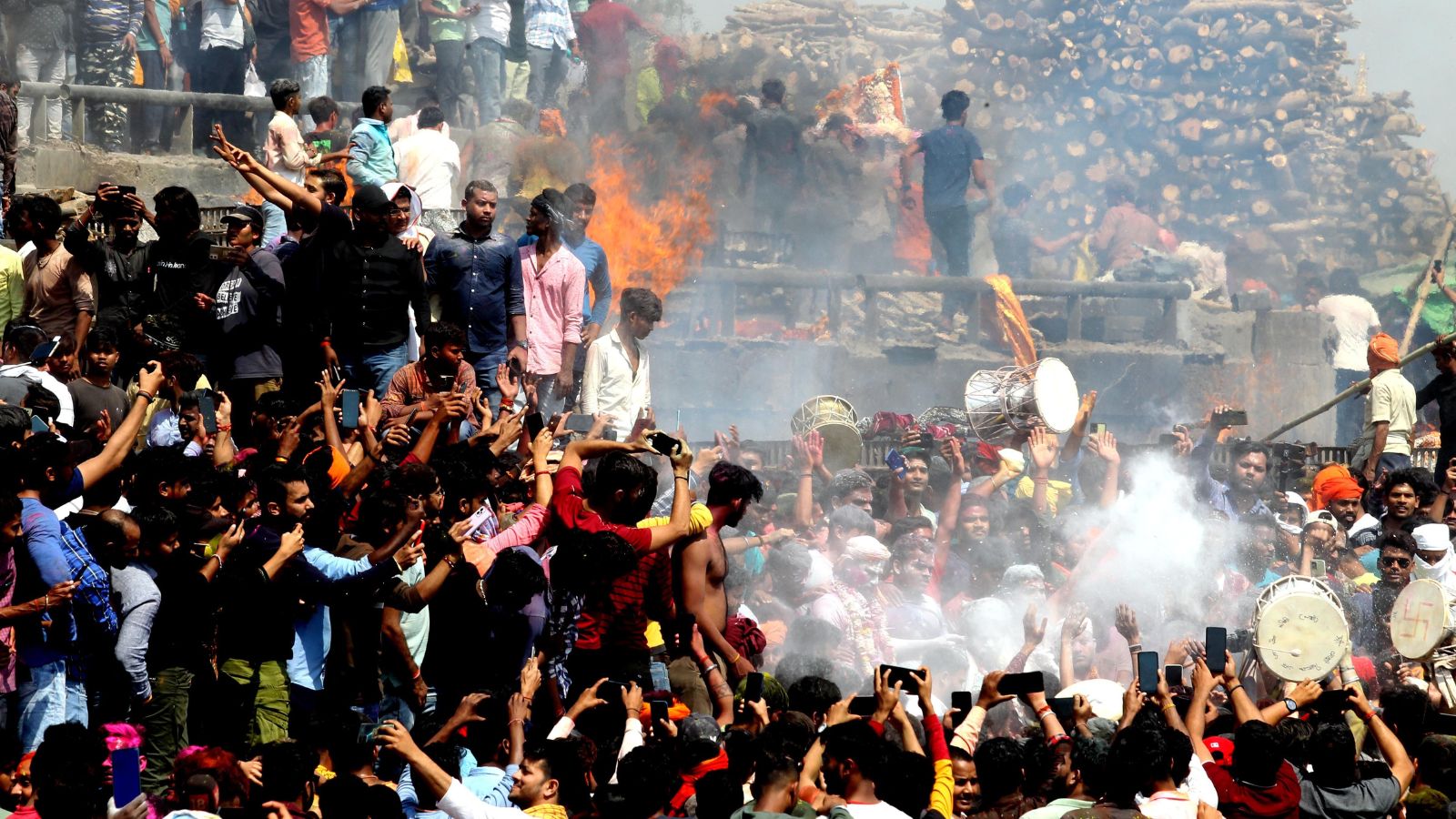
A unique Holi tradition in Varanasi, known as “Masan Holi,” where ashes from funeral pyres at Manikarnika Ghat are used in the celebration, is facing opposition. Descendants of the Dom Raja, the Kashi Vidvat Parishad, and other members of the Dom community are protesting the event, scheduled for Saturday, February 28, claiming it is a recent development not sanctioned by scriptures and causes distress to grieving families. Organizers, however, maintain that the practice is centuries old and a vital part of local tradition.
Key Points:
- “Masan Holi” at Manikarnika Ghat involves using ashes from funeral pyres for Holi celebrations.
- Opposition is led by Vishwanath Chaudhary, a descendant of the Dom Raja, and the Kashi Vidvat Parishad.
- Critics argue the event disrupts funeral rites, causes hardship to mourners, involves alcohol consumption, and violates the sanctity of the cremation ground.
- Ram Narayan Dwivedi, secretary of the Parishad, stated that the scriptures do not mention “Mashaan Holi.”
- Gulshan Kapoor, an organizer, claims the event is an ancient tradition and objections are for publicity.
- Organizers expect a large turnout, similar to last year’s estimated 400,000 attendees.
- The celebration is slated to begin at noon with rituals at the Baba Mashan Nath Temple, followed by celebrations outside.
Key Takeaways:
- The conflict highlights the tension between evolving cultural practices and traditional religious norms in India.
- The dispute over the historicity of “Masan Holi” demonstrates the contested nature of tradition and its interpretation.
- The event underscores the challenges of balancing religious expression with respect for grieving families and the sanctity of sacred spaces.
- The rise of social media plays a role in popularizing the event and amplifying both support and opposition.
- The involvement of multiple stakeholders (Dom community, religious scholars, event organizers, local authorities) indicates the complexity of resolving the issue.
 First Piper