
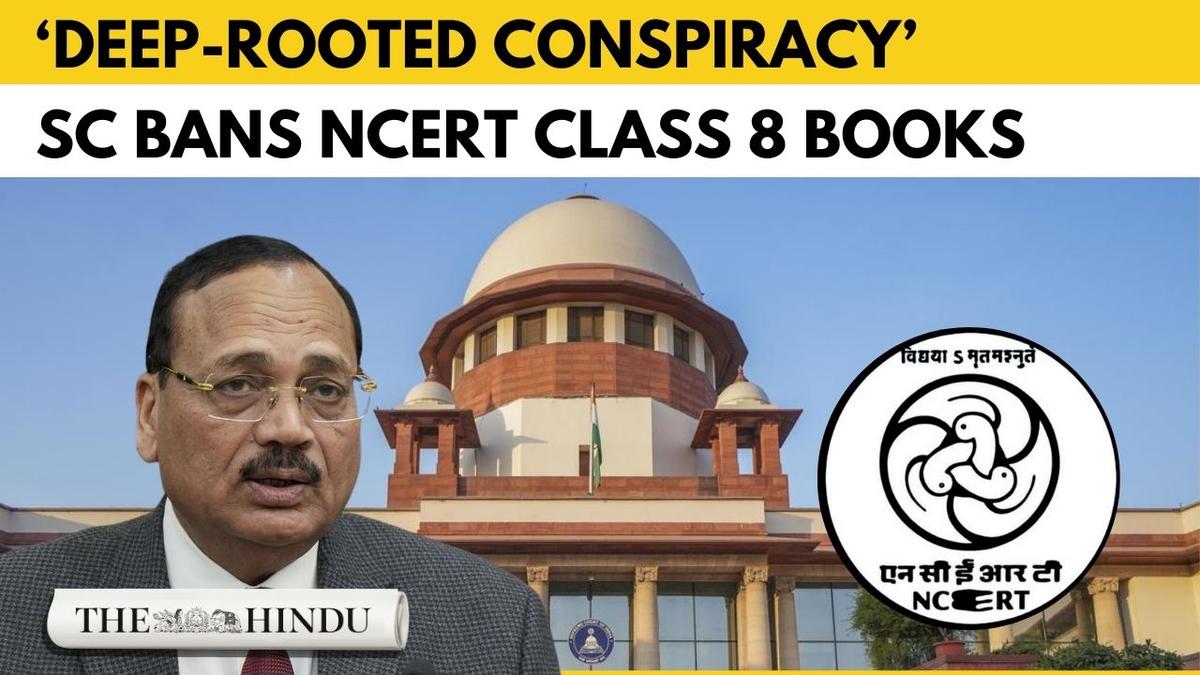
Thu Feb 26 12:05:38 UTC 2026: ### Headline: Supreme Court Bans Controversial Textbook Chapter on Corruption
The Story
The Supreme Court of India, acting on its own accord (suo motu), has issued a complete ban on the reprinting and digital distribution of a Class 8 Social Science textbook containing controversial references to “corruption.” The order, delivered on February 26, 2026, demands the immediate seizure of all existing copies of the textbook. The Court has warned of contempt of court proceedings for any violations of the ban.
Key Points
- The Supreme Court took suo motu cognisance of the textbook content.
- The textbook in question is a Class 8 Social Science textbook.
- The controversial content pertains to references to “corruption.”
- The ban includes both reprinting and digital circulation.
- The order mandates immediate seizure of existing copies.
- Violations of the order will be considered contempt of court.
Critical Analysis
The Supreme Court’s swift and decisive action, taking suo motu cognisance, suggests the content was deemed to be of an exceptionally sensitive or damaging nature. The mention of “corruption” within the context of the judiciary, as suggested by the related historical context (“Supreme Court bans NCERT textbook with chapter on ‘corruption in judiciary’”), likely triggered the immediate ban to protect the judiciary’s reputation and prevent potential misinformation among young students. The timing, amidst other sensitive news like the Kerala Story 2 ban and discussions about government accountability, indicates a heightened sensitivity to content that could incite public distrust in institutions.
Key Takeaways
- The Indian judiciary is highly protective of its image and reputation.
- The Supreme Court is willing to exercise its suo motu powers to address issues it deems critical.
- The government and judiciary are sensitive to content that could potentially undermine public trust in institutions.
- Education materials are under increased scrutiny, particularly regarding politically sensitive topics.
- Freedom of expression, particularly in educational materials, is being carefully balanced against the need to maintain public order and confidence in institutions.
Impact Analysis
This event is significant because it sets a precedent for the Supreme Court’s intervention in educational content. This could lead to increased self-censorship among publishers and educators, fearing legal repercussions. It may also spark a broader debate about academic freedom and the role of the judiciary in shaping educational narratives. In the long term, this incident could lead to more stringent vetting processes for educational materials and potentially affect how sensitive social and political issues are taught in schools.
 First Piper