
Wed Feb 25 13:49:39 UTC 2026: ### Rajkot Authorities Demolish Over 1,400 Illegal Structures Citing Flood Risk
The Story:
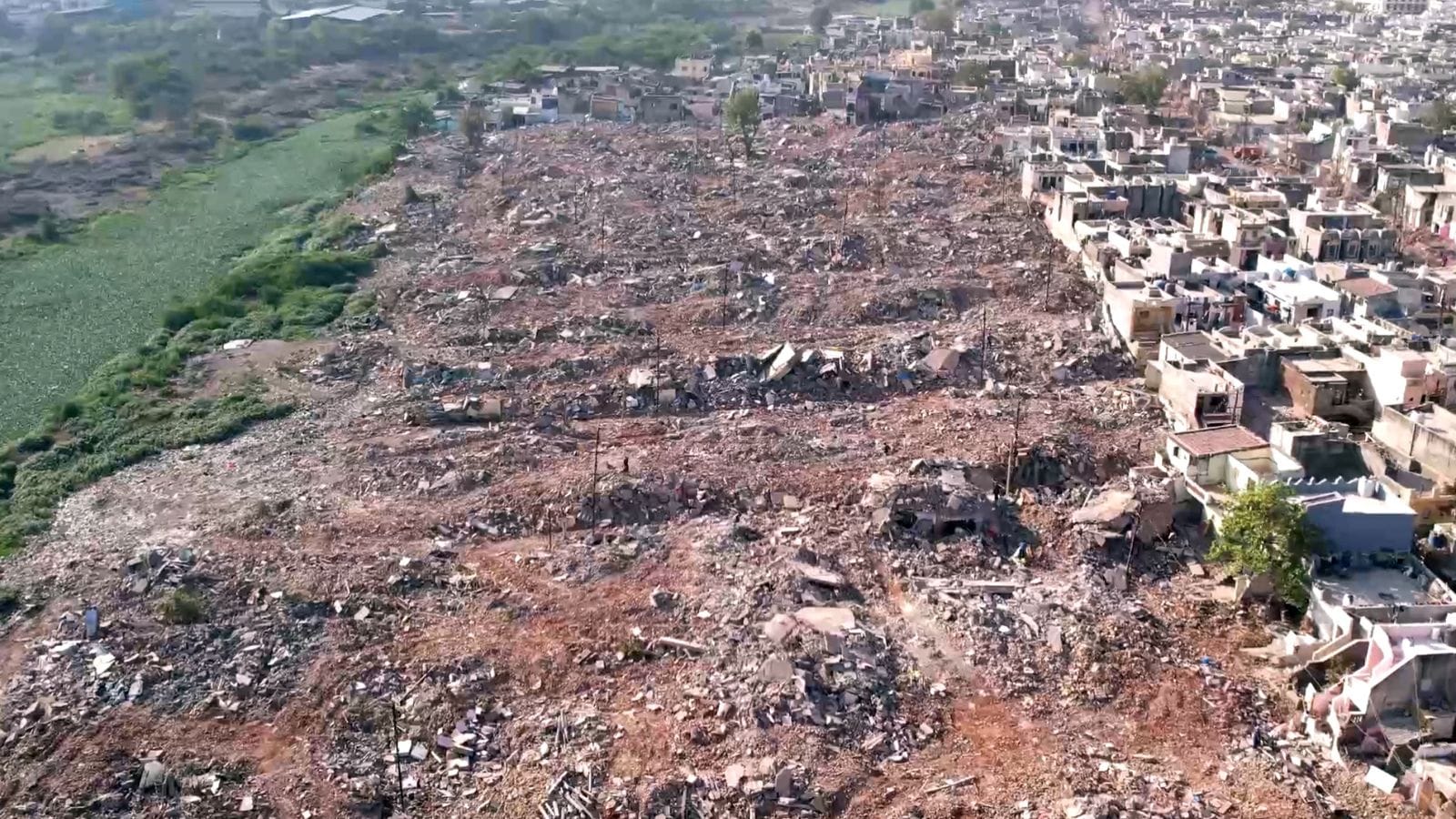
The Rajkot Municipal Corporation (RMC) completed the demolition of 1,489 illegally constructed properties in the Jangleshwar area (Ward No. 16) on Wednesday. The demolition targeted structures encroaching on the Aji riverbed and a Town Planning (TP) road. Municipal Commissioner Tushar Sumera stated that the encroachments obstructed the flow of the Aji and Khokhaddad rivers, exacerbating flooding and hindering emergency response efforts. Notices were served under section-260(1) of the GPMC Act, followed by demolition orders under section-260(2) after residents failed to comply.
The RMC cleared 33,750 square meters of land on the TP Road and 55,000 square meters on the Aji riverbed, totaling approximately 88,750 square meters, valued at about Rs 350 crore. A significant deployment of personnel, including 1,512 officials and 2,900 police personnel, was involved in the operation.
Key Points:
- 1,489 illegal properties demolished in Rajkot’s Jangleshwar area.
- Demolition targeted encroachments on the Aji riverbed and TP road.
- RMC cited flood risk as the primary justification.
- 88,750 square meters of land cleared, valued at approximately Rs 350 crore.
- Significant personnel deployment: 1,512 RMC officials and 2,900 police personnel.
- Notices were served under the GPMC Act before demolition.
Critical Analysis:
The related historical context shows an unrelated news item “UCCRI(ML) condemns demolition of houses in Bhoodan lands in Khammam”. This context reveals that demolitions of houses are a recurring issue in the region, sometimes leading to condemnation and possibly protests. The RMC’s action, while justified on grounds of public safety (flood control), could still face resistance or criticism, depending on the affected residents’ perspectives and potential claims of unfair treatment or inadequate resettlement provisions.
Key Takeaways:
- Urban planning and encroachment remain significant challenges for Indian cities.
- Authorities are increasingly taking decisive action against illegal constructions, particularly those obstructing infrastructure or posing safety risks.
- The scale of these operations highlights the extent of illegal construction in certain areas and the resources required to address it.
- While justified on paper, such actions inevitably displace residents and raise questions about fairness and due process.
- The potential for social unrest or legal challenges exists, depending on how the authorities manage the aftermath and address the needs of those displaced.
Impact Analysis:
The demolition serves as a precedent for other municipalities facing similar challenges with illegal construction and flood management. The action demonstrates a commitment to enforcing urban planning regulations and prioritizing public safety. However, the long-term impact will depend on how the RMC uses the cleared land and whether it provides adequate resettlement assistance to those displaced. Failure to address these issues could lead to future conflicts and undermine public trust. The cleared land can be used to develop infrastructure that will mitigate flooding, which can have a long-term positive impact on the region.
 First Piper