
Thu Feb 26 01:01:15 UTC 2026: # India Deepens Ties with Israel Amid Domestic Controversies
The Story:
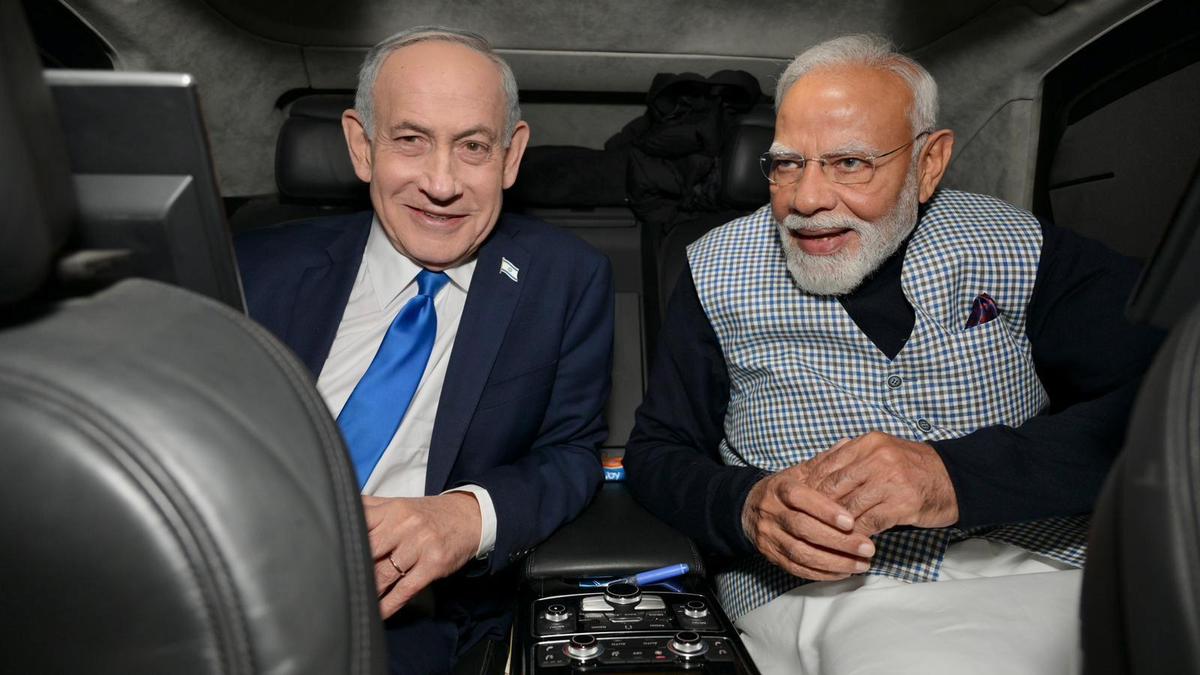
On February 25, 2026, Prime Minister Narendra Modi addressed the Israeli Parliament, the Knesset, reaffirming India’s support for Israel and condemning the October 7 Hamas attack. He also voiced support for the Gaza Peace Initiative. Simultaneously, within India, the Supreme Court took suo motu cognizance of a controversial “corruption” section in an NCERT textbook, leading to the NCERT issuing an apology and halting distribution. Other news includes the reconstitution of a committee to investigate a High Court Justice, bail granted in a demolition violence case, a horrific murder in Delhi, and criticism from Rahul Gandhi regarding Modi’s visit to Israel.
Key Points:
- Prime Minister Narendra Modi expressed strong support for Israel in an address to the Knesset, condemning the October 7 Hamas attack.
- Modi endorsed the Gaza Peace Initiative.
- The Supreme Court of India initiated a suo motu case regarding a “corruption” section in an NCERT Class 8 textbook, resulting in the NCERT apologizing and halting distribution.
- A committee was reconstituted to probe the removal of Justice Yashwant Varma.
- Bail was granted to six individuals arrested in connection with violence during a demolition exercise near a mosque in Delhi.
- A man allegedly murdered his wife and three daughters in Delhi.
- Rahul Gandhi criticized Modi’s visit to Israel and a trade deal with the U.S.
- Duties of 126% were imposed on imports of solar cells from India by the Trump administration.
- Yes Bank reported fraudulent transactions worth $0.28 million using its Multi-Currency Prepaid Forex Cards.
- Donald Trump and Volodymyr Zelenskyy spoke ahead of talks on ending Russia’s invasion of Ukraine.
- An Iranian delegation arrived in Geneva for talks with the U.S.
- A federal judge ruled against the Trump administration’s policy of deporting immigrants to “third countries”.
Critical Analysis:
The events of February 25, 2026, paint a picture of India actively engaging on the international stage, particularly solidifying its relationship with Israel, while simultaneously grappling with various domestic issues ranging from judicial scrutiny to violent crime and political opposition. The timing of Modi’s visit coinciding with domestic controversies could be interpreted as a strategic move to showcase leadership on a global platform amidst challenges at home. Rahul Gandhi’s criticism also indicates a heightened political battle surrounding India’s foreign policy direction, particularly concerning the U.S. and Israel.
Key Takeaways:
- India’s foreign policy is increasingly focused on strengthening ties with key allies like Israel, even amidst regional conflicts.
- Domestic institutions like the Supreme Court are actively overseeing educational content, indicating a focus on shaping national narratives.
- Political opposition is leveraging foreign policy decisions to criticize the ruling government.
- Trade relations with the U.S. remain a contentious issue, particularly under the Trump administration.
Impact Analysis:
The deepening relationship between India and Israel has long-term implications for regional dynamics in the Middle East, potentially influencing peace processes and strategic alliances. The domestic controversies, particularly the NCERT textbook issue and the investigation into Justice Varma, could lead to significant reforms in the education system and the judiciary, respectively. The political opposition’s focus on foreign policy could shape future election campaigns and influence India’s international standing. The trade disputes with the U.S. could impact India’s economic growth and its participation in global trade agreements.
 First Piper