
Thu Feb 26 03:04:59 UTC 2026: ### Economic Scars of War: Russia and Ukraine Four Years On
The Story:
Four years after Russia’s invasion of Ukraine on February 24, 2022, both nations are grappling with severe economic consequences. A joint report estimates Ukraine’s post-war reconstruction costs at $558 billion over the next decade, nearly three times its 2025 GDP. Russia, facing sanctions, experiences sluggish economic growth. Both countries suffer from high inflation and decreased social spending as defense budgets balloon. The human cost is staggering, with estimates of over 1.2 million Russian and 500,000-600,000 Ukrainian casualties between February 2022 and December 2025.
Key Points:
- Ukraine requires an estimated $558 billion for post-war reconstruction.
- Russia’s economy grew by less than 1% last year and is projected to grow another 1% in 2026.
- Ukraine’s GDP contracted by almost 30% in 2022, with a projected recovery to 4.5% in 2026.
- Inflation surged in both countries in 2022, remaining persistently high. Russia saw inflation at 14% in 2022, moderating to 5% in 2023 but rising to 9% last year.
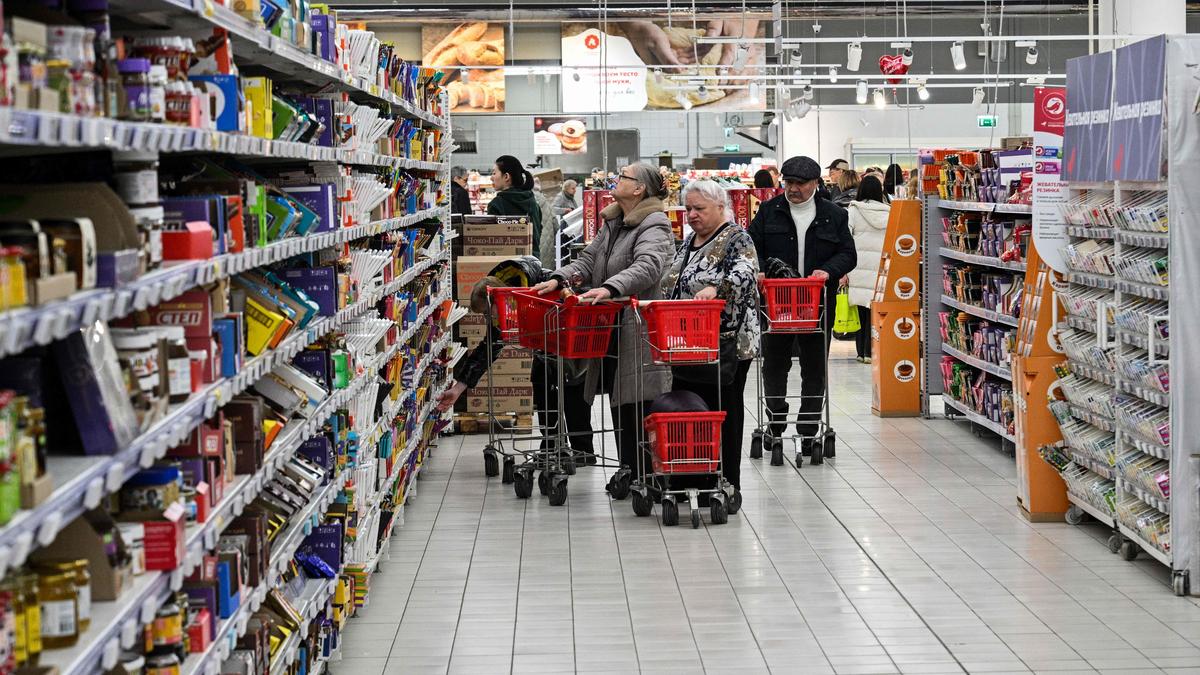
- Food prices have risen substantially. In Russia, bread prices are up 13% this month compared to a year ago and over 50% compared to five years ago. Rice prices are up 40% compared to 2022.
- Defense spending in Ukraine has consistently accounted for over half of the country’s spending since 2022, reaching 26% of GDP by 2025.
- Ukraine’s gross government debt accounted for over 109% of the country’s GDP in 2025.
- Russia’s military spending accounts for almost 30% of total expenditure, with potential underreporting due to classification under other categories.
- Estimated casualties between February 2022 and December 2025: 1.2 million in Russia and 500,000-600,000 in Ukraine.
Critical Analysis:
The article highlights the devastating economic repercussions of prolonged conflict. The massive reconstruction costs for Ukraine underscore the scale of destruction. Russia’s economic stagnation, despite its size, demonstrates the power of international sanctions. The persistent inflation and rising food prices in both countries reveal the direct impact on ordinary citizens. The shift in budgetary priorities toward defense, at the expense of social programs, reflects the difficult choices governments make during wartime.
Key Takeaways:
- The Russia-Ukraine war has had a significant and lasting negative impact on both economies.
- The cost of reconstruction in Ukraine is immense, requiring substantial international assistance.
- Sanctions have effectively constrained Russia’s economic growth, though their long-term impact remains to be seen.
- The war has led to increased hardship for citizens in both countries, with rising inflation and decreased social spending.
- Casualty figures underscore the immense human cost of the conflict.
Impact Analysis:
The long-term impact of the war will likely include:
- Protracted economic instability in both Russia and Ukraine.
- A reshaping of geopolitical alliances and trade relationships.
- Increased global food insecurity due to disruptions in agricultural production and supply chains.
- A potential increase in migration
 First Piper