
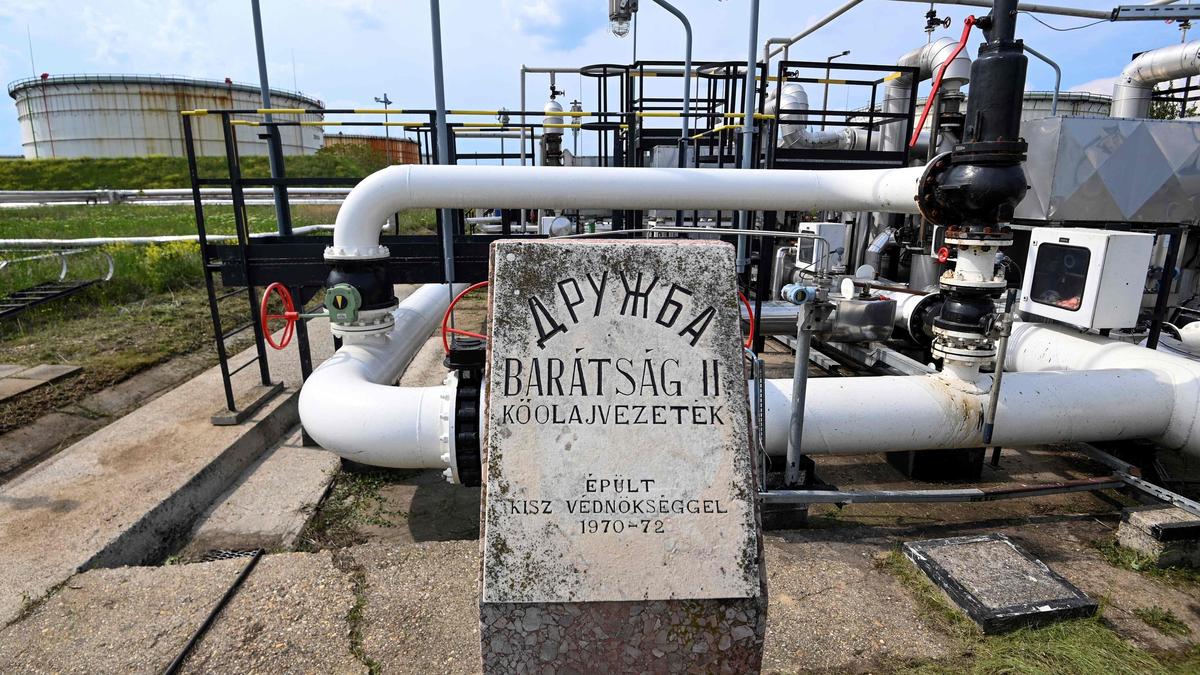
Thu Feb 26 10:36:17 UTC 2026: Headline: Hungary and Slovakia Resist EU Pressure, Maintain Reliance on Russian Oil Amidst Pipeline Dispute
The Story:
Ukraine faces renewed pressure from Hungary and Slovakia over disruptions to the Druzhba pipeline, a critical conduit for Russian oil to Eastern and Central Europe. The pipeline’s flows were halted last month, with Ukraine citing damage from a Russian drone attack. However, Hungary and Slovakia allege deliberate delays by Ukraine for political reasons. This dispute highlights the ongoing struggle within the EU to reduce dependence on Russian energy, particularly as Hungary and Slovakia remain heavily reliant on Russian oil, despite EU efforts and alternative options.
Key Points:
- The Druzhba pipeline, crucial for supplying Russian oil to Eastern and Central Europe, has been halted, sparking tensions between Ukraine, Hungary, and Slovakia.
- Hungary and Slovakia claim Ukraine is deliberately delaying the resumption of oil flows for political reasons, a claim Ukraine denies.
- Despite EU efforts to reduce reliance on Russian energy following the 2022 Versailles Declaration and the REPowerEU plan, Hungary and Slovakia still heavily depend on Russian oil.
- Hungary and Slovakia received temporary exemptions from the EU to continue importing Russian oil, but a recent report by the Centre for the Study of Democracy (CSD) suggests Hungary’s reliance is a political choice, not a necessity.
- In 2024, Russian crude accounted for 87% of Hungary and Slovakia’s crude oil imports, significantly higher than pre-war levels.
- Alternative pipelines, like the Adria pipeline, and the potential revival of the Odesa-Brody pipeline offer viable non-Russian crude oil sources.
- Hungarian PM Viktor Orban has repeatedly emphasized the importance of Russian energy supplies for Hungary’s energy security.
- Slovakia’s Prime Minister Robert Fico has halted military aid to Ukraine and advocated for the EU to become a peacemaker rather than an arms supplier.
- The EU has made progress in reducing its dependence on Russian gas, oil, and coal imports, with alternative suppliers like the U.S. and Norway increasing their shares.
Key Takeaways:
- The Druzhba pipeline dispute reveals the complex political and economic challenges in the EU’s effort to achieve energy independence from Russia.
- Hungary and Slovakia’s continued reliance on Russian oil is driven by a combination of political alignment with Russia and perceived economic benefits, despite available alternatives.
- The situation underscores the limitations of EU energy policies when individual member states prioritize national interests and maintain close ties with Russia.
- The dispute highlights the ongoing tensions within the EU regarding the approach to the conflict in Ukraine and the role of Russian energy supplies.
- EU efforts to diversify energy sources have been successful in some areas, but significant loopholes and political resistance remain, hindering full energy independence.
 First Piper