
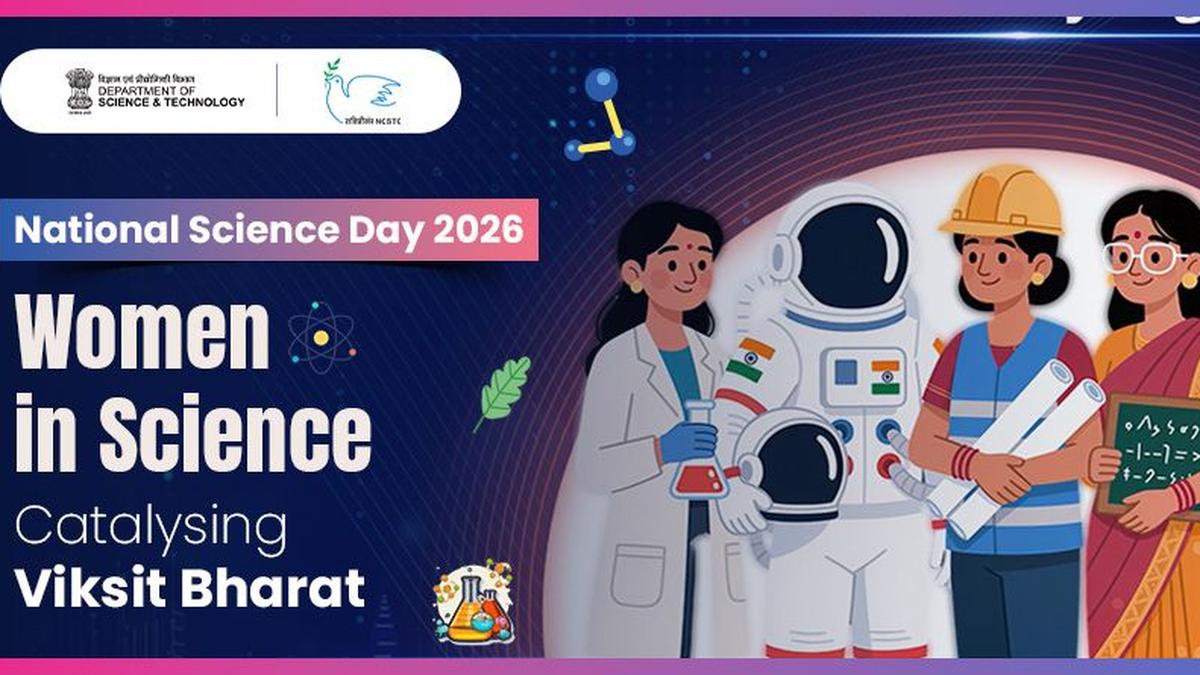
Thu Feb 26 09:14:13 UTC 2026: ### Rethinking National Science Day: A Call for Decolonization and Broader Recognition
The Story:
An article published in The Hindu on February 26, 2026, advocates for a re-evaluation of India’s National Science Day, celebrated annually on February 28. The article argues that the current celebration, commemorating C.V. Raman’s discovery of the Raman effect and subsequent Nobel Prize, perpetuates a narrow, externally validated, and elitist view of science. It calls for a “de-Nobelised” and decolonized understanding of science that recognizes the contributions of technicians, field staff, nurses, lab attendants, data collectors, and other often-overlooked individuals, as well as local and indigenous forms of knowledge. The article draws upon insights from the book Decolonial Keywords to analyze how terms like “jugaad,” “poromboke,” and “laboratory” reveal the political and social biases embedded within the scientific establishment.
Key Points:
- National Science Day currently reinforces a state-sanctioned definition of science that prioritizes “world-class discoveries” and external validation (e.g., the Nobel Prize).
- The article critiques the tendency to valorize “jugaad” as frugal innovation while ignoring its broader implications and the inventiveness of farmers, fishers, and craftspeople.
- The concept of “poromboke” (wasteland) is used to illustrate how state classifications can devalue landscapes and, consequently, the livelihoods of marginalized communities dependent on them.
- The analysis of “laboratory” highlights the disparity between elite “mega labs” and the ubiquitous “minor labs” where most Indians encounter scientific authority, arguing that the latter are often conceptually marginalized.
- The author advocates for National Science Day to become an annual forum for discussing what truly counts as science, expanding recognition to all contributors and forms of knowledge production.
Key Takeaways:
- India’s understanding and celebration of science are shaped by historical and political forces that privilege certain forms of knowledge and actors over others.
- Decolonizing science in India requires challenging the dominance of external validation and expanding the definition of scientific contribution to include a wider range of individuals and practices.
- Language and classification play a crucial role in shaping perceptions of scientific value and legitimacy.
- Rethinking National Science Day presents an opportunity to promote a more inclusive and equitable understanding of science in India.
Impact Analysis:
The call for a re-evaluation of National Science Day has the potential to reshape science education, funding priorities, and public perception of scientific achievement in India. By advocating for the recognition of diverse forms of knowledge and the contributions of often-overlooked individuals, this movement could lead to a more inclusive and equitable scientific landscape. The long-term impact could include increased participation in science from marginalized communities, a greater focus on addressing local challenges through locally-developed solutions, and a more nuanced understanding of the role of science in society. The success of this movement will depend on its ability to influence policy decisions, educational curricula, and public discourse surrounding science and technology in India.
 First Piper