
Wed Feb 25 08:53:23 UTC 2026: # US and South Korea to Conduct Freedom Shield Exercises Amidst North Korean Tensions
The Story:
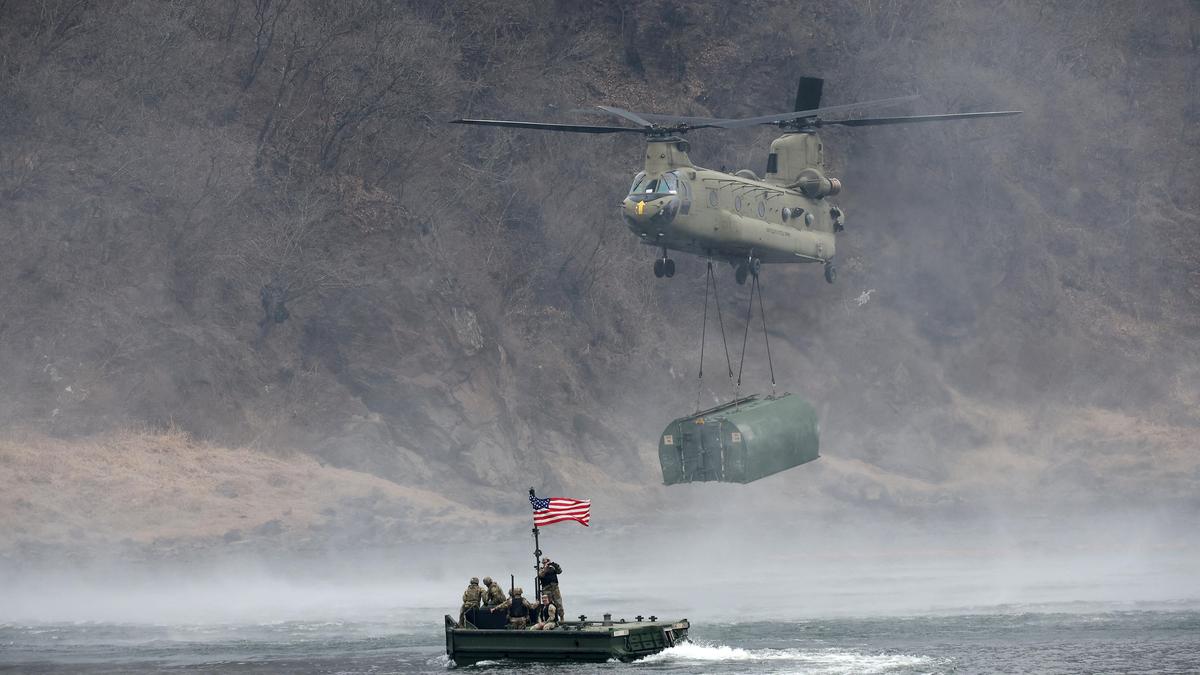
The United States and South Korea announced they will conduct their annual Freedom Shield joint military exercises from March 9-19, 2026. This comes against a backdrop of heightened tensions and a diplomatic freeze with North Korea, which views these exercises as invasion rehearsals. The drills are computer-simulated and designed to bolster combined defense capabilities, incorporating evolving war scenarios. The announcement coincides with a major political conference in North Korea, where Kim Jong Un is expected to outline his future policy goals.
Key Points:
- The Freedom Shield exercises are scheduled for March 9-19, 2026.
- North Korea views the exercises as invasion rehearsals and uses them as a pretext for military demonstrations.
- The exercises are largely computer-simulated, testing joint operational capabilities.
- The exercises will be accompanied by a field training program called Warrior Shield.
- South Korea is grappling with intensifying U.S.-China competition and pressure from Washington to assume a greater share of the defense burden.
- Kim Jong Un has prioritized relations with Russia, sending troops and equipment to support the war in Ukraine.
Critical Analysis:
The decision to proceed with Freedom Shield, despite North Korea’s predictably hostile reaction, suggests a hardening of resolve by the US and South Korea. Considering Kim Jong Un‘s shift towards Russia, the exercises can be interpreted as a message of deterrence to both North Korea and any potential collaboration with Russia that might destabilize the region. The timing, coinciding with Kim’s policy announcements, further underscores the intent to signal strength and preparedness.
Key Takeaways:
- The U.S. and South Korea are prioritizing military readiness amidst stalled diplomacy with North Korea.
- North Korea’s increasing alignment with Russia poses a new dimension to regional security concerns.
- The Freedom Shield exercises serve as a deterrent signal to North Korea and potentially to other actors in the region.
- South Korea is under pressure to increase its defense contributions due to broader U.S. strategic priorities focused on China.
- A breakthrough in diplomatic relations between the Koreas appears unlikely in the near term.
Impact Analysis:
The Freedom Shield exercises are likely to exacerbate tensions on the Korean Peninsula. In the short term, expect increased military activity from North Korea, potentially including missile tests or other demonstrations of force. Longer-term, the exercises reinforce the alliance between the U.S. and South Korea, but also risk deepening the divide and solidifying North Korea’s reliance on Russia. The exercises could also prompt further development of North Korea’s nuclear and missile programs, creating a cycle of escalation. The exercises also put South Korea in a difficult position as it tries to balance its relationship with the US and China.
 First Piper