
Wed Feb 25 17:26:10 UTC 2026: ### Headline: Trump’s State of the Union: India Relations Complicated by Conflicting Claims and Immigration Policies
The Story:
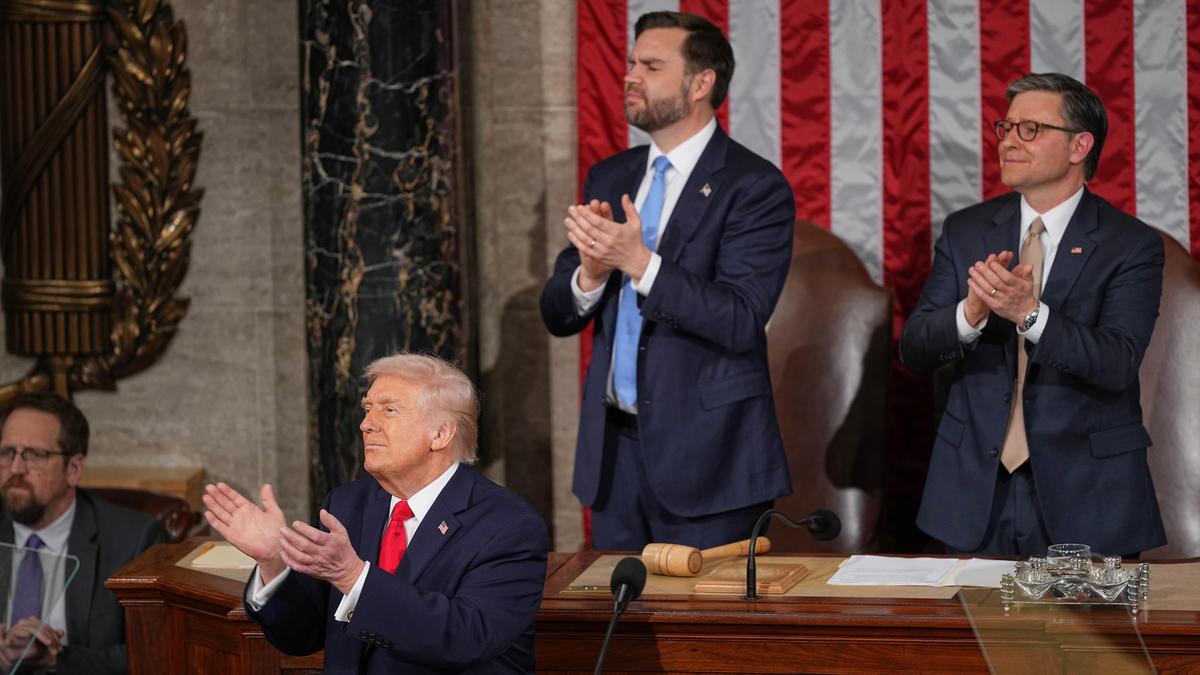
President Donald Trump delivered his State of the Union address on February 24, 2026, focusing on economic growth, affordability, and cracking down on crime and immigration. The speech highlighted tensions between the U.S. and India on multiple fronts. Trump reiterated his disputed claim of ending the India-Pakistan conflict in May 2025, a claim consistently denied by India. Simultaneously, Prime Minister Narendra Modi embarked on a visit to Israel amidst rising U.S.-Iran tensions. The speech also touched on trade disputes and restrictive immigration policies impacting Indian students and professionals in the U.S.
Key Points:
- President Trump claims to have ended the India-Pakistan conflict in May 2025, a claim disputed by India.
- Prime Minister Modi traveled to Israel amidst potential U.S.-Iran conflict.
- Trump intends to maintain tariffs, despite Supreme Court challenges, affecting potential trade deals with India.
- The U.S. imposed a new 125.87% duty on certain Indian solar goods.
- Trump’s immigration policies are impacting Indian students, professionals, and leading to deportations.
- The speech referenced a case involving an Indian-origin truck driver in the context of illegal immigration, calling for stricter laws.
- The 2026 Indian American Attitudes Survey (IAAS) indicates a rise in online hate speech and weakening support for the Trump administration within the Indian American community.
Critical Analysis:
The events surrounding President Trump’s State of the Union address reveal a multi-layered strain on U.S.-India relations. Trump’s repeated claims about resolving the India-Pakistan conflict, despite Indian denials, suggest a deliberate attempt to portray himself as a global peacemaker, even if it means distorting reality. Simultaneously, his focus on tariffs and immigration restrictions signals a protectionist approach that directly impacts India’s economic and human capital interests. Modi’s visit to Israel during escalating U.S.-Iran tensions adds another layer of complexity, potentially positioning India in a precarious diplomatic situation.
Key Takeaways:
- U.S.-India relations are facing challenges due to conflicting narratives and policy differences.
- Trump’s trade and immigration policies are creating friction with India.
- Modi’s strategic decisions, such as the visit to Israel, require careful navigation in a volatile geopolitical landscape.
- The Indian American community is experiencing increased discrimination and declining support for the Trump administration.
Impact Analysis:
The combination of trade disputes, immigration restrictions, and conflicting narratives surrounding international conflicts has the potential to significantly damage the U.S.-India relationship. The imposition of tariffs and stricter immigration policies could hinder economic cooperation and cultural exchange. The rise in hate speech and discrimination within the U.S. against Indian Americans could further strain the relationship, impacting diplomatic ties and potentially influencing future political alignments. The long-term consequences could include a shift in India’s geopolitical alliances and a reevaluation of its strategic partnership with the U.S.
 First Piper