
Wed Feb 25 12:49:45 UTC 2026: Headline: Trump Pushes “Delilah’s Law” Targeting Illegal Immigrant Truck Drivers, Potentially Impacting Thousands of Indian Nationals
The Story:
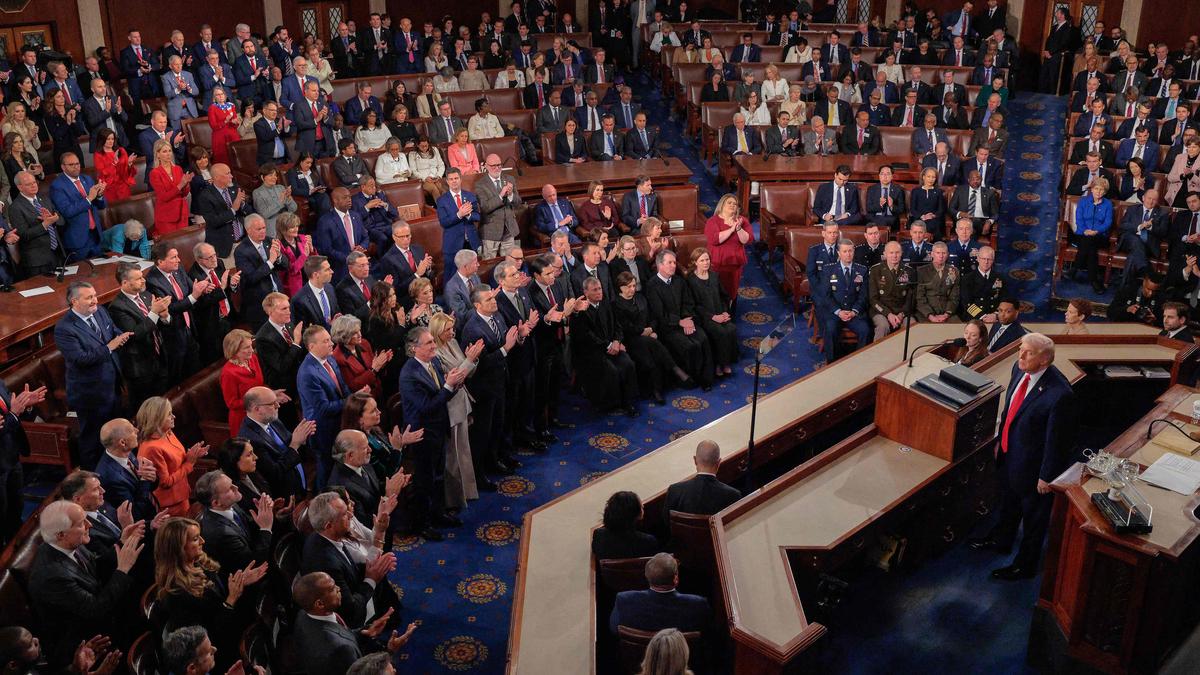
During his State of the Union address on February 24, 2026, U.S. President Donald Trump urged Congress to implement “Delilah’s Law,” a measure designed to restrict commercial driver’s licenses for illegal immigrants. The law is named after Delilah Coleman, a young girl severely injured in June 2024 by an Indian truck driver in California. The proposed legislation is expected to disproportionately affect Indian-origin drivers, particularly those from Punjab and Haryana, who constitute a significant portion of the U.S. trucking workforce. The President’s address reinforced his administration’s hardline stance on illegal immigration, including stricter English proficiency requirements.
Key Points:
- President Trump advocated for “Delilah’s Law” during his February 24, 2026, State of the Union address.
- “Delilah’s Law” aims to restrict commercial driver’s licenses for illegal immigrants.
- The law is named after Delilah Coleman, injured in a June 2024 accident caused by an Indian truck driver.
- The move could negatively impact over 1.5 lakh Indian-origin truckers, primarily from Punjab and Haryana.
- Between January 2025 and January 2026, over 2,400 Indian nationals were deported or repatriated from the U.S.
- Illegal migration from India reportedly plunged by 77% in the first nine months of 2025.
- Approximately 4.8% to 5% of all undocumented immigrants in the U.S. were from India, totaling around 725,000 as of 2022-2024.
Critical Analysis:
The timing of President Trump’s push for “Delilah’s Law” during his State of the Union address, coupled with the explicit mention of stricter English proficiency demands, suggests a strategic effort to appeal to his base while simultaneously addressing concerns about public safety and immigration control. The use of a sympathetic figure like Delilah Coleman amplifies the emotional impact of the legislation, making it politically difficult to oppose. The historical context of increased deportations of Indian nationals indicates a consistent policy of stricter immigration enforcement under the Trump administration.
Key Takeaways:
- “Delilah’s Law” represents a continuation of the Trump administration’s hardline immigration policies.
- The legislation could have significant economic consequences for Indian-origin truck drivers in the U.S.
- The focus on English proficiency requirements adds another layer of complexity and potential discrimination.
- The emotional appeal of the case involving Delilah Coleman strengthens the political support for the law.
- U.S.-India bilateral ties could be strained due to the potential impact on Indian nationals and increased deportations.
Impact Analysis:
The implementation of “Delilah’s Law” could have far-reaching consequences:
- Economic Impact: A significant reduction in the number of Indian-origin truck drivers could disrupt the U.S. transportation industry and lead to increased shipping costs.
- Diplomatic Relations: The law could strain U.S.-India relations, especially if perceived as discriminatory towards Indian nationals.
- Social Impact: The law could create a climate of fear and uncertainty within the Indian immigrant community in the U.S.
- Political Ramifications: The success of “Delilah’s Law” could embolden the Trump administration to pursue further restrictive immigration policies.
- Legal Challenges: The
 First Piper