
Wed Feb 25 15:39:10 UTC 2026: Headline: Experts Urge Dialogue and Transparency to Strengthen India’s Fiscal Federalism
The Story:
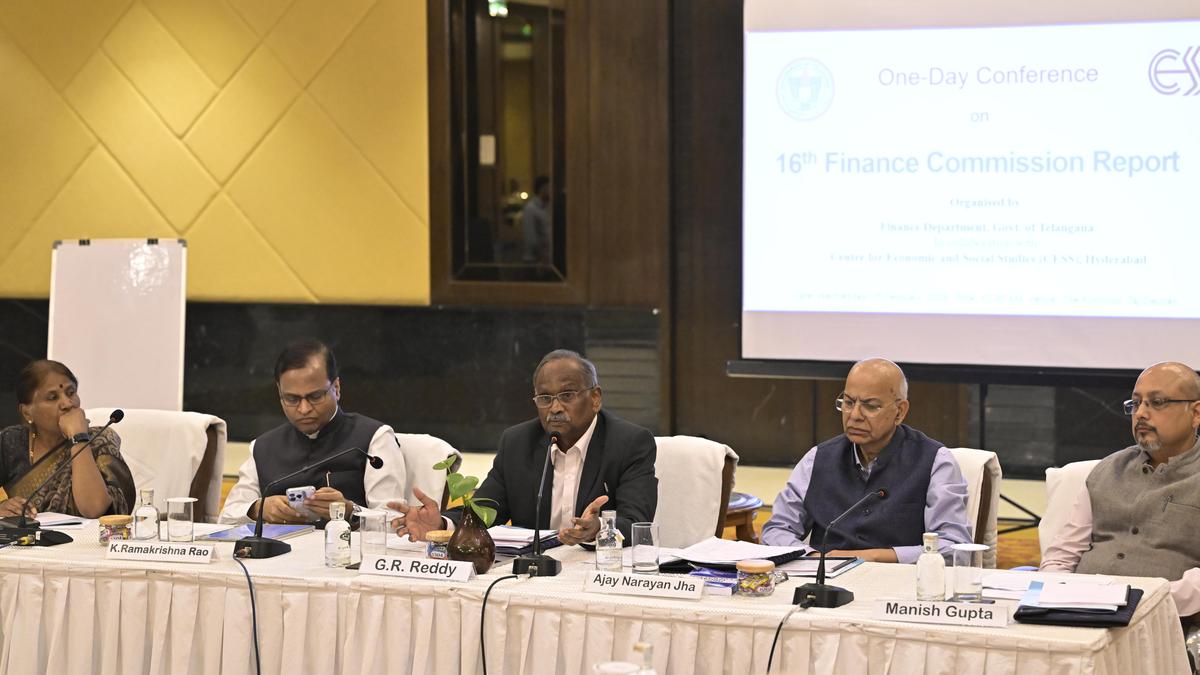
A high-level conference in Hyderabad on Wednesday, February 25, 2026, addressed the critical juncture of India’s fiscal federalism and the role of the upcoming 16th Finance Commission (FC). Renowned speakers, including former Reserve Bank of India Governor D. Subba Rao and former Deputy Chairman of the Planning Commission Montek Singh Ahluwalia, emphasized the need for renewed dialogue between the Centre and the States, greater transparency, and stronger institutions to effectively support national growth and State-level development. Concerns were raised about the growing divide between the Union and the States, the unchecked growth of cesses, and the need to revisit the distribution of subjects across different lists.
Key Points:
- The conference was jointly organized by the Telangana State Finance department and Centre for Economic and Social Studies (CESS).
- D. Subba Rao described the 16th FC as ‘a textbook commission’ that largely followed the constitutional mandate but highlighted the urgent need to address the limits of States’ freedom to spend, borrow and raise resources.
- Montek Singh Ahluwalia warned against a drift from cooperative federalism to ‘combative federalism’ and stressed the need to confront the unchecked growth of cesses.
- Telangana Chief Secretary K. Ramakrishna Rao advocated for reduced dependence on Union transfers and stronger local resource mobilization, highlighting the State’s high own-revenue share of about 80%.
- Ajay Narayan Jha, member of the 15th FC, argued that ‘needs of assistance’ must be assessed in relation to each State’s capacity, with structurally deficit States requiring explicit recognition and attention.
- Jayaprakash Narayan pointed out significant inter-State variations in fiscal health, with Andhra Pradesh having the highest Debt to GSDP ratio at 61%.
Key Takeaways:
- India’s fiscal federalism is facing significant challenges requiring a renewed approach to Centre-State relations.
- Increased transparency and dialogue are crucial for effective resource allocation and addressing regional disparities.
- The 16th Finance Commission has a vital role in shaping the future of fiscal federalism in India.
- States need to focus on strengthening their own resource mobilization to reduce dependence on Union transfers.
- Addressing the specific needs of structurally deficit States is essential for inclusive growth.
Impact Analysis:
The discussions and recommendations from this conference could significantly influence the Terms of Reference and recommendations of the 16th Finance Commission. This, in turn, will impact the distribution of resources between the Centre and the States for the period following the commission’s report. The call for greater transparency in cesses and surcharges, along with the need for improved expenditure efficiency metrics, could lead to reforms in fiscal management at both the central and state levels. Successfully addressing the concerns raised about ‘combative federalism’ and fostering a more cooperative environment will be crucial for achieving balanced and sustainable economic development across India. The focus on structurally deficit States signals a potential shift towards a more equitable distribution of resources, potentially reducing regional disparities in the long run.
 First Piper