
Wed Feb 25 11:20:54 UTC 2026: # Modi Visits Israel Amidst Evolving Geopolitical Landscape
The Story:
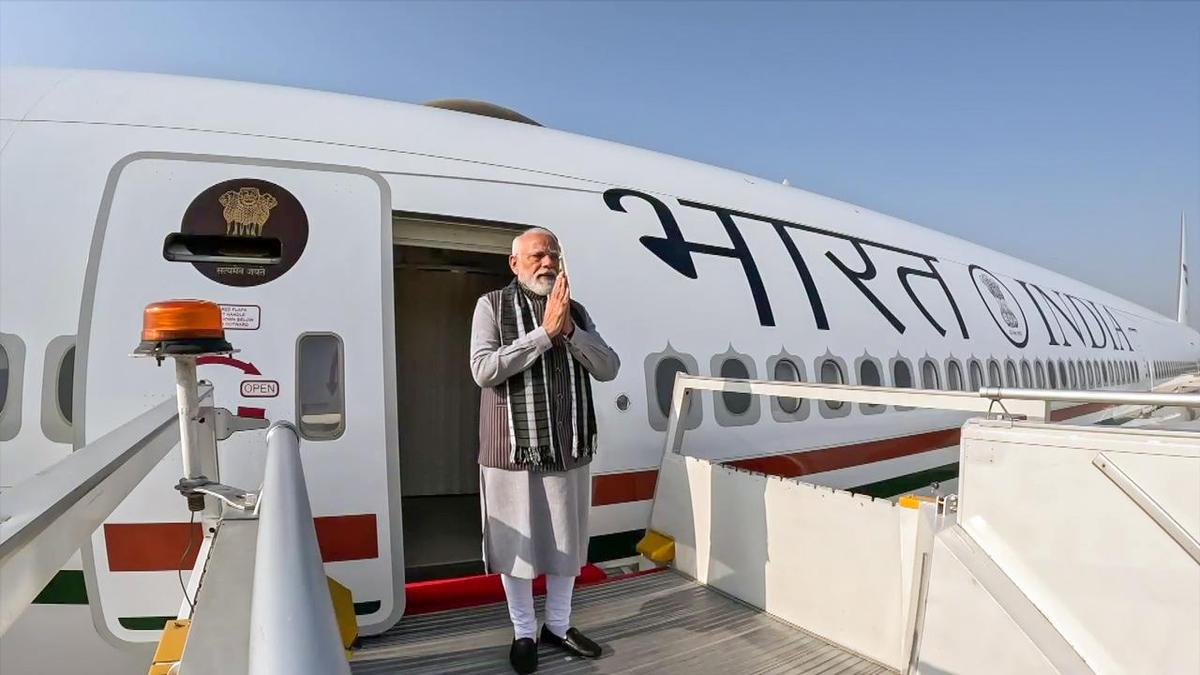
Prime Minister Narendra Modi arrived in Israel on Wednesday, February 25, 2026, for a two-day visit aimed at strengthening the India-Israel Strategic Partnership. Discussions with Prime Minister Benjamin Netanyahu are expected to focus on expanding cooperation in science, technology, and other areas. This visit follows India’s recent alignment with over 100 countries at the United Nations in criticizing Israel’s West Bank policies, a move that highlights the complexities of the evolving relationship.
Key Points:
- Prime Minister Modi’s visit is aimed at reviewing the India-Israel Strategic Partnership with Prime Minister Benjamin Netanyahu.
- Bilateral trade between India and Israel peaked at over $10.7 billion in 2022-23 but declined to $3.6 billion in 2024-25 due to war-related disruptions.
- India has maintained a trade surplus with Israel since 2014-15, which narrowed to $663 million in 2024-25.
- Refined petroleum products and diamonds constitute a significant portion of India’s exports to Israel, while diamonds dominate India’s imports from Israel.
- India is a major importer of Israeli arms and ammunition, accounting for over 38% of Israel’s arms exports between 2014 and 2024.
- Israeli FDI into India has crossed $347 million between 2000 and September 2025, with over 300 investments mainly in the technology sector.
- Approximately 32,715 Indians traveled to Israel in 2024, with around 32,000 Indian workers employed in Israel, many recruited after the Gaza conflict.
Critical Analysis:
The news snippets provided in the historical context, such as “Opinion | How Israel Once Defied Its Biggest Ally To Secretly Help India Against Pakistan,” suggests a deep-rooted, albeit sometimes covert, strategic alliance between the two nations. This historical context combined with the primary article’s information regarding defense cooperation and technology investment, indicates a pragmatic and enduring relationship driven by mutual strategic interests, despite occasional diplomatic divergences as seen in the UN vote.
Key Takeaways:
- The India-Israel relationship is multifaceted, encompassing trade, defense, technology, and labor mobility.
- While defense cooperation remains a cornerstone, economic factors such as trade disruptions and fluctuating trade surpluses present challenges.
- India’s recent alignment with other nations criticizing Israel’s West Bank policies underscores the balancing act India must perform in its foreign policy.
- The increasing number of Indian workers in Israel highlights the growing people-to-people ties and economic interdependence.
- The relationship is likely to continue to deepen, particularly in areas aligned with India’s “Make in India” initiative and technology sectors.
Impact Analysis:
The continued strengthening of the India-Israel partnership has significant long-term implications:
- Geopolitical Influence: A stronger alliance enhances India’s geopolitical influence in the Middle East and provides Israel with a crucial ally in Asia.
- Economic Growth: Increased trade and investment, particularly in technology and defense, can contribute to economic growth in both countries.
- Defense Capabilities: Access to advanced Israeli defense technology strengthens India’s defense capabilities and contributes to its strategic autonomy.
- Labor Dynamics: The migration of Indian workers to Israel will likely continue, impacting labor dynamics in both countries and potentially leading to increased remittances to India.
- Diplomatic Balancing Act: India’s ability to maintain strong ties with Israel while also
 First Piper