
Wed Feb 25 07:46:49 UTC 2026: ### Headline: Karnataka Minister Explores Air-to-Water Technology to Combat Water Scarcity
The Story:
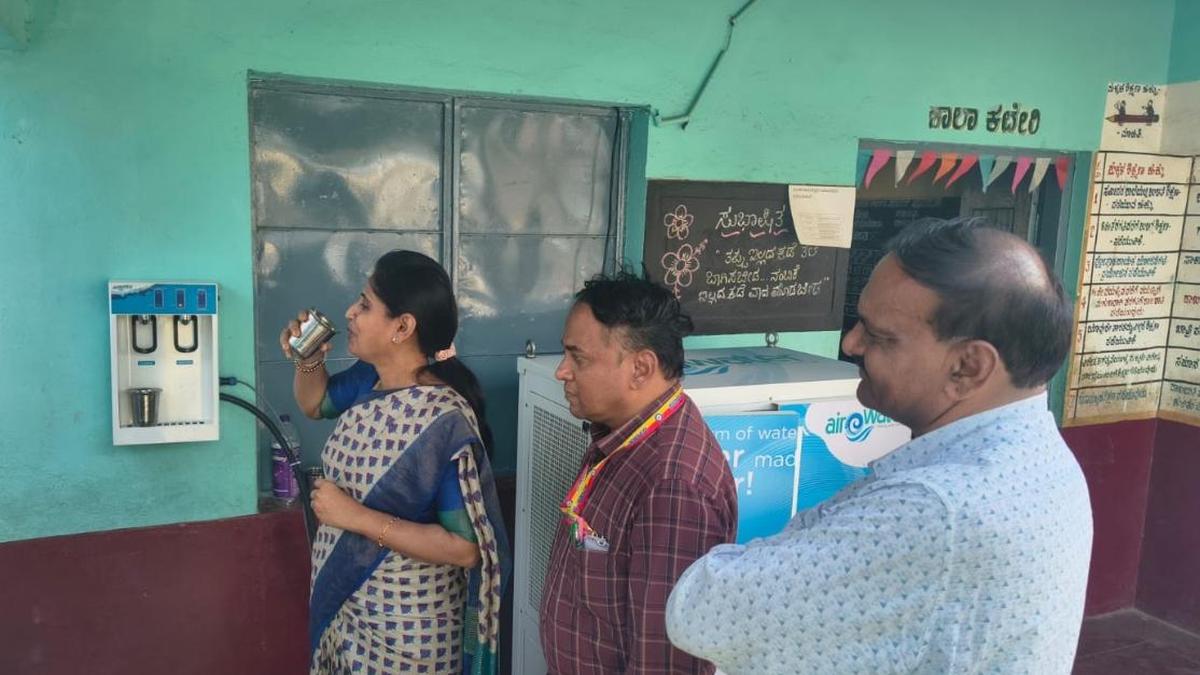
Karnataka’s Minister for Animal Husbandry and Sericulture, K. Venkatesh, who also serves as the Minister in charge of Chamarajanagar district, inspected an air-to-water (atmospheric water generator) unit installed at a Government Higher Primary School in Somwarpet on February 25, 2026. The unit, capable of producing 100 liters of purified drinking water per day, aims to provide safe drinking water to students. Following the inspection, Minister Venkatesh expressed interest in exploring the possibility of installing similar units in other water-scarce areas of the district.
Key Points:
- The air-to-water unit has been installed at the Government Higher Primary School in Somwarpet, near Chamarajanagar.
- The unit has a capacity to produce 100 liters of purified drinking water per day.
- Deputy Commissioner Shreerupa explained that the technology collects moisture from the atmosphere, condenses it, and purifies it into potable water.
- The technology can operate throughout the year, independent of groundwater or rainfall.
- The unit operates on electricity and can be integrated with solar power.
- The Minister is considering installing similar units in other areas of Chamarajanagar district facing water scarcity.
Key Takeaways:
- Karnataka is actively exploring innovative technological solutions to address water scarcity issues.
- Air-to-water technology is being considered as a viable alternative to traditional water sources, especially in remote and forested areas.
- The initiative reflects a growing awareness of the need for sustainable water management practices in the face of increasing water stress.
- The deployment of such units in schools highlights a focus on ensuring access to safe drinking water for children.
Impact Analysis:
The adoption of air-to-water technology, if scaled up, has the potential to significantly impact water security in Karnataka, particularly in regions prone to drought or with limited access to groundwater. This could lead to:
- Improved Public Health: Reduced waterborne diseases due to access to purified drinking water.
- Enhanced Educational Outcomes: Improved student attendance and concentration due to better health and hydration.
- Economic Benefits: Reduced reliance on expensive water tankers and bottled water, leading to cost savings for communities and schools.
- Environmental Sustainability: Reduced pressure on groundwater resources and a decreased carbon footprint if the units are powered by solar energy.
 First Piper