
Wed Feb 25 01:56:15 UTC 2026: ### Modi’s Israel Visit Amidst Regional Tensions Focuses on Defense, Trade, and Strategic Alliances
The Story:
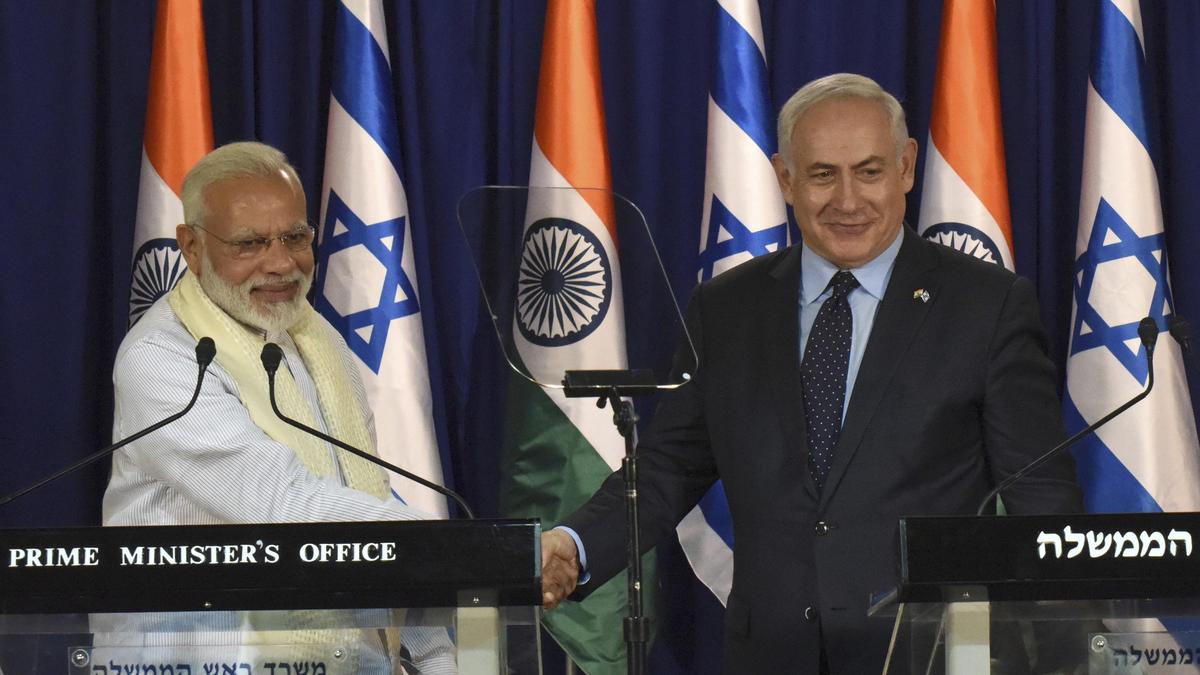
Indian Prime Minister Narendra Modi is undertaking a two-day visit to Israel starting February 25, 2026, amidst a volatile West Asian security landscape. The visit, his second to Israel after a historic first in July 2017, aims to deepen cooperation on defense, trade, and technology, particularly in light of escalating tensions involving Iran, the US military buildup in the Persian Gulf, and the fragile ceasefire in Gaza. The visit also underscores India’s “de-hyphenation” of its Israel engagement, with no planned meetings with Palestinian Authority leadership.
Key Points:
- The visit occurs against the backdrop of a potential major military conflict in West Asia.
- India is Israel’s largest defense customer, accounting for 34% of Israel’s arms exports between 2020 and 2024.
- Discussions are expected on the procurement and co-production of the ‘Iron Beam’ laser defense system.
- India and Israel signed a Bilateral Investment Agreement in September 2025 and are pursuing a Free Trade Agreement (FTA).
- The India-Middle East-Europe Economic Corridor (IMEC) is a key strategic project under discussion.
- Discussions are likely to include the Gaza peace process and India’s potential role.
- Israeli PM Benjamin Netanyahu envisions a “hexagon” of alliances including India, Arab nations, African nations, Mediterranean nations, and nations in Asia.
Critical Analysis:
The timing of Modi’s visit highlights India’s growing strategic importance in the region. The focus on defense cooperation, particularly advanced systems like the ‘Iron Beam,’ demonstrates India’s prioritization of national security in the face of evolving threats, evidenced by the lessons learned from “Operation Sindoor” in May 2025. The pursuit of an FTA underscores the economic dimension of the relationship, moving beyond traditional trade in diamonds and chemicals towards high-tech sectors. Netanyahu’s vision of a “hexagon” alliance suggests Israel’s desire to build a broad coalition against perceived radical threats, although India’s perspective on regional dynamics may differ.
Key Takeaways:
- India’s strategic partnership with Israel is strengthening, driven by shared security concerns and economic opportunities.
- The visit signals India’s commitment to modernizing its defense capabilities through collaboration with Israel.
- The IMEC project is a strategically important initiative for both countries, offering an alternative trade route to Europe.
- India’s balanced approach to the region, maintaining ties with both Gulf countries and Israel, allows it to play a constructive role in regional stability.
- Differing perspectives on regional alliances between India and Israel highlight potential challenges in aligning strategic goals.
Impact Analysis:
The deepening India-Israel partnership has long-term implications for regional security and economic development. Increased defense cooperation could enhance India’s ability to address security threats, while the FTA could boost bilateral trade and investment. The IMEC project, if successfully implemented, could transform regional connectivity and trade flows. However, the success of these initiatives hinges on achieving lasting peace in Gaza and managing the complex dynamics of the West Asian region. India’s role in the Gaza peace process, if any, will be closely watched for its potential to contribute to regional stability.
 First Piper