
Mon Feb 23 17:04:25 UTC 2026: ### UN Chief Warns of “Rule of Force” as Human Rights Face “Full-Scale Attack”
The Story:
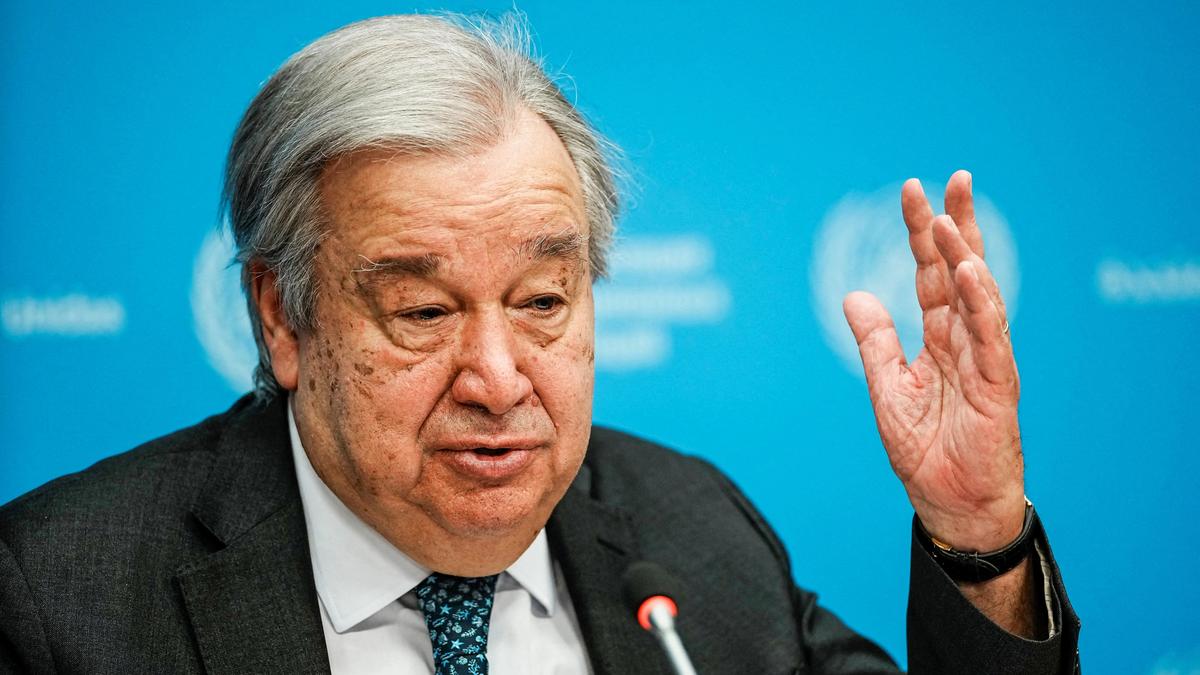
United Nations Secretary-General Antonio Guterres, in his final in-person address to the UN Human Rights Council in Geneva on February 23, 2026, warned that “the rule of force” is supplanting the rule of law globally. He highlighted the erosion of human rights, pointing to conflicts like the war in Ukraine and the situation in the Occupied Palestinian Territory, as well as the misuse of artificial intelligence and other technologies. He criticized powerful nations for trampling on international law and excusing mass suffering, while UN rights chief Volker Turk noted the resurgence of “domination and supremacy” on the world stage.
Key Points:
- Guterres states that human rights are under a “full-scale attack” worldwide.
- He criticizes the “rule of force” and the erosion of international law.
- He voices outrage at the war in Ukraine, where he says more than 15,000 civilians have been killed.
- He highlights “blatant violations of human rights” in the Occupied Palestinian Territory, stating that the two-state solution is being “stripped away.”
- Turk warns of a “deeply worrying trend” of “domination and supremacy” making a comeback, noting a fierce competition for power and resources.
- The UN’s traditional top donor, Washington, has dramatically slashed its foreign aid spending.
- Guterres warns that inequalities are widening, climate chaos is accelerating, and technology is being used to suppress rights.
- He emphasizes the vulnerability of marginalized groups, including migrants, refugees, LGBTIQ+ communities, minorities, and indigenous peoples.
Critical Analysis:
The timing of Guterres‘s warning coincides with domestic political tensions in India, exemplified by the arrest of the Youth Congress Chief following a protest related to the AI Impact Summit. This arrest, coupled with discussions around the implementation of a Uniform Civil Code, suggests a broader trend of governments potentially prioritizing national interests or specific ideologies over individual rights and freedoms. The UN’s concern about the misuse of AI to suppress rights becomes particularly relevant in this context, as technological advancements could be used to monitor and control dissent.
Key Takeaways:
- The UN leadership perceives a significant global decline in respect for human rights and international law.
- The rise of authoritarian tendencies and the misuse of technology are identified as key threats.
- Decreasing foreign aid from major donor nations weakens the UN’s ability to address these challenges.
- Domestic political events, such as the arrest of the Youth Congress Chief in India, can be viewed as microcosms of a larger global trend of suppressing dissent and prioritizing national interests over individual rights.
- The UN is calling for urgent action to protect vulnerable populations and prevent the erosion of democratic values.
Impact Analysis:
The UN’s stark warning signals a potentially destabilizing period for international relations and global security. Reduced funding for humanitarian aid, coupled with increasing conflicts and human rights abuses, could lead to increased migration, political instability, and humanitarian crises. The long-term impact of the misuse of AI on human rights and democratic processes remains a significant concern, potentially leading to increased surveillance, censorship, and manipulation of information. The call for urgent action suggests that the UN anticipates further deterioration and is attempting to galvanize international cooperation to address these challenges.
 First Piper