
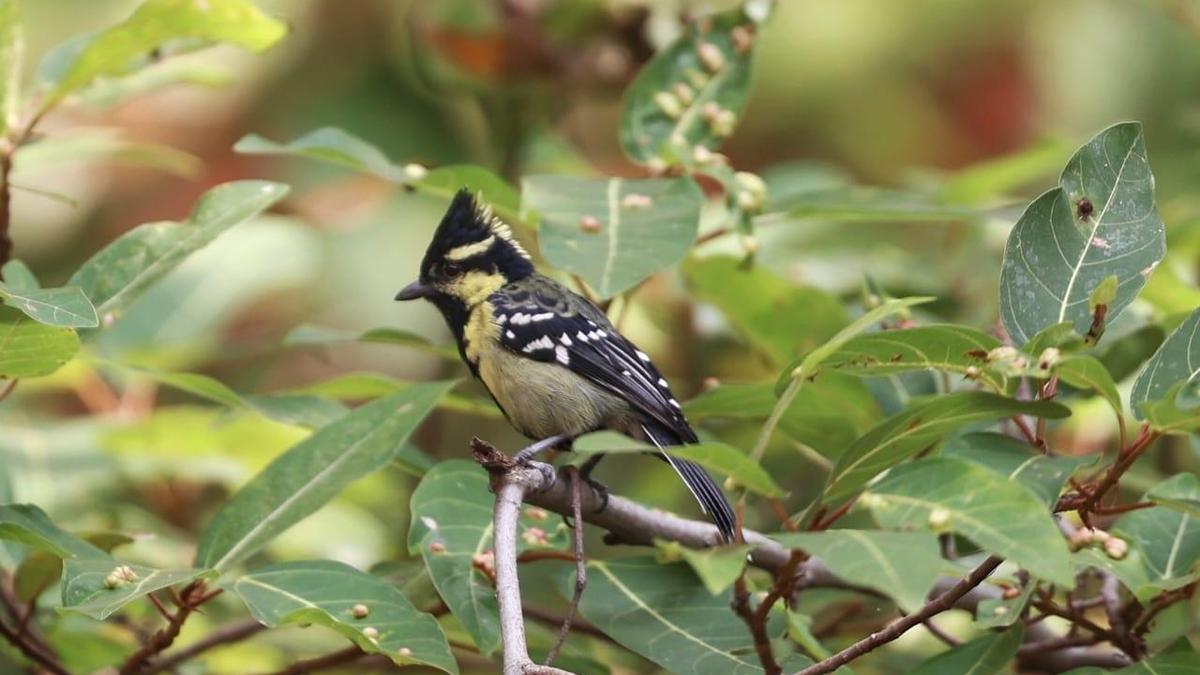
Mon Feb 23 20:59:37 UTC 2026: ### Headline: Indian Yellow Tit Spotted in Tirupati, Highlighting Ecological Richness
The Story
The fifth edition of the ‘Garuda Atlas’, a bird-mapping exercise around Tirupati, concluded with the recording of over 55,000 birds from 274 species. Notably, the Indian Yellow Tit was spotted for the first time in the Tirupati region during a bird walk at ‘Divyaramam’. The survey, led by the Indian Institute of Science Education and Research (IISER Tirupati) in partnership with the Tirupati Nature Society (TNS) and the Andhra Pradesh Forest Department, underscores the ecological health of the landscape.
The ‘Garuda Atlas’ initiative, which began in 2022 as the ‘Tirupati Bird Atlas’ before evolving to incorporate the city’s cultural identity, aims to encourage broader public participation in documenting and understanding local bird populations. Other notable species, including the Shaheen Falcon, Yellow-throated Bulbul, Red-necked Falcon, Slaty-breasted Rail, and Black eagle, were also recorded during the survey.
Key Points
- Over 55,000 birds were recorded during the fifth edition of the ‘Garuda Atlas’.
- 274 different species were documented across the Tirupati landscape.
- The Indian Yellow Tit was spotted for the first time in the Tirupati region.
- The ‘Garuda Atlas’ is a collaborative project led by IISER Tirupati, TNS, and the Andhra Pradesh Forest Department.
- The survey highlights the ecological richness and health of the Tirupati landscape.
Key Takeaways
- Citizen science initiatives like the ‘Garuda Atlas’ are valuable for monitoring biodiversity and ecological health.
- The presence of diverse bird species indicates a healthy ecosystem in the Tirupati region.
- Collaboration between research institutions, NGOs, and government agencies is crucial for effective conservation efforts.
- The expansion of the survey’s name to ‘Garuda Atlas’ reflects a strategic effort to engage the local community by connecting the project to the region’s cultural identity.
 First Piper