
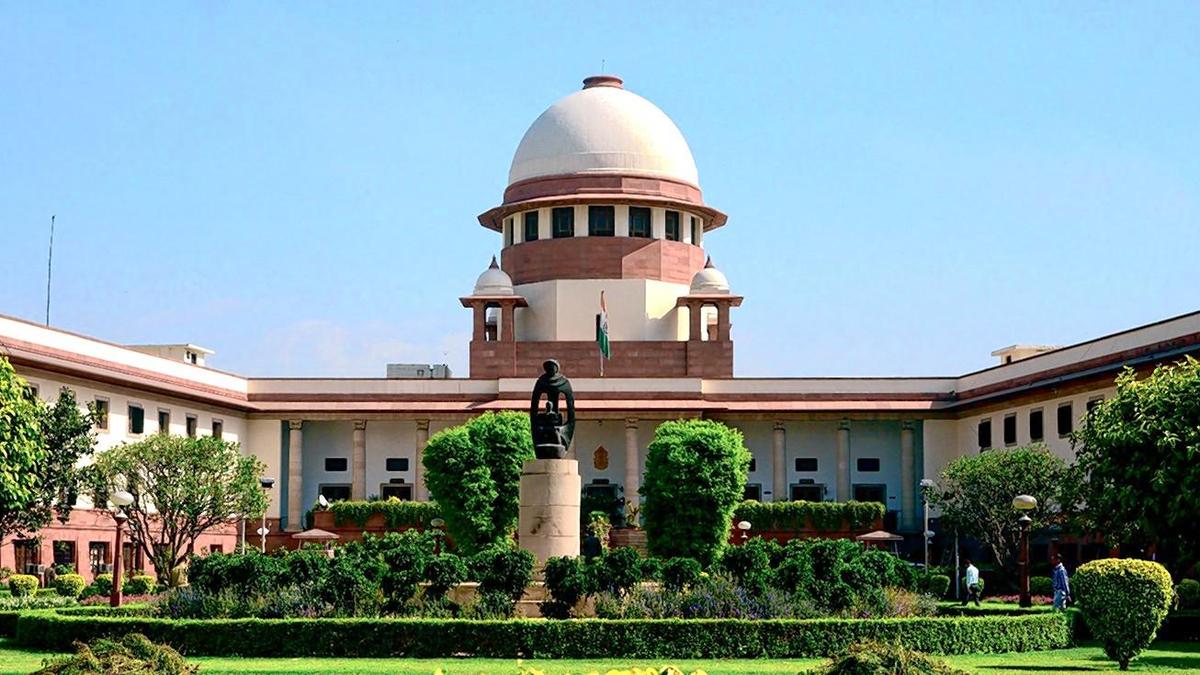
Tue Feb 24 10:42:50 UTC 2026: ### Headline: Supreme Court Upholds Aadhaar’s Validity in Electoral Rolls Amid Security Concerns
The Story
On Tuesday, February 24, 2026, the Supreme Court reaffirmed its stance on the use of Aadhaar as a valid form of identification in the Special Intensive Revision (SIR) process for electoral rolls. The court declined to modify a previous order from September 2025 that included Aadhaar as an accepted identity proof, citing the Representation of the People Act’s continued endorsement of the 12-digit unique identity number. Chief Justice Surya Kant and Justice Joymalya Bagchi directed petitioner-advocate Ashwini Kumar Upadhyay to address his concerns about fraudulent Aadhaar cards being manufactured on a large scale to the Union Government, emphasizing that amending the Representation of the People Act was beyond the court’s purview.
Key Points
- The Supreme Court refused to alter its September 2025 order regarding Aadhaar use in the SIR process.
- The court cited the Representation of the People Act’s acceptance of Aadhaar as a valid identity proof.
- Petitioner Ashwini Kumar Upadhyay raised concerns about the mass production of fake Aadhaar cards, particularly in border areas.
- The court advised Upadhyay to petition the Union Government to amend the Representation of the People Act.
- The court acknowledged the seriousness of the alleged fraud but maintained that the issue should be addressed by the government.
- The court previously dismissed arguments to remove Aadhaar from the list of acceptable documents for identity verification, noting that even passports can be forged.
- On September 8, 2025, the court ordered the Election Commission to include Aadhaar as the 12th ‘indicative’ document for identity verification during the Bihar SIR exercise.
Critical Analysis
The court’s continued reliance on the Representation of the People Act is logical given the separation of powers. The legislative branch is responsible for creating the law, and the judicial branch is responsible for interpreting it. The Supreme Court cannot simply ignore a law that is currently in place, even if there are concerns about its potential for abuse.
Key Takeaways
- The Supreme Court is bound by existing legislation, even when presented with evidence of potential fraud.
- The responsibility for amending laws lies with the Union Government and the legislative process.
- Concerns about the security and potential for misuse of Aadhaar continue to persist, despite its widespread adoption.
- The court acknowledges the seriousness of potential Aadhaar fraud and has asked the petitioner to address the Union Government.
- The debate surrounding Aadhaar’s role in electoral processes is ongoing, highlighting the tension between convenience, inclusion, and security.
Impact Analysis
The Supreme Court’s decision solidifies Aadhaar’s role in the electoral process, at least for the time being. This has several potential long-term implications:
- Continued Aadhaar Usage: Aadhaar will likely remain a primary means of identity verification for electoral purposes, potentially streamlining the voting process for many citizens.
- Pressure on the Government: The court’s direction to Upadhyay to petition the government puts pressure on the Union Government to address concerns about Aadhaar fraud and potential security vulnerabilities.
- Potential Legislative Changes: If the government takes Upadhyay’s concerns seriously, there could be future amendments to the Representation of the People Act to address Aadhaar-related security issues. This could involve stricter verification processes or alternative forms of identification.
- Impact on Elections: Depending on how the government responds, the prevalence of fraudulent Aadhaar cards could potentially impact the integrity of future elections. The extent of this impact depends on the scale of the fraud and the effectiveness of countermeasures.
- Public Trust: The ongoing debate surrounding Aadhaar could erode public
 First Piper