
Tue Feb 24 05:50:14 UTC 2026: ### Headline: Panama Seizes Control of Panama Canal Ports Amid US-China Tensions
The Story:
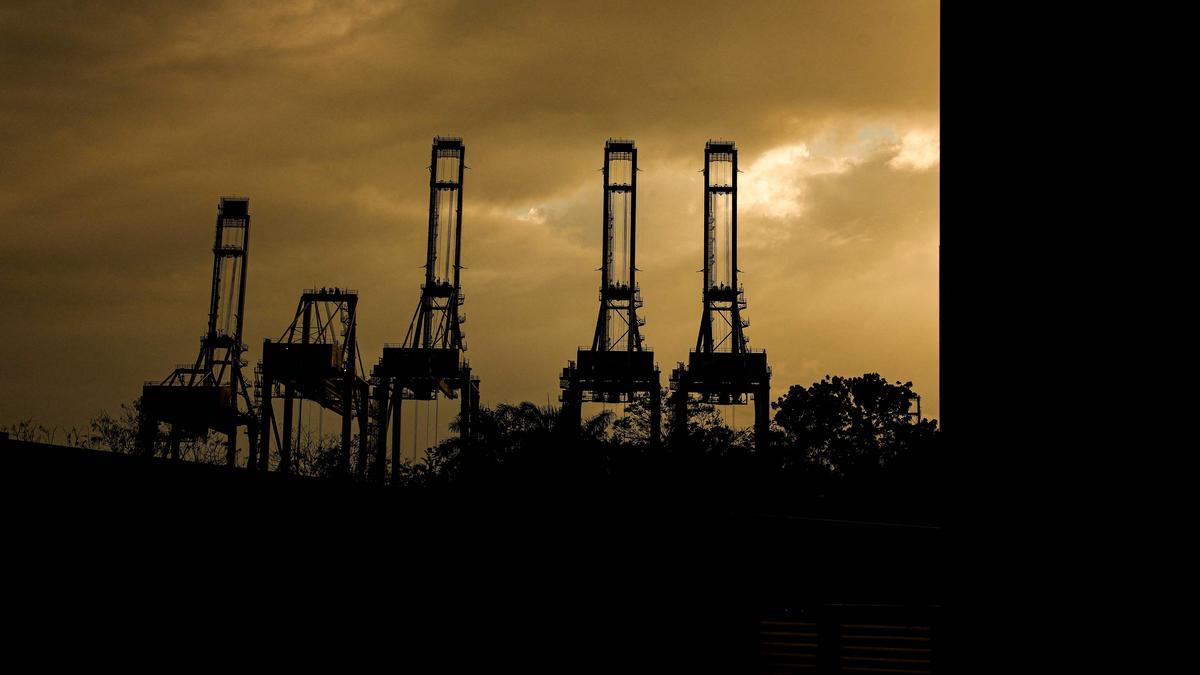
Panamanian authorities have seized control of two ports on the Panama Canal from CK Hutchison Holdings, a Hong Kong-based conglomerate, after the Supreme Court annulled the company’s concession. The move follows escalating tensions between the United States and China, with former U.S. President Donald Trump alleging Chinese control over the canal. CK Hutchison is contesting the takeover, calling it “unlawful” and warning of “serious risks” to port operations. Panama has appointed APM Terminals and Terminal Investment Limited to temporarily operate the ports during an 18-month transition period.
Key Points:
- Panama seized control of the Balboa and Cristobal ports from CK Hutchison Holdings on February 23, 2026.
- The Panamanian Supreme Court declared CK Hutchison’s concession, which had been in place since 1997, as “unconstitutional.”
- CK Hutchison denounces the takeover as “unlawful” and “confiscatory,” threatening legal action against Panama.
- Former U.S. President Donald Trump previously claimed, without evidence, that China effectively controlled the canal.
- APM Terminals (Maersk) and Terminal Investment Limited (MSC) will temporarily operate the ports during an 18-month transition.
Critical Analysis:
The seizure of the ports from CK Hutchison is occurring within a broader context of geopolitical rivalry between the U.S. and China. The U.S. has long viewed the Panama Canal as strategically vital, and any perceived Chinese influence over the waterway raises concerns in Washington. Panama, caught between these two global powers, is attempting to balance its economic interests with its sovereignty. The legal challenge to the concession suggests domestic concerns about the fairness or legality of the original agreement, providing a pretext for intervention amid international pressure.
Key Takeaways:
- Geopolitical tensions between the U.S. and China are increasingly impacting international commerce and infrastructure projects.
- Small nations like Panama are navigating complex relationships with global superpowers, often facing difficult choices.
- Contractual agreements involving foreign entities are subject to political and legal scrutiny, particularly in strategically sensitive sectors.
- The Panama Canal remains a critical chokepoint for global trade, making it a focal point of international interest and competition.
- The seizure highlights the risks associated with long-term concessions, particularly when geopolitical landscapes shift.
Impact Analysis:
The seizure of the ports from CK Hutchison could have long-term implications for foreign investment in Panama and the region. The legal challenges and potential international arbitration could deter other companies from investing in large-scale infrastructure projects. The incident may also lead to increased scrutiny of Chinese investments in Latin America, potentially impacting China’s Belt and Road Initiative. Furthermore, this event could prompt the U.S. to strengthen its diplomatic and economic ties with Panama to counter Chinese influence, potentially leading to a new era of strategic competition in the region. The future of the Panama Canal and its role in global trade will be significantly shaped by how these events unfold.
 First Piper