
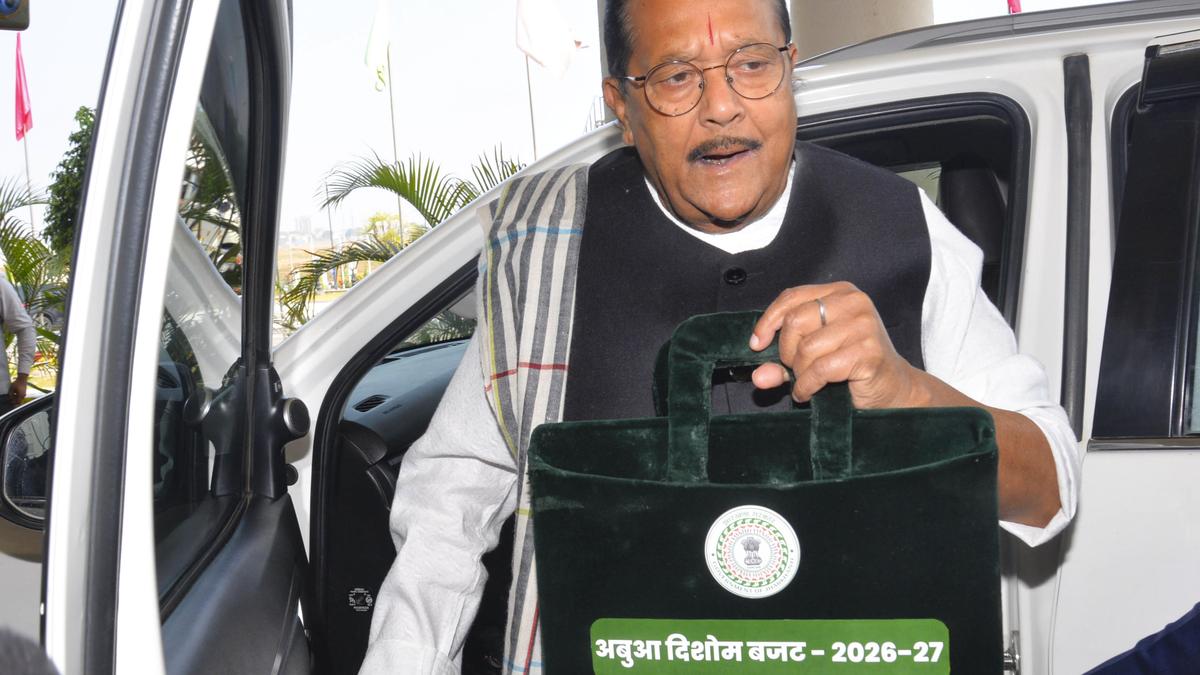
Tue Feb 24 09:33:54 UTC 2026: # Jharkhand Government Tables ₹1.58 Lakh Crore “Abua Dishom” Budget for 2026-27
The Story:
On February 24, 2026, the Jharkhand Government, led by the JMM, presented a ₹1.58 lakh crore budget for the 2026-27 fiscal year in the State Assembly. Finance Minister Radhakrishna Kishore emphasized that the budget, dubbed the “Abua Dishom” budget, aims to address the aspirations of all sections of society, particularly the poor, farmers, tribals, and women. The budget includes provisions for new schools, women farmer programs, and infrastructure development, while also criticizing the central government for alleged inadequate financial assistance.
Key Points:
- The Jharkhand Government tabled a ₹1.58 lakh crore budget for the 2026-27 fiscal year.
- The budget is termed the “Abua Dishom” budget.
- The budget includes a “Mahila Khushhali Yojna” for women farmers with an allocation of ₹25 crore.
- 100 new CM schools of excellence will be opened.
- Finance Minister Radhakrishna Kishore accused the central government of not providing adequate financial assistance, citing a shortfall of ₹5,000 crore in central tax share and ₹11,000 crore in grants-in-aid.
- The Minister also claimed that the Union Government owes the state ₹1.36 lakh crore in lieu of coal supply to central PSUs.
Critical Analysis:
The budget presentation occurs amidst a backdrop of significant events in Jharkhand and neighboring regions. The Supreme Court’s intervention to clear discrepancy cases in Bengal, using judges from Odisha and Jharkhand, indicates pressure on the judicial system and potentially increased scrutiny of governance. The air ambulance crash in Jharkhand, claiming lives, adds to the state’s challenges. The Finance Minister’s strong criticism of the central government suggests ongoing political tensions and financial disputes, potentially impacting the state’s ability to implement its budget effectively. The budget’s focus on marginalized communities and infrastructure development reflects a strategic effort to address social and economic disparities, given the state’s rich mineral resources and tourism potential.
Key Takeaways:
- The Jharkhand government is prioritizing social welfare schemes targeting marginalized communities in its 2026-27 budget.
- The state government is engaged in a financial dispute with the central government, potentially hindering development initiatives.
- Recent events, including the air ambulance crash and judicial interventions, may add pressure on the state government’s performance and accountability.
- The increased budget amount from ₹1.45 lakh crore in 2025-26 to ₹1.58 lakh crore in 2026-27 shows an increase in government spending.
- The naming of the budget as “Abua Dishom” budget indicates the government’s focus on the tribal population.
Impact Analysis:
The “Abua Dishom” budget’s success hinges on resolving the financial disputes with the central government and efficient implementation of its welfare schemes. Failure to secure adequate central funding could significantly impede the state’s development plans and exacerbate existing social and economic inequalities. The focus on education and women’s empowerment could have long-term positive impacts on the state’s human development indicators, provided the initiatives are effectively implemented and monitored. The political tensions between the state and central governments will likely continue to shape the state’s development trajectory and its ability to leverage its resources effectively.
 First Piper