
Tue Feb 24 10:54:59 UTC 2026: ### Headline: Adivasi Man Killed in Suspected Carnivore Attack Sparks Protests in Nilgiris
The Story:
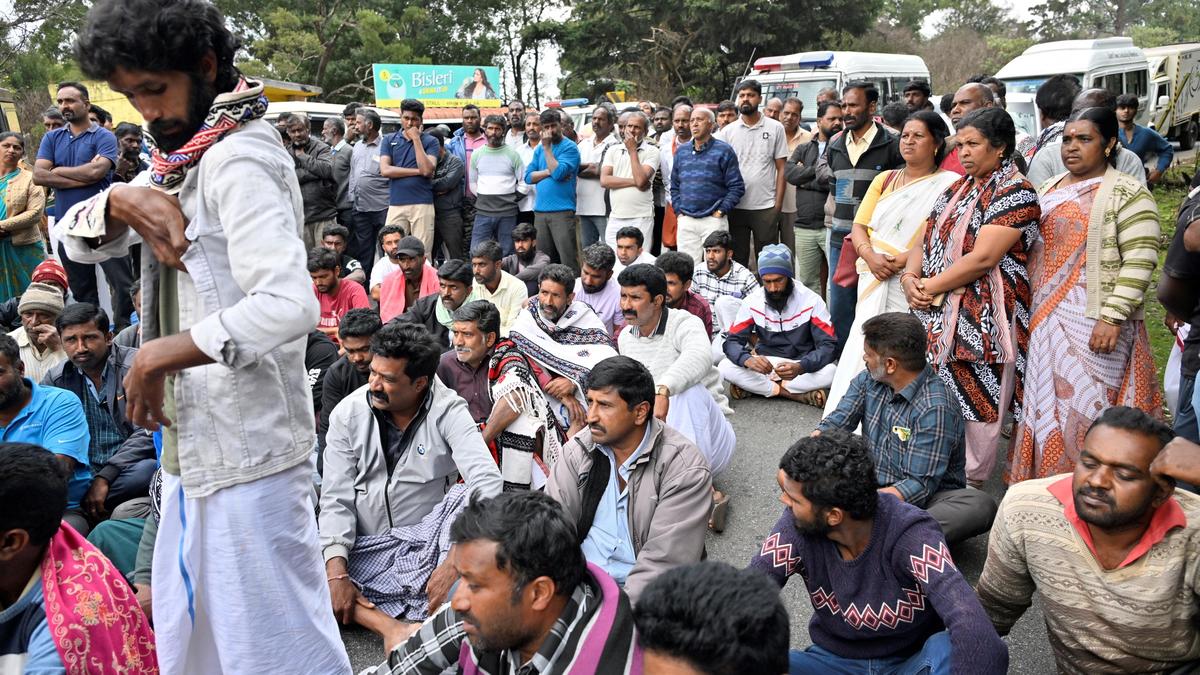
A 55-year-old Adivasi man, Pusthal Kuttan, was found dead in the Udhagai South Range of the Nilgiris on Tuesday, February 24, 2026, following a suspected carnivore attack. The incident occurred near Eighth Mile, along a bridle path Kuttan was using to reach his father’s house. The discovery of his dismembered body led to immediate protests by local residents, who blocked the road near Sholur Junction, demanding the capture of the responsible animal.
The road blockade disrupted traffic between Udhagamandalam and Gudalur for several hours. Forest Department and police officials negotiated with the protesters, assuring them that action would be taken. Hair samples have been collected from the attack site for forensic testing to determine whether a tiger or leopard was responsible. Compensation will be provided to the victim’s family.
Key Points:
- Pusthal Kuttan, 55, an Adivasi man, was killed in a suspected carnivore attack on February 24, 2026.
- The attack occurred near Eighth Mile in the Udhagai South Range, Nilgiris.
- Residents blocked the road near Sholur Junction to protest the incident and demand the animal’s capture.
- Traffic was disrupted for several hours before officials assured action.
- Hair samples have been sent for forensic testing to identify the animal, and camera traps are being used.
- A similar incident occurred on March 26, 2025, when Kenthar Kuttan, 27, was killed by a tiger in Governor Shola, approximately two aerial kilometers from the recent attack.
Key Takeaways:
- Man-animal conflict remains a significant issue in the Nilgiris region, particularly affecting Adivasi communities.
- The Forest Department faces challenges in balancing wildlife conservation with the safety and concerns of local residents.
- Quick response and assurance of action from authorities are crucial in managing public unrest following such incidents.
- Forensic analysis and camera trapping are essential tools for identifying the animals responsible for attacks.
- Compensation to the families of victims is a necessary but insufficient measure to address the underlying issues.
Impact Analysis:
The incident highlights the escalating man-animal conflict in the Nilgiris and its potential long-term implications. The repeated attacks, particularly on vulnerable Adivasi communities, could lead to increased animosity towards wildlife and undermine conservation efforts. It necessitates a comprehensive strategy involving habitat management, community engagement, and proactive measures to mitigate human-wildlife interactions. Failure to address these issues could result in further loss of life, increased social unrest, and a decline in wildlife populations due to retaliatory killings. Long-term solutions might include creating buffer zones, providing alternative livelihoods for communities dependent on forest resources, and enhancing wildlife monitoring and early warning systems.
 First Piper