
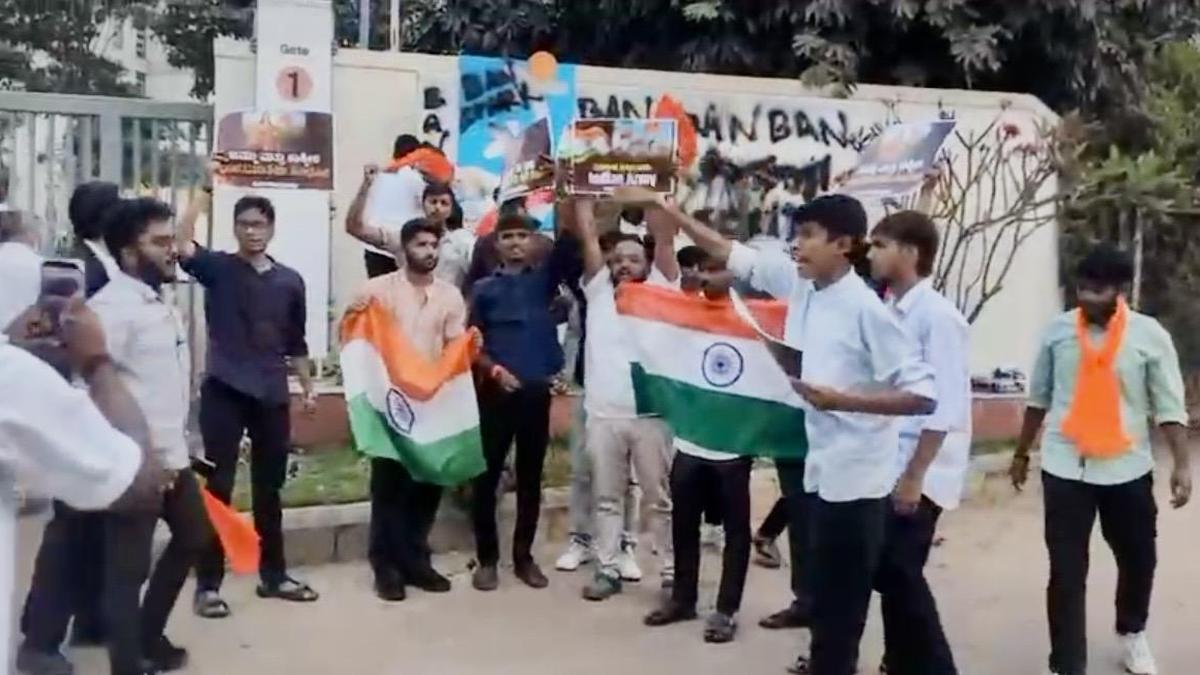
Tue Feb 24 16:53:44 UTC 2026: Headline: ABVP Activists Disrupt Azim Premji University Event, Sparking Protests
The Story: On February 24, 2026, members of the Akhil Bharatiya Vidyarthi Parishad (ABVP) allegedly stormed the Azim Premji University campus near Sarjapur, Bengaluru, causing vandalism and leading to the preventive custody of several activists. The ABVP claimed the university was hosting an “anti-national” event that portrayed the Indian Army negatively, accusations the university and students involved strongly deny. The incident prompted counter-protests by Azim Premji University students condemning the ABVP’s actions and urging government intervention.
Key Points:
- ABVP activists allegedly vandalized Azim Premji University property, claiming an “anti-national” event was being facilitated.
- The university denies the event took place and condemns the violence.
- Police detained several ABVP activists to prevent further escalation.
- Azim Premji University students staged a counter-protest against the ABVP’s actions.
- A student involved in a study circle claimed the discussion was about Kashmir, which is part of India and their syllabus.
- AISA condemned the vandalism as an attack on critical thinking and debate.
Critical Analysis:
The event must be seen in light of the rise of Hindutva activism. The thrashing of a Congress spokesperson by a Hindutva activist, as well as the ABVP protest, indicates a pattern of growing intolerance and aggressive assertion of Hindutva ideology within Indian society.
Key Takeaways:
- The incident highlights the increasing polarization of Indian society and the suppression of dissenting voices.
- The role of student organizations in promoting or hindering free speech and academic freedom is crucial.
- The event underscores the need for universities to protect their students and faculty from external interference and intimidation.
- The police’s swift action suggests an attempt to maintain law and order amidst rising tensions.
Impact Analysis:
This event is likely to have a chilling effect on academic discourse and freedom of expression within universities in India. It may lead to increased self-censorship among students and faculty, as well as greater scrutiny of campus events by right-wing groups. The incident could also fuel further polarization and division within Indian society, making it more difficult to address complex issues such as Kashmir through open and honest dialogue. The rise of Hindutva activism will likely continue to impact social cohesion and democratic values in the long term.
 First Piper