
Mon Feb 23 03:59:11 UTC 2026: ### India-U.S. Trade Deal Threatens Kashmir’s Apple Industry, Sparks Political Outcry
The Story:
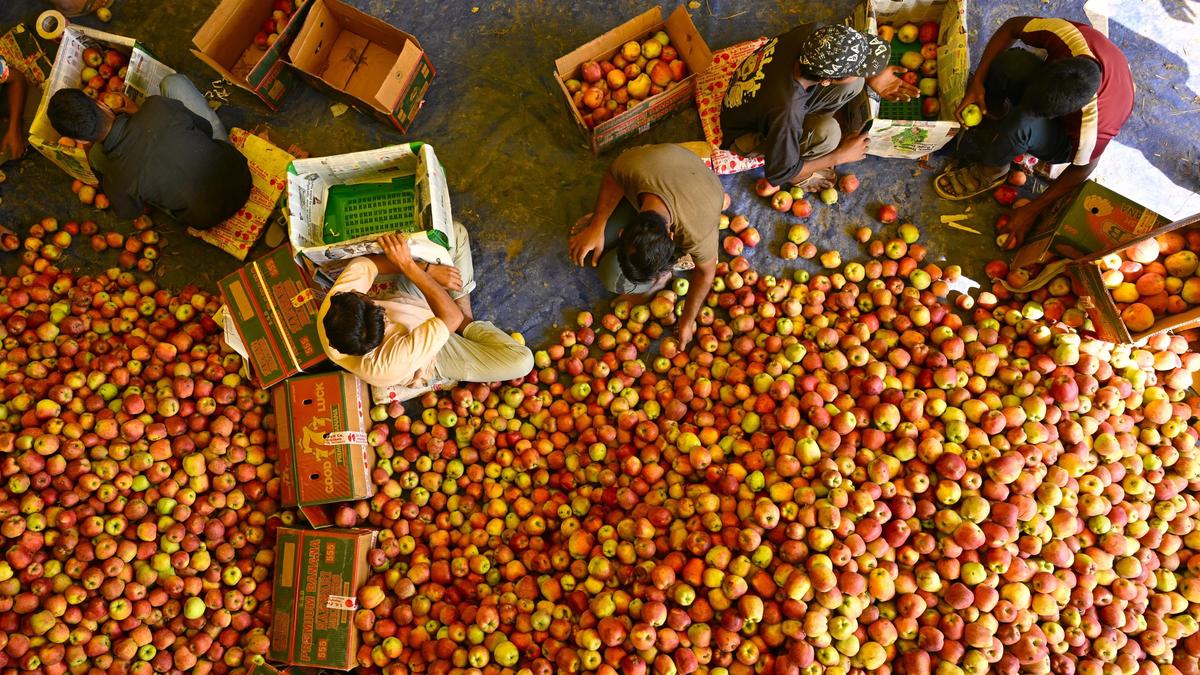
A new India-U.S. trade deal reducing basic customs duty on imported apples from 50% to 25%, coupled with a similar India-EU deal, is sparking significant concern in Jammu and Kashmir (J&K). Local politicians and traders fear the deals will devastate the region’s horticulture sector, particularly apple production, which constitutes 50% of J&K’s total horticulture output. The reduced import duties threaten to flood the market with cheaper apples from the U.S. and EU, undercutting local produce and potentially rendering investments in cold storage infrastructure economically unviable.
Key Points:
* The India-U.S. trade deal reduces basic customs duty on apples from 50% to 25%, while the India-EU deal reduces import duty on fresh fruits to 20% under a Tariff Rate Quota (TRQ) system.
* J&K’s horticulture sector generates approximately ₹10,000 crore in revenue and employs around 35 lakh individuals, directly or indirectly supporting about 7 lakh families.
* J&K produces over 70% of India’s total apple production, with apple production in J&K standing at 21 lakh metric tonnes in 2024.
* Kashmir’s apple yields (7-8 tonnes per hectare) are significantly lower than those of Western countries like the U.S., New Zealand, and EU (40-70 tonnes per hectare) due to farming practices and technology.
* Local orchardists have invested heavily in cold storage infrastructure, storing 397.08 lakh metric tonnes of apples in 92 cold storages.
* J&K political parties are calling for a joint strategy to pressure the central government to exclude apples from the trade deals and provide interest-free loans for farmers under the Holistic Agriculture Development Programme (HADP).
Critical Analysis:
The timing of these trade deals, coinciding with J&K’s economic reliance on apple production, suggests a potential oversight in considering regional economic vulnerabilities during trade negotiations. The historical context doesn’t reveal any specific strategic depth, but does indicate that consumer awareness and preferences in food markets are in flux, as evidenced by the articles about Trader Joe’s.
Key Takeaways:
* The India-U.S. and India-EU trade deals pose a significant threat to J&K’s apple industry due to reduced import duties.
* The disparity in apple production efficiency between J&K and Western countries exacerbates the potential negative impact.
* The deals could jeopardize investments in local cold storage infrastructure and destabilize off-season apple prices.
* There is a growing political consensus in J&K to advocate for safeguards to protect the apple industry.
* Long-term solutions include improving productivity and quality in J&K’s apple farming practices through technological intervention and financial support.
Impact Analysis:
The long-term impact of these trade deals could be substantial. If the concerns of J&K’s apple producers are not addressed, the region could face significant economic hardship, potentially leading to increased unemployment and social unrest. The deals could also trigger a shift in consumer preferences towards imported apples, further eroding the market share of local producers. To mitigate these risks, the Indian government needs to actively engage with J&K stakeholders to implement policies that support the modernization of apple farming practices and protect the region’s economic interests. The success of HADP will be critical. Failure to do so could have lasting negative consequences on J&K’s economy and stability.
 First Piper