
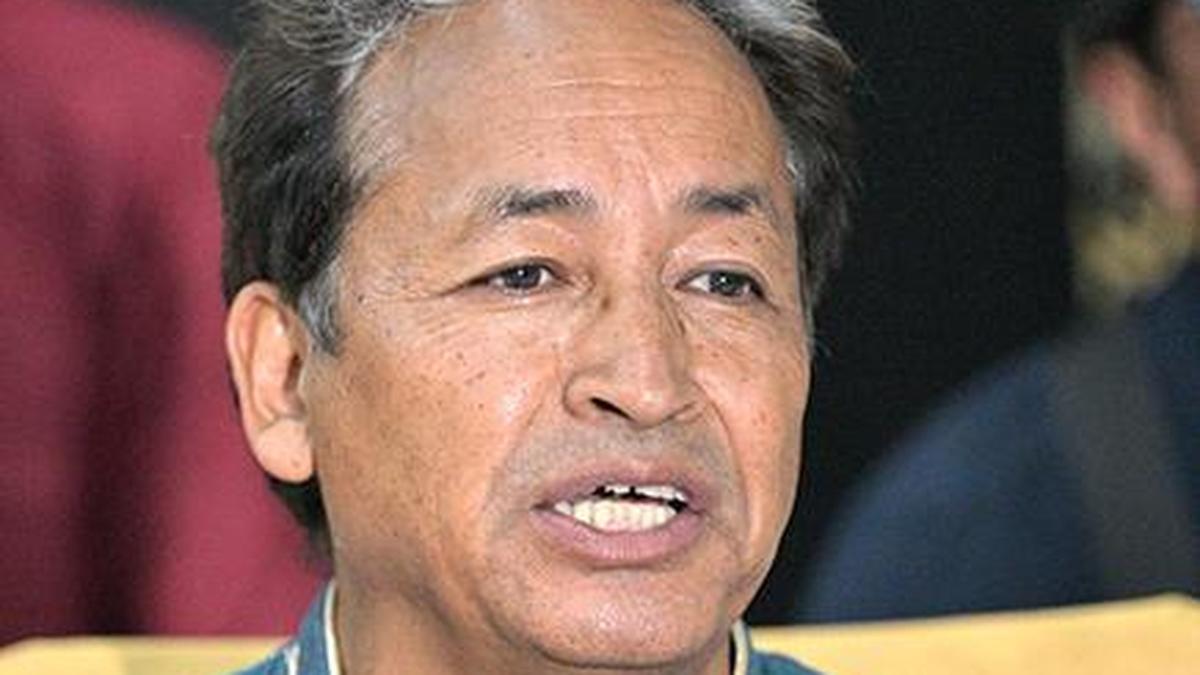
Mon Feb 23 12:05:26 UTC 2026: # Supreme Court Adjourns Hearing on Climate Activist Sonam Wangchuk’s Detention
The Story:
The Supreme Court has adjourned the hearing on a petition filed by Gitanjali J. Angmo, wife of climate activist Sonam Wangchuk, challenging his detention under the National Security Act (NSA). The hearing was deferred to February 26, 2026, due to the unavailability of Solicitor General Tushar Mehta. The court had previously inquired about the possibility of the government reconsidering Wangchuk’s detention, given his health condition. Wangchuk was detained on September 26, 2025, following violent protests in Leh demanding statehood and Sixth Schedule status for Ladakh. The government accuses him of inciting the violence.
Key Points:
- The Supreme Court adjourned the hearing on Sonam Wangchuk’s detention under the NSA to February 26, 2026.
- Gitanjali J. Angmo, Wangchuk’s wife, filed the petition challenging his detention.
- The Solicitor General’s absence prompted the adjournment.
- The Centre and Ladakh administration claim Wangchuk instigated violence in Leh on September 24, 2025, resulting in four deaths and 161 injuries.
- The government alleges Wangchuk sought to incite protests similar to the Arab Spring, Nepal, and Bangladesh.
- Wangchuk denies these allegations, asserting his democratic right to criticize and protest.
- Senior advocate Kapil Sibal, representing Ms. Angmo, claims police used “borrowed material” and selective videos.
- Ms. Angmo argues the detention is illegal and violates Wangchuk’s fundamental rights.
- Wangchuk was detained two days after violent protests in Leh demanding Statehood and Sixth Schedule status for Ladakh.
Critical Analysis:
The historical context provided shows the Supreme Court is handling multiple sensitive cases, including one regarding Lucknow residents and another concerning the Kerala Devaswom Recruitment Board. The fact that the Supreme Court is considering the Sonam Wangchuk case alongside these other politically charged issues indicates a potentially significant load on the judiciary and the need to prioritize cases carefully. The reference to the ICC opening hearings into ex-Philippine President Rodrigo Duterte suggests an increased international focus on accountability for leaders, which, while not directly related to Wangchuk’s case, contributes to a broader atmosphere of scrutiny regarding government actions.
Key Takeaways:
- The adjournment highlights the complexities and potential delays within the judicial system, especially in cases involving national security.
- The government’s justification for Wangchuk’s detention hinges on claims of inciting violence and attempting to destabilize the region.
- The defense argues that the evidence against Wangchuk is weak and based on misrepresentation.
- The case raises important questions about the balance between national security concerns and fundamental rights to protest and dissent.
- The Supreme Court’s ultimate decision will have significant implications for environmental activism and freedom of expression in India.
Impact Analysis:
The outcome of this case could significantly impact the future of environmental activism and dissent in India, particularly in sensitive border regions like Ladakh. A ruling upholding the detention could set a precedent for the government to use the NSA against activists deemed to be a threat to national security, potentially chilling free speech and peaceful assembly. Conversely, a ruling in favor of Wangchuk could strengthen protections for activists and reaffirm the importance of dissent in a democratic society. The case will also likely affect the relationship between the central government and the people of Ladakh, who are seeking greater autonomy and protections for their unique culture and environment. The international community will also be watching closely, as the case touches upon broader issues of human rights and environmental protection.
 First Piper