
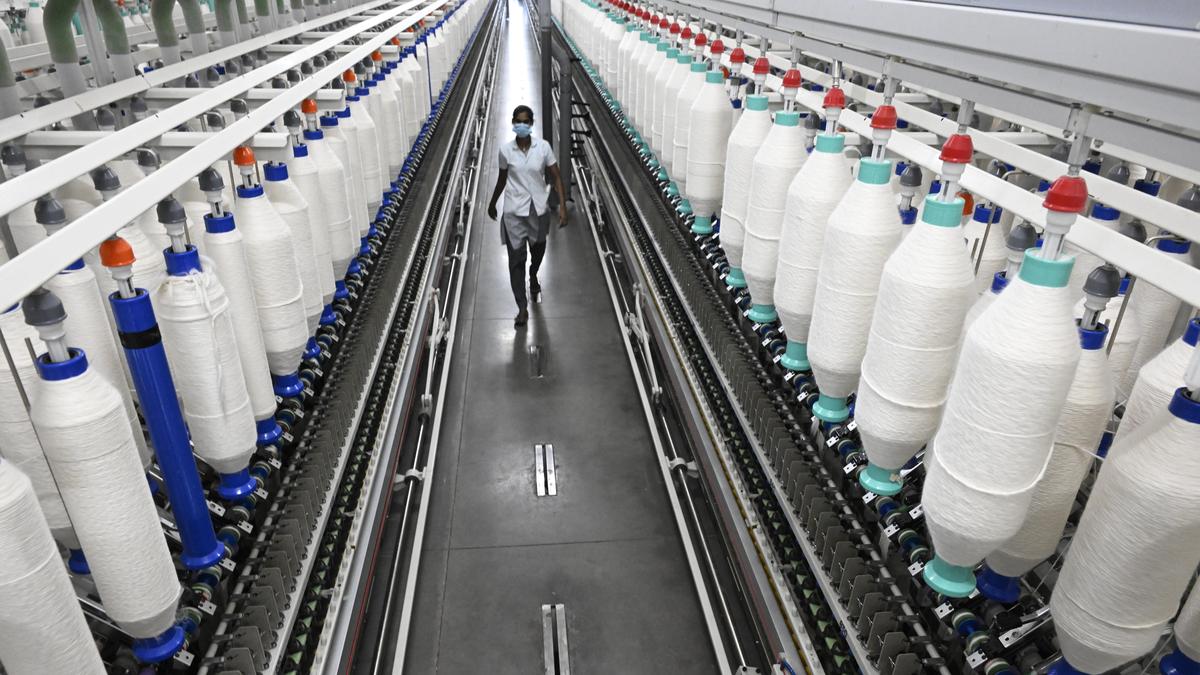
Sun Feb 22 19:05:32 UTC 2026: # Tamil Nadu Textile Industry Faces Crisis as Hundreds of Mills Shut Down
The Story:
Tamil Nadu’s textile industry is facing a severe crisis, with over 300 mills ceasing operations between 2021-22 and 2023-24. Data from the Union Ministry of Textiles reveals a significant decline in the number of operational mills, impacting the state’s economy and employment. Industry representatives cite a combination of factors, including rising raw material costs, high power tariffs, stringent environmental regulations, and unfavorable competition with other states.
Key Points:
- Over 300 textile mills in Tamil Nadu closed between 2021-22 and 2023-24.
- The number of operational textile mills decreased from 2,121 in 2021-22 to 1,672 in 2023-24.
- Approximately 200,000 powerlooms have been scrapped in the last few years.
- Tamil Nadu’s power cost for textile mills is ₹9.25 per unit, higher than competing states.
- The industry faces challenges related to raw material costs, bank interest rates, zero liquid discharge regulations, and caps on state subsidies.
Critical Analysis:
The closure of textile mills in Tamil Nadu appears to be a multifaceted problem exacerbated by both domestic and international factors. The historical context suggests several contributing elements:
- Increased waste cotton prices: This would directly impact the cost of raw materials, putting additional pressure on mills, especially smaller ones.
- Potential Indo-U.S. trade deal: Rahul’s statement suggests concerns that such a deal could negatively impact the Indian textile industry, possibly by increasing competition from U.S. textiles or altering trade dynamics.
- Untreated textile effluents: This highlights the environmental challenges faced by the industry, which are compounded by regulations like zero liquid discharge, as mentioned in the primary article.
- “0% Tariff” deal with the U.S. and benefits similar to Bangladesh: While seemingly positive, these deals could create new pressures on the industry, potentially requiring adjustments in production or pricing to remain competitive.
Key Takeaways:
- The Tamil Nadu textile industry is in a state of decline due to a confluence of economic and regulatory pressures.
- High power costs and raw material expenses are significant burdens for textile mills in the state.
- Environmental regulations, while important, contribute to the increased operational costs for processing units.
- Government policies, including subsidy caps, are seen as hindering the industry’s competitiveness.
- International trade deals and global competition add another layer of complexity to the challenges faced by the Tamil Nadu textile sector.
Impact Analysis:
The shutdown of textile mills in Tamil Nadu has significant long-term implications:
- Economic Impact: Job losses and reduced industrial output will negatively impact the state’s economy. The MSME sector, heavily reliant on textiles, will suffer significantly.
- Social Impact: Widespread unemployment can lead to social unrest and migration from affected areas.
- Environmental Impact: While regulations aim to protect the environment, the closure of mills might lead to unregulated practices or a shift of production to regions with less stringent environmental standards.
- Policy Implications: The crisis necessitates a review of existing policies related to power tariffs, subsidies, and environmental regulations to support the textile industry’s sustainability. The state government needs to address these issues urgently to prevent further decline and revitalize the sector.
 First Piper