
Mon Feb 23 13:44:02 UTC 2026: ### Headline: Maoist Faction Offers Surrender in Chhattisgarh Amidst Leadership Capitulation
The Story:
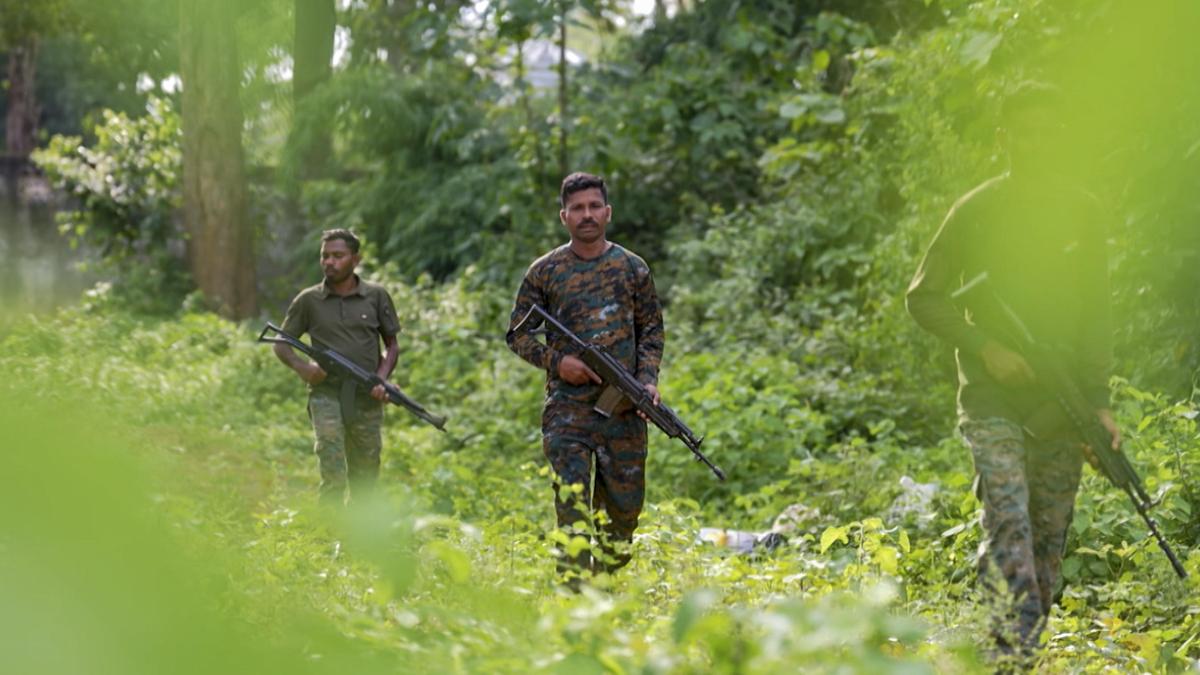
A division of the banned Communist Party of India (Maoist), specifically the Bolangir-Bargarh-Mahasamund (BBM) division active along the Chhattisgarh-Odisha border, has offered to surrender to the Chhattisgarh government. In a letter addressed to Deputy Chief Minister Vijay Sharma, the group, claiming 15 members are willing to lay down their arms, requested a radio message guaranteeing their safety. This offer comes on the heels of the surrender of key Maoist leaders, including Tippiri Tirupati (Devji), the general secretary, in Telangana’s Asifabad district on February 22, 2026.
The letter, purportedly written by Vikas, the west sub-zonal secretary, also raises concerns about the treatment of surrendered cadres, questioning why they are being held in barracks and whether they will face legal repercussions after their surrender period. The letter also questions why the Maharashtra-Madhya Pradesh-Chhattisgarh (MMC) special zone, whose cadre surrendered en masse in recent months, continues to be combed and targeted even after the media reported their surrender decision. It proposes that the Maoist party be recognized as a political party with police cases against them cancelled. The Deputy CM has responded positively, assuring their safety and promising to broadcast the requested radio message.
Key Points:
- The Bolangir-Bargarh-Mahasamund (BBM) division of the CPI (Maoist) has offered to surrender.
- 15 cadres are reportedly willing to surrender.
- The offer follows the surrender of senior Maoist leader Tippiri Tirupati (Devji) on February 22, 2026.
- The Maoists have requested a radio message from Deputy CM Vijay Sharma guaranteeing their safety.
- The letter expresses concerns about the rehabilitation process for surrendered Maoists.
- Governor Ramen Deka stated that 532 Maoists were neutralised, 2,704 surrendered and 2,004 were arrested in the past two years in Chhattisgarh.
Critical Analysis:
The timing of the BBM division’s surrender offer, immediately following the high-profile surrender of Devji and other senior leaders, suggests a potential domino effect within the Maoist ranks. The questions raised in the letter, particularly regarding the treatment of surrendered cadres and the continued operations in surrendered areas, indicate a lack of trust and a desire for clear guarantees from the government. The request for recognition as a political party suggests a strategic shift towards seeking legitimacy through political means rather than armed struggle.
Key Takeaways:
- The surrender of senior Maoist leaders is potentially creating a cascade effect, encouraging lower-level cadres to surrender.
- Trust remains a significant hurdle in the surrender and rehabilitation process.
- The Maoists are seeking assurances of fair treatment and rehabilitation, including the potential for political participation.
- The Chhattisgarh government is actively promoting the narrative of receding left-wing extremism.
- The government’s response will be crucial in determining whether this surrender offer translates into a broader trend.
Impact Analysis:
The BBM division’s surrender, if successfully executed, could significantly weaken the Maoist presence along the Chhattisgarh-Odisha border. The success of the rehabilitation process will be crucial in setting a precedent and encouraging further surrenders. If the government can address the concerns raised in the letter and provide a clear path for rehabilitation and potential political participation, it could accelerate the decline of Maoist influence in the region. However, failure to do so could reinforce distrust and potentially lead to a resurgence of armed struggle. The long-term impact will depend on the government’s ability to
 First Piper