
Sun Feb 22 16:47:58 UTC 2026: # Islamic State Claims Responsibility for Attacks in Syria, Signaling New Phase of Operations
The Story:
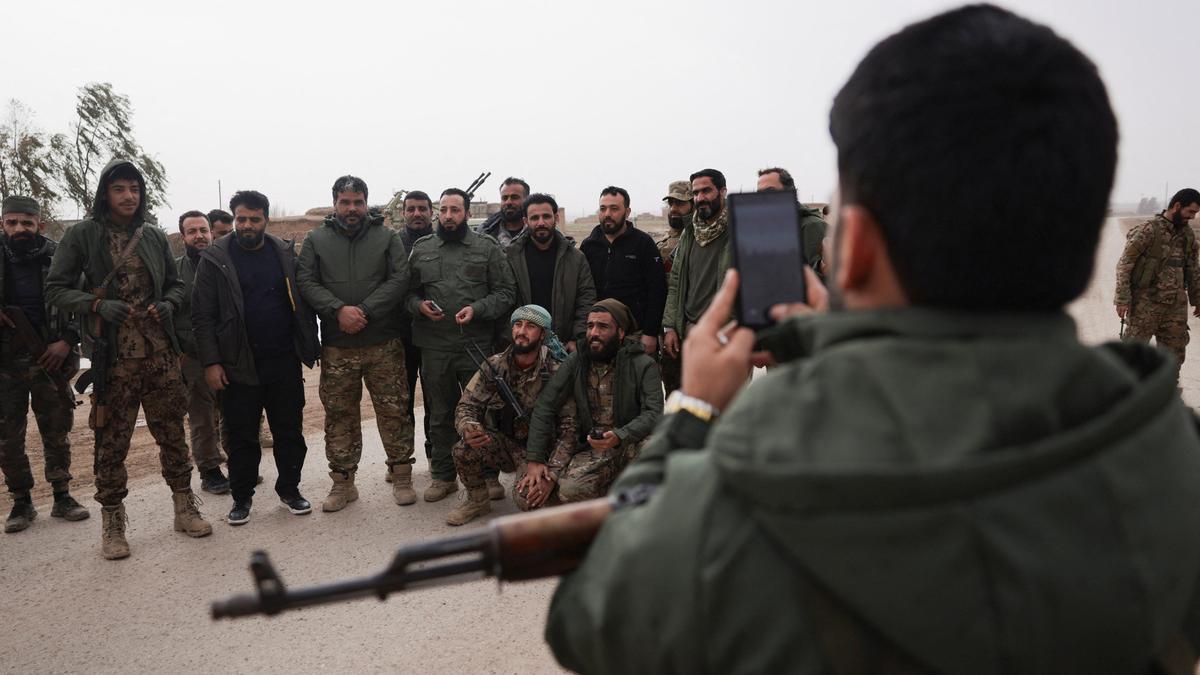
The Islamic State (IS) has claimed responsibility for two attacks on Syrian Army personnel on Saturday, February 21, 2026, signaling a new phase of operations against the Syrian government. The attacks, which occurred in Mayadin and Raqqa, resulted in the death of a soldier and a civilian, according to Syrian officials. IS has stated that these attacks are part of a broader strategy against President Ahmed al-Sharaa, whom they view as a puppet of the global coalition.
Key Points:
- IS claimed responsibility for attacks in Mayadin (Deir al-Zor province) and Raqqa on February 21, 2026.
- The attacks targeted Syrian Army personnel, resulting in casualties.
- IS spokesperson Abu Hudhayfa al-Ansari declared a “new phase of operations” against the Syrian government.
- Ahmed al-Sharaa, the current Syrian President, is described by IS as a “watchdog” of the U.S.-led global coalition.
- Sharaa signed Syria’s accession to the global coalition to defeat IS during a visit to the U.S. in November 2025.
- The UN reported five foiled assassination attempts against Sharaa and senior cabinet ministers by IS.
- IS has carried out six attacks against Syrian government targets since the fall of Assad.
Critical Analysis:
The timing of these attacks, coupled with the IS spokesperson’s statement, suggests a calculated effort to destabilize the current Syrian government under Ahmed al-Sharaa. The reference to Sharaa as a “watchdog” of the global coalition highlights IS’s perception of him as a traitor who abandoned their cause, especially given his past as an Al-Qaeda leader. The mention of Sharaa signing Syria’s accession to the global coalition during his visit to the U.S. last November further fuels IS’s narrative of him being a puppet of foreign powers. The call for intensified attacks via social media also indicates a coordinated strategy to garner support and escalate violence.
Key Takeaways:
- IS is actively attempting to undermine the authority of the current Syrian government.
- The group views President Ahmed al-Sharaa as an illegitimate leader due to his alliance with the global coalition.
- There is a clear escalation in IS activity, indicating a potential resurgence of the group’s influence in Syria.
- The situation in Syria remains volatile, with the threat of further attacks and instability.
- The UN’s report of foiled assassination attempts highlights the vulnerability of the Syrian leadership.
Impact Analysis:
The resurgence of IS activity in Syria could have significant long-term implications. A destabilized Syria could lead to a resurgence of other extremist groups, exacerbating the already complex geopolitical landscape. The involvement of the global coalition, particularly the U.S., could draw them further into the conflict. A prolonged period of instability could also lead to a humanitarian crisis, with widespread displacement and suffering. Furthermore, the attacks may strain relations between Syria and other regional actors, potentially leading to further conflicts. The situation warrants close monitoring and a coordinated international response to prevent further escalation and address the root causes of the conflict.
 First Piper