
Sun Feb 22 05:12:16 UTC 2026: ### Iran’s Internal Unrest and Nuclear Tensions Escalate Amidst U.S. Military Buildup
The Story:
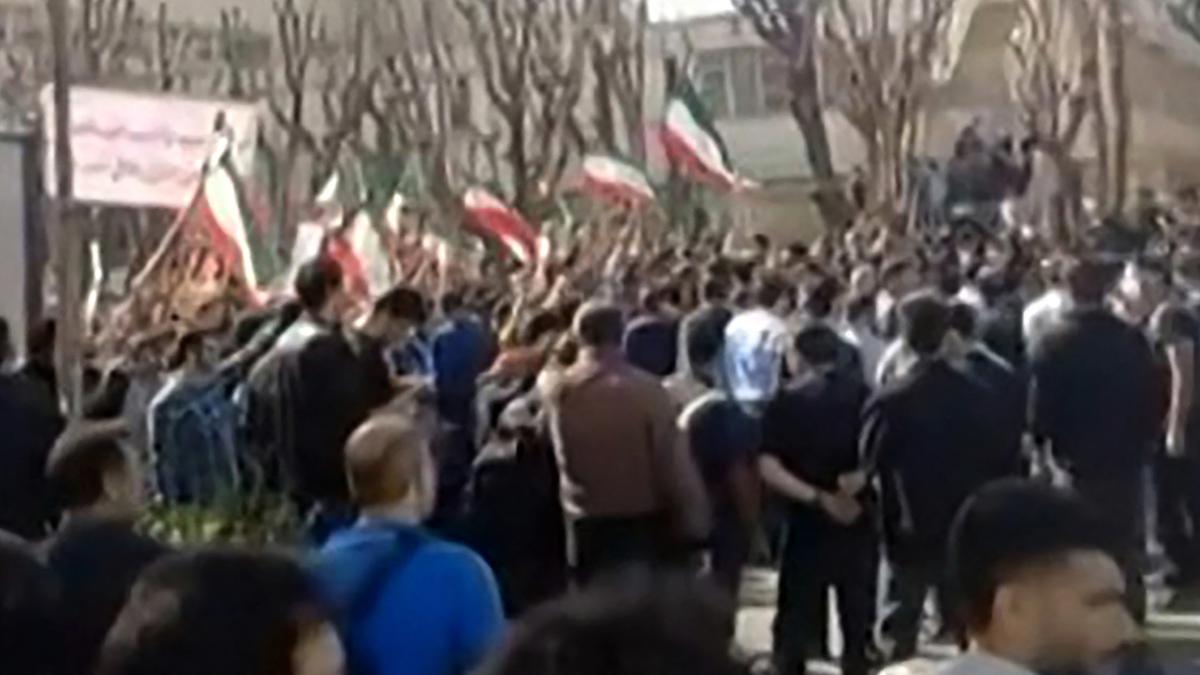
Iranian students are once again taking to the streets, clashing with counter-protesters and chanting anti-government slogans. These protests, centered around universities like Sharif University of Technology in Tehran, come on the heels of a brutal government crackdown last month, which reportedly resulted in thousands of deaths. The renewed unrest coincides with heightened tensions between Iran and the U.S., as President Donald Trump has threatened military intervention over Iran’s nuclear program and has significantly increased the U.S. military presence in the region. Talks mediated by Oman are ongoing, but the atmosphere remains volatile.
Key Points:
- Anti-government protests erupted at Iranian universities, including Sharif University of Technology.
- Protests commemorate the 40th day since a violent government crackdown on mass demonstrations in January 2026.
- The U.S. has increased its military presence in the region, deploying aircraft carriers, jets, and weaponry.
- Nuclear talks between the U.S. and Iran, mediated by Oman, are ongoing, with Iran preparing to submit a draft proposal.
- President Trump has issued a 15-day ultimatum to Iran to agree to a nuclear deal, threatening unspecified consequences.
- The U.S.-based Human Rights Activists News Agency (HRANA) reports over 7,000 killings in the government crackdown.
- Several countries, including Sweden, Serbia, Poland, and Australia, have urged their citizens to leave Iran due to fears of conflict.
Critical Analysis:
The protests are happening because of a complex interplay of factors: deep-seated economic grievances within Iran, a brutal government crackdown that has fueled public anger, and external pressure from the U.S. regarding Iran’s nuclear program. The timing of the protests, coinciding with the U.S. military buildup and ongoing nuclear talks, suggests a strategic element, either by internal factions seeking to influence the negotiations or by external actors attempting to destabilize the Iranian regime. The U.S. is clearly attempting to use military pressure to extract concessions from Iran in the nuclear talks.
Key Takeaways:
- Internal dissent in Iran is intensifying, creating instability for the clerical leadership.
- The U.S. is employing a strategy of coercive diplomacy, combining military threats with ongoing negotiations.
- The risk of military conflict between the U.S. and Iran remains high, with potentially devastating consequences for the region.
- The success of the nuclear talks is contingent on both sides making significant concessions and de-escalating tensions.
- The international community is increasingly concerned about the potential for a wider conflict in the Middle East.
Impact Analysis:
The events described have significant long-term implications. A failed nuclear deal and continued tensions could lead to military conflict, destabilizing the region and potentially drawing in other global powers. Even without military conflict, the internal unrest in Iran could lead to further human rights abuses and a more authoritarian regime. The outcome of these events will shape the geopolitical landscape of the Middle East for years to come, impacting energy markets, regional security, and international relations. The renewed protests highlight the fragility of the Iranian regime and the potential for significant political change in the future. The high death toll reported by HRANA, if accurate, underscores the severity of the human rights situation in Iran and could lead to further international condemnation and sanctions.
 First Piper