
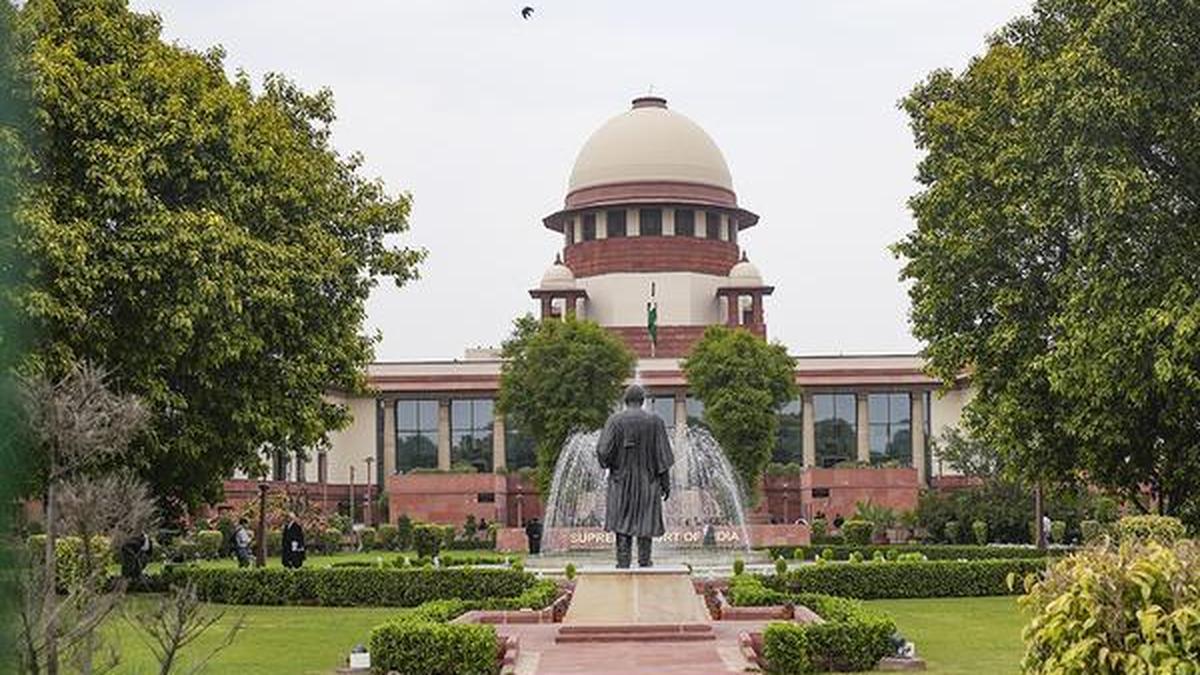
Mon Feb 23 09:35:36 UTC 2026: ### Headline: Indian Supreme Court Reconsiders Sweeping Directives on Cow Vigilantism, Emphasizes Individual Rights
The Story:
The Supreme Court of India, on Monday, February 23, 2026, signaled a shift in its approach to addressing cow vigilantism and mob violence. Chief Justice Surya Kant expressed reservations about the “unmanageable” nature of the “general directions” issued in the landmark 2018 Tehseen Poonawalla judgment, which mandated preventive, remedial, and punitive measures against such crimes. The court indicated a preference for an individualistic approach, emphasizing that each case should be judged on its singular facts and merits, with immediate action taken against any infringement of rights or abuse of law.
The court refused to entertain contempt petitions alleging non-compliance with the 2018 judgment by State Governments and authorities. While acknowledging the obligation of the government to protect all individuals, the court had previously stated in February 2025 that it could not “micro-manage” criminal prosecutions across the country and urged victims to approach local courts and state authorities.
Key Points:
- Chief Justice Surya Kant deemed the 2018 Supreme Court directions on cow vigilantism and mobocracy as “unmanageable.”
- The Court advocated for an individualistic approach to addressing such crimes, focusing on the specific facts and merits of each case.
- The Court refused to entertain contempt petitions regarding non-compliance with the 2018 Tehseen Poonawalla judgment.
- The 2018 judgment had been a sharp judicial criticism against lynchings and communally-colored mob violence since 2014, directing preventive, remedial, and punitive measures.
- In 2025, the Supreme Court had already expressed its inability to “micro-manage” mob lynching prosecutions and urged victims to seek recourse through local courts and state authorities.
Critical Analysis:
The Supreme Court’s shift away from broad directives towards a case-by-case approach likely reflects a recognition of the practical challenges in enforcing sweeping guidelines across a diverse country like India. The court may be attempting to balance its role in upholding fundamental rights with the limitations of judicial oversight over local law enforcement. The related historical context shows a highly polarised political climate with parties campaigning on religious lines and accusations of attempts to destabilise government further inflaming tensions. The court’s change in stance may be an attempt to de-escalate the situation and place the power back in the hands of local authorities.
Key Takeaways:
- The Indian Supreme Court is recalibrating its approach to addressing complex issues like cow vigilantism, prioritizing individual rights and case-specific analysis.
- There is growing concern over the practical limitations of issuing broad directives and the need for local authorities to take ownership of law enforcement.
- The evolving stance of the Supreme Court reflects the ongoing tension between upholding constitutional principles and managing the realities of a diverse and complex legal landscape.
- The court’s shift may be a response to the perceived ineffectiveness of earlier directives and the need for more targeted and effective interventions.
Impact Analysis:
The Supreme Court’s decision to move away from broad directives on cow vigilantism could have significant implications for the prosecution and prevention of such crimes. By emphasizing individual rights and local enforcement, the court may be aiming to foster a more nuanced and effective response to these issues. However, there is also a risk that this shift could lead to inconsistent application of the law and a weakening of protections for vulnerable communities. The long-term impact will depend on how effectively local authorities implement the court’s directives and whether they are held accountable for any failures to protect individual rights.
 First Piper