
Sun Feb 22 08:43:49 UTC 2026: # Wildfire Smoke Forms Rotating Vortices in Stratosphere, Studies Reveal
The Story
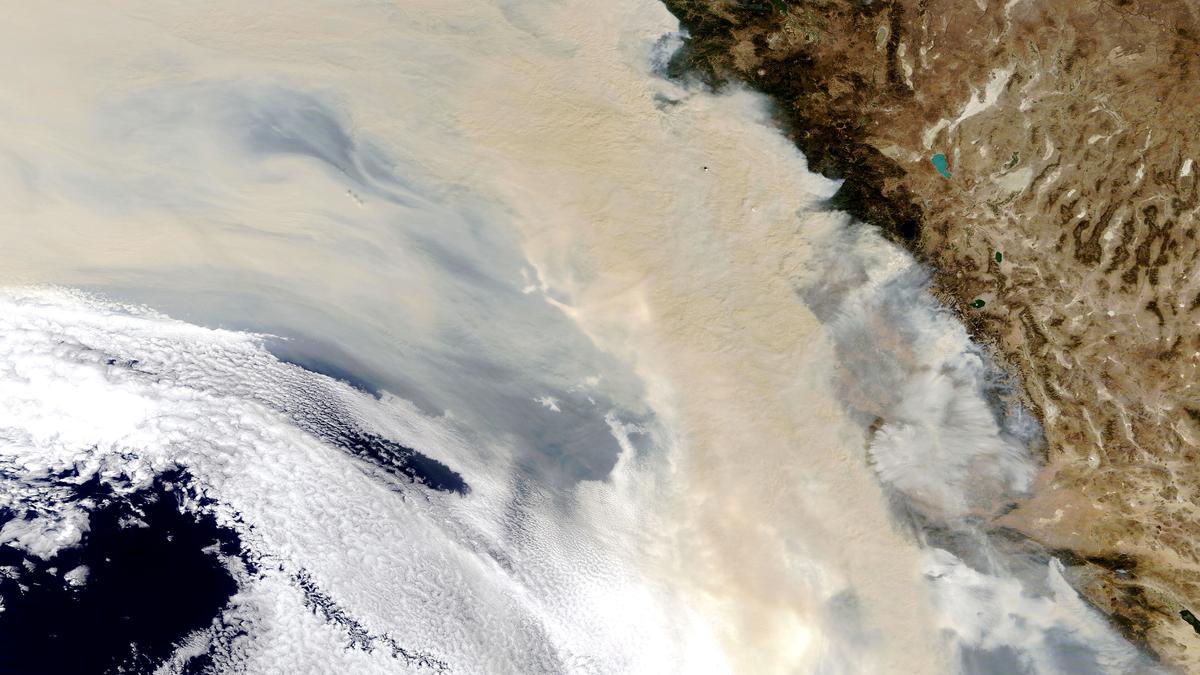
New research published in Weather and Climate Dynamics and presented at the American Meteorological Society sheds light on how wildfire smoke in the stratosphere can coalesce into compact, spinning bubbles. These vortices rotate clockwise in the northern hemisphere and counter-clockwise in the southern hemisphere. The studies explain that smoke particles absorb sunlight, warming the surrounding air and causing it to become buoyant. This buoyancy drives the smoke upwards, and the resulting heating pattern creates a rotating collar of air around the smoke bubble, preventing it from dispersing and allowing it to continue rising.
Key Points
- Wildfire smoke in the stratosphere can form compact, rotating vortices.
- The vortices rotate clockwise in the northern hemisphere and counter-clockwise in the southern hemisphere.
- Smoke particles absorb sunlight, warming the air around them and making it buoyant.
- The rising warm air creates a rotating “collar” around the smoke bubble, containing it.
- This rotating bubble prevents the smoke from mixing with the surrounding air, allowing it to continue rising.
Critical Analysis
The historical context reveals a growing concern over air quality, smoking, and wildfire management. The news about Argentina’s struggles with wildfires highlights the increasing frequency and intensity of these events, which directly contribute to the stratospheric smoke described in the primary article. The AI tool for scolding smokers, while seemingly unrelated, reflects a broader societal awareness of the negative impacts of air pollution.
Key Takeaways
- Wildfires are producing enough smoke to significantly impact the stratosphere.
- The formation of rotating smoke vortices suggests a complex interaction between wildfire smoke and atmospheric dynamics.
- These vortices can potentially transport smoke over long distances and influence weather patterns.
- Understanding these processes is crucial for predicting the long-term effects of wildfires on the climate.
Impact Analysis
The discovery of these rotating smoke vortices has significant implications for climate modeling and weather forecasting. The ability of these vortices to trap and transport smoke could lead to:
* Altered weather patterns: The presence of smoke in the stratosphere can affect the amount of sunlight reaching the Earth’s surface, potentially influencing temperature and precipitation patterns.
* Increased atmospheric warming: The absorption of sunlight by smoke particles can contribute to atmospheric warming, exacerbating climate change.
* Long-range transport of pollutants: The vortices can carry pollutants over long distances, impacting air quality in regions far from the original wildfires.
Further research is needed to fully understand the long-term effects of these smoke vortices and to develop strategies for mitigating their impact.
 First Piper