
Sat Feb 21 17:14:57 UTC 2026: ### Venezuela Grants Amnesty to Political Prisoners Following U.S. Intervention
The Story:
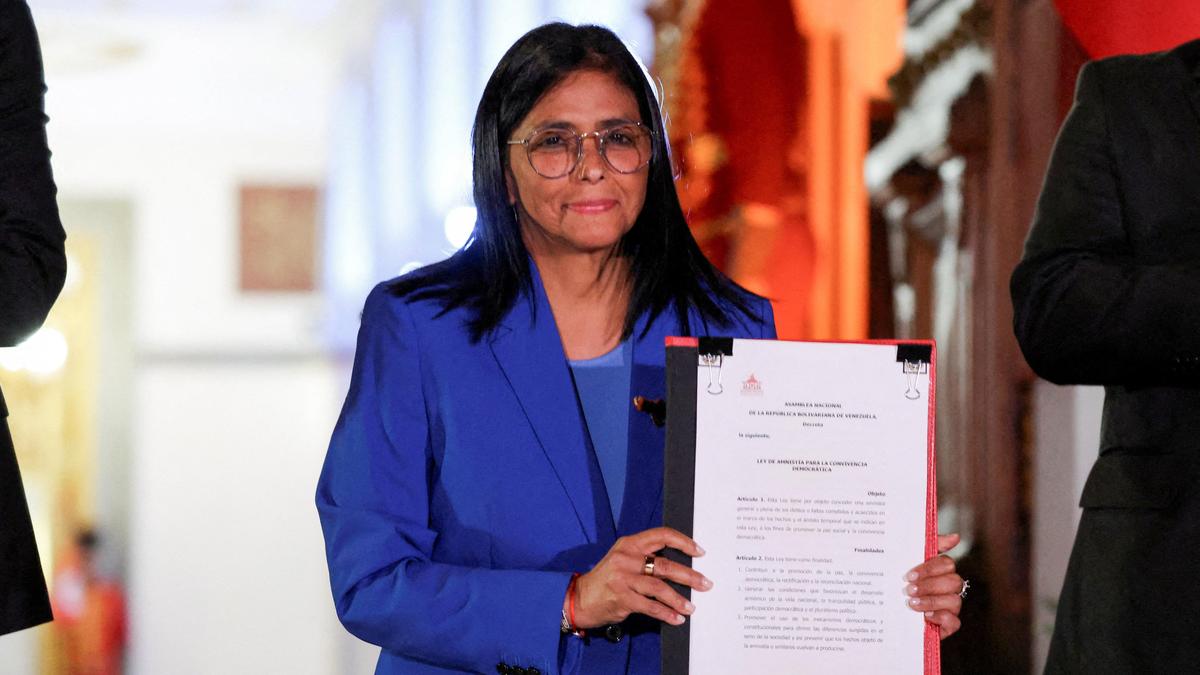
Following the U.S.-backed ousting of Nicolas Maduro, Venezuela’s interim government, led by Delcy Rodriguez, has enacted an amnesty law leading to the release of 379 political prisoners. The National Assembly unanimously approved the law, raising hopes for broader reconciliation. However, the legislation faces criticism for excluding individuals accused of promoting foreign intervention or terrorism, potentially leaving many prisoners, particularly ex-soldiers, behind bars. Opposition figures and rights groups also expressed concerns that the amnesty might excuse past abuses committed under Maduro and his predecessor, Hugo Chavez.
Key Points:
- 379 political prisoners are to be released following the amnesty law enacted by the interim government.
- The amnesty law was passed unanimously by Venezuela’s National Assembly.
- The law excludes those accused of promoting foreign intervention or terrorism.
- Opposition figures like Maria Corina Machado and Juan Pablo Guanipa, along with exiled figures like Edmundo Gonzalez Urrutia, have voiced concerns regarding the limitations and potential misuse of the law.
- The U.S., under President Donald Trump, has taken control of Venezuela’s oil sales, promising a share of the profits to Washington.
- Nicolas Maduro has been taken to New York to stand trial on drug trafficking and other charges.
Critical Analysis:
The timing of the amnesty law, immediately following the U.S.-backed removal of Nicolas Maduro, suggests a strategic attempt by the interim government to stabilize the country and gain legitimacy. The exclusion of individuals accused of promoting foreign intervention reveals a desire to maintain control and potentially silence opposition voices who may have collaborated with the U.S. in Maduro’s ouster.
Key Takeaways:
- The amnesty law represents a significant, albeit limited, step toward reconciliation in Venezuela.
- The U.S. intervention has fundamentally altered the political landscape, enabling the amnesty but also raising concerns about U.S. influence over Venezuelan affairs, especially concerning oil sales.
- The exclusion of certain political prisoners highlights the ongoing tensions and potential for continued political persecution.
- The trial of Nicolas Maduro in the U.S. signifies a dramatic shift in the international perception and treatment of the former leader.
Impact Analysis:
The amnesty law, while imperfect, could pave the way for a more stable political environment in Venezuela. However, the long-term impact hinges on the interim government’s ability to address the underlying issues of political division, economic instability, and human rights abuses. The U.S. control of Venezuelan oil sales raises questions about the future of Venezuela’s sovereignty and economic independence. The exclusion of certain prisoners and concerns about excusing past abuses could fuel further unrest and undermine efforts towards lasting reconciliation. The trial of Maduro in the U.S. will likely set a precedent for holding authoritarian leaders accountable for their actions, but could also be seen as a form of neocolonialism, further complicating U.S.-Venezuelan relations.
 First Piper