
Sun Feb 22 10:23:52 UTC 2026: ### DMK Begins Seat-Sharing Talks, Congress Seeks Meeting Ahead of Tamil Nadu Assembly Elections
The Story:
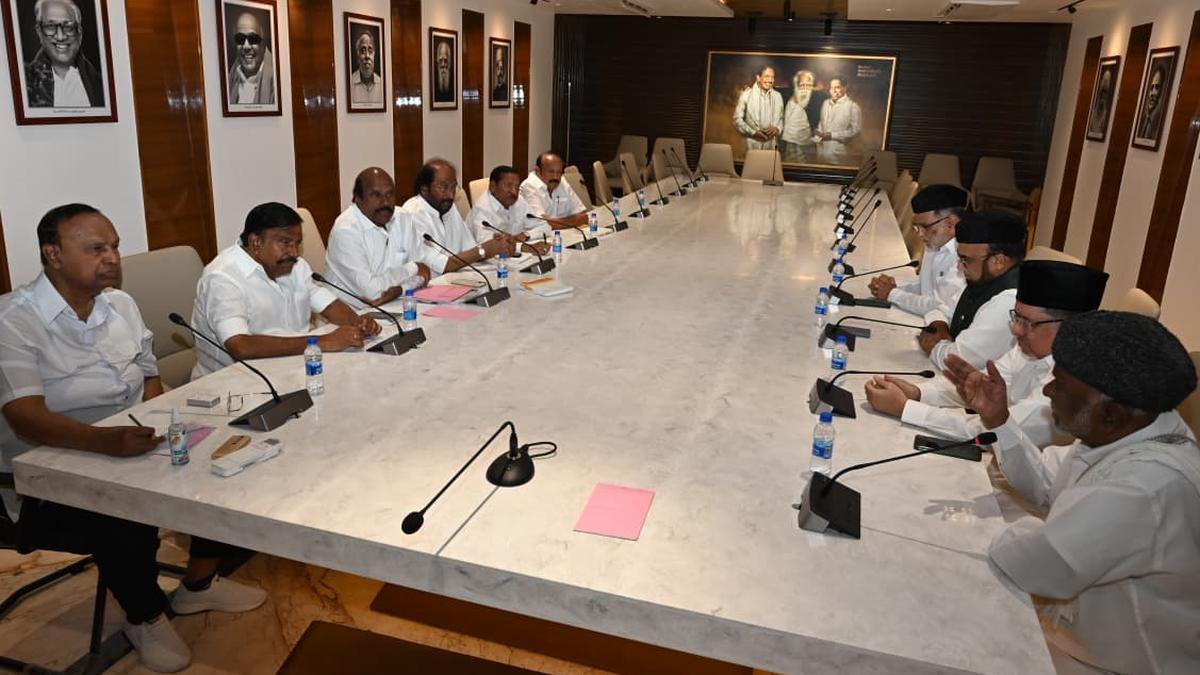
The ruling DMK (February 22, 2026) commenced seat-sharing negotiations with its allies in preparation for the upcoming Tamil Nadu Assembly elections. The initial discussions were held with the Indian Union Muslim League (IUML) at ‘Anna Arivalayam’ in Chennai. Simultaneously, Congress general secretary K.C. Venugopal has requested a meeting with DMK president and Tamil Nadu Chief Minister M.K. Stalin, scheduled for the same evening, indicating the importance of Congress’s role in the alliance.
The IUML, which was allotted three seats in the 2021 Assembly elections, is now seeking five. However, the DMK has urged them to reduce their demand, citing the need to accommodate new entrants like the DMDK and Kamal Haasan’s Makkal Needhi Maiam.
Key Points:
- The DMK initiated seat-sharing talks with allies, starting with the IUML, on February 22, 2026.
- Congress general secretary K.C. Venugopal is scheduled to meet with DMK president M.K. Stalin on the same day.
- The IUML has requested five seats for the upcoming elections, up from the three they received in 2021.
- DMK leader T.R. Baalu pointed out the IUML’s inability to win in all allotted constituencies in 2021 and emphasized the need to accommodate new political parties.
- Naam Tamilar Katchi (NTK) has already announced its candidates for the Assembly polls, with Seeman contesting from Karaikudi.
Critical Analysis:
The DMK’s approach to seat-sharing reflects a strategic balancing act. While maintaining established alliances, the party is also considering accommodating new political players, suggesting a broader coalition strategy to consolidate power. The Congress’s eagerness to meet with Stalin highlights the party’s desire to remain a significant player in the DMK-led alliance. The NTK contesting independently, as indicated by the context, presents a potential challenge to both the DMK and its allies by potentially splitting the anti-incumbency vote.
Key Takeaways:
- The DMK is prioritizing coalition building, balancing the needs of existing allies with the inclusion of new parties.
- Congress seeks to maintain its influence within the DMK-led alliance.
- The seat-sharing negotiations are likely to be complex, requiring compromises from all parties involved.
- The political landscape in Tamil Nadu is evolving, with new entrants vying for representation.
- The NTK’s independent candidacy adds another layer of complexity to the upcoming elections.
Impact Analysis:
The outcome of these seat-sharing talks will significantly shape the political landscape of Tamil Nadu. A successful coalition could solidify the DMK’s position, while internal disagreements could weaken the alliance and open opportunities for opposition parties. The accommodation of new parties could lead to a realignment of political forces and potentially alter the dynamics of future elections. The performance of the NTK will be a key indicator of the evolving political preferences of Tamil Nadu voters.
 First Piper